Article on GPU economics
Supply and demand in the GPU market
The GPU shortage is, at heart, an economics story. Here are the basics of supply and demand applied to AI chips, in plain language with real data.
Key takeaways
- When demand rises faster than supply can grow, prices firm up and lead times stretch. That is the GPU market today.
- Training compute for frontier AI models has grown roughly 4 to 5 times per year since 2010, according to Epoch AI, far outpacing supply.
- GPU supply is slow to respond because it depends on complex, capital-heavy manufacturing.
- Slow supply plus fast demand means tight markets tend to persist.
Supply and demand, applied to GPUs
Economics offers a simple frame for the GPU shortage. Price and availability are set by the balance between how much buyers want and how much sellers can provide. When demand grows faster than supply, the result is higher prices, longer waits, and rationing toward the buyers who commit first.
What makes GPUs unusual is how the two sides move at different speeds. Demand can jump in months as a new AI capability catches on. Supply takes years to expand because it depends on building fabrication plants and specialized production. That mismatch in tempo is the heart of the story.
Most markets self-correct when prices rise, because high prices attract new suppliers. The GPU market resists that tidy correction because the supply response is so slow. By the time new capacity arrives, demand has often moved further ahead.
It also helps to separate two kinds of buyers. Some need compute for a fixed project and will wait or substitute if prices climb. Others treat compute as strategic and will pay almost anything to secure it now, because being shut out costs them more than the hardware. In a tight market, that second group sets the tone, which keeps prices firm and pushes everyone toward committing earlier.
Why the two sides behave so differently
| Factor | Demand side | Supply side |
|---|---|---|
| Speed of change | Can rise sharply in months as AI adoption grows | Expands slowly over years through new fabs and capacity |
| Main driver | Larger models and wider everyday AI usage | Complex, capital-heavy manufacturing and packaging |
| Flexibility | Buyers can commit early and at scale to secure supply | Producers cannot simply add a shift to make more |
| Result when mismatched | Orders pile up and waits grow | Output cannot catch up quickly, so scarcity holds |
How fast the demand side is moving
The product at the center of the market
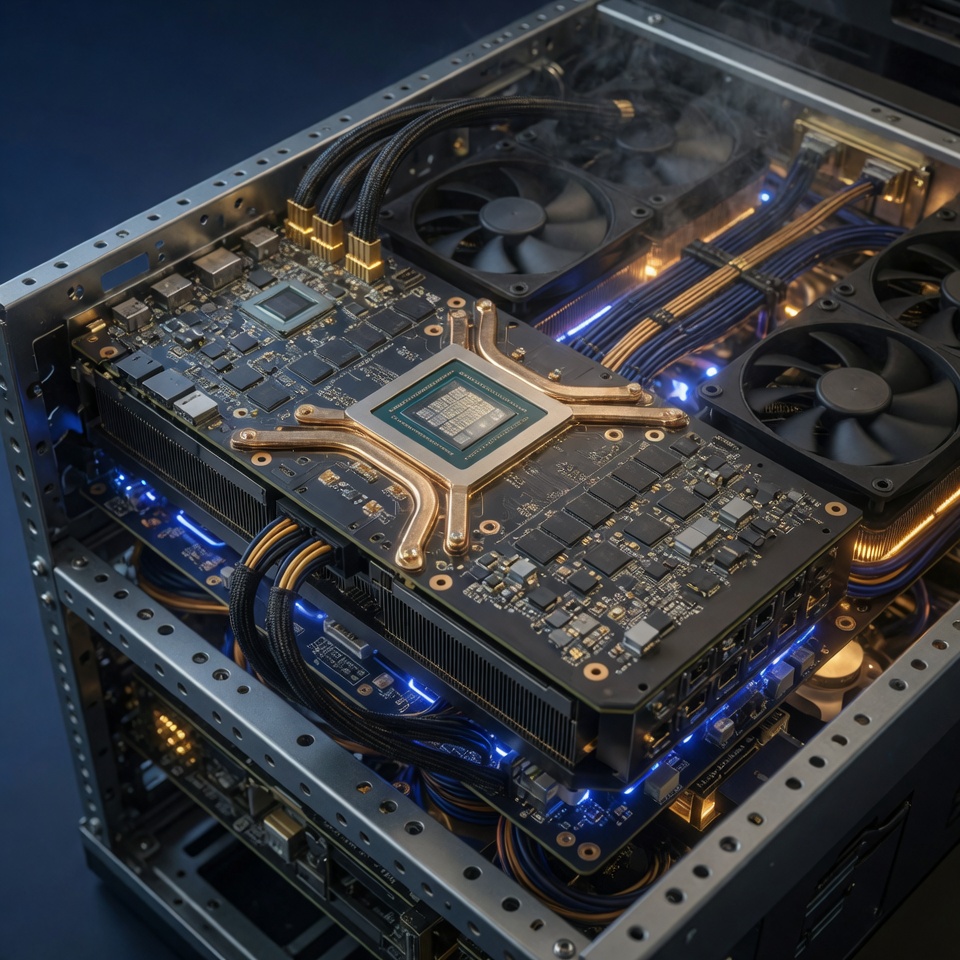
Every price and lead time in this market traces back to a physical product like the accelerator cards shown here. Because each card depends on a long, slow supply chain, the market cannot simply manufacture its way out of a shortage when demand jumps.
Why tight markets tend to last
In an ordinary market, high prices pull in new supply until balance returns. The GPU market resists that quick correction because adding capacity is so slow. Epoch AI finds training compute has grown 4 to 5 times per year since 2010, while building new manufacturing takes years to plan, construct, and qualify.
Efficiency gains help on the margin. Epoch AI also reports algorithmic efficiency improving about 3 times per year, letting models do more with the same chips. But that has not closed the gap, because demand for capability keeps growing faster than efficiency saves, and cheaper compute tends to invite even more use.
Economists call this induced demand. When a resource becomes cheaper or more capable, people find new uses for it that were not worth the cost before. In compute, every efficiency gain tends to unlock new applications rather than simply satisfying existing ones, which keeps the demand curve climbing even as each unit of work gets cheaper to perform.
How a tight GPU market shows itself
Long lead times
Orders for the newest hardware can stretch into many months, because much of the early supply is committed before it ships.
Allocation over open sale
Rather than selling first come, first served, producers allocate scarce units to large, committed buyers, which favors the organized.
Value in access
A place inside a powered, cooled, operating facility becomes valuable in its own right, separate from the price of the chip.
What a tight market does to prices and resale
When new supply is committed far in advance, attention shifts to the secondary market, where hardware changes hands after its first owner. In a tight market, even used accelerators can hold their value unusually well, because buyers who cannot wait for new allocation are willing to pay for capability they can deploy today.
That resilience has limits. Hardware still ages against newer generations, and a faster, more efficient chip can quickly reset what older units are worth. So a tight market supports prices in the near term while the long-term direction still bends toward depreciation as technology moves on.
For buyers, the practical takeaway is that timing and condition matter as much as headline price. A unit available now, in good order, with somewhere to run it can be worth more in real terms than a cheaper one that arrives late or sits idle. The economics here is less about a single price and more about access at the right moment.
What the economics mean for buyers
In a market where supply is slow and demand is fast, scarce hardware tends to flow to organized buyers who commit early and operate at scale. For individuals, the practical move is to hold a real position through ownership while a professional team handles sourcing and operations.
The economics also explain why timing matters. In a tight market, the cost of waiting is not just a higher price later. It can mean being unable to secure current hardware at all for a stretch, because available supply is already committed. That is why understanding supply and demand is less an academic exercise and more a practical guide to how access actually works.
Our service on managed GPU compute explains how owning physical hardware can work without competing alone in a tight market. It does not remove market risk. Owning hardware does not guarantee any result. Operational benefits are not guaranteed and depend on utilization, uptime, demand, costs, hardware performance, and market conditions.
References and data
- Training compute of frontier AI models grows by 4 to 5x per year. Epoch AI. May 2024.
Common questions about the GPU market
Demand for AI compute has grown faster than supply can expand. When demand outpaces supply, basic economics produces higher prices, longer waits, and rationing toward buyers who commit first.
GPU production depends on complex, capital-heavy manufacturing, specialized memory, and advanced packaging. Adding capacity means building facilities over years, so producers cannot simply make more on short notice.
In most markets, high prices quickly attract new supply. Here the supply response takes years, so by the time new capacity arrives, demand has often moved further ahead, which keeps the market tight.
Only partly. Epoch AI reports algorithmic efficiency improving about 3 times per year, but demand for capability grows faster. Cheaper compute also tends to invite more use, so the gap stays open.
It may ease, but slowly. Epoch AI reports training compute has grown 4 to 5 times per year since 2010, while supply takes years to add, so tight conditions tend to persist even as capacity grows.
Talk with us about AI infrastructure ownership
Share your name, phone, email, and which managed device tier interests you. We will reach out with a clear walkthrough. No pressure.
Request received
Thank you. We will contact you at the phone number or email you provided.
Want a position in a tight GPU market?
Talk through what owning managed NVIDIA GPU hardware would look like, sourced and operated by professionals.
Operational benefits are not guaranteed and depend on utilization, uptime, demand, costs, hardware performance, and market conditions.