Article on cooling
Cooling a GPU at home is hard
A GPU under sustained AI load is a small, relentless heater. Removing that heat is the part of home hosting people underestimate most, and it is exactly where ordinary homes fall short.
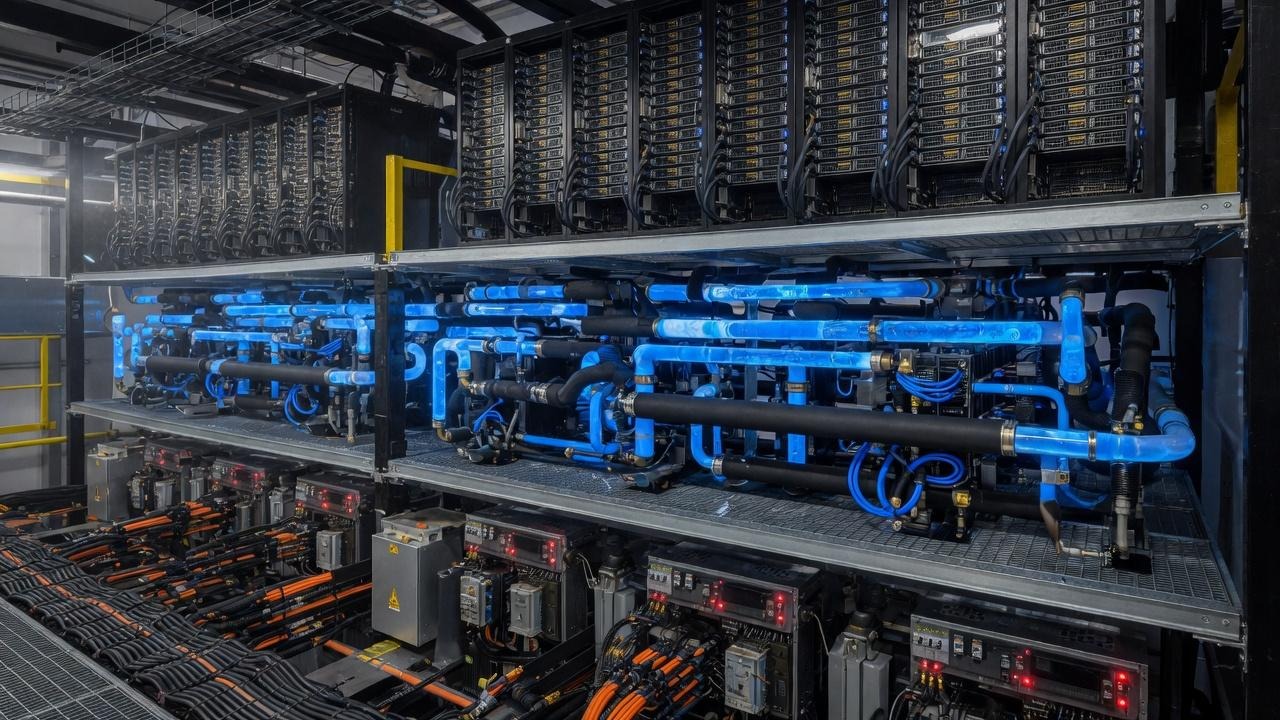
Key takeaways
- A GPU under sustained load produces continuous heat that has to go somewhere.
- Home air conditioning is built for comfort, not for removing concentrated machine heat.
- Sustained high temperatures throttle performance and shorten hardware life.
- Data centers use industrial cooling designed specifically for high-density compute.
Every watt in becomes heat out
A GPU running an AI workload converts a large, steady amount of electricity into computation, and nearly all of that energy leaves the machine as heat. This is not a flaw, it is physics. The harder and longer the GPU works, the more heat it produces, and that heat does not pause when you stop paying attention to it.
In a data center this is expected and planned for from the ground up. In a home, that same heat pours into a room that was never designed to absorb it, and the trouble starts almost immediately. The room warms, the cooling equipment strains, and the hardware edges toward the temperatures it is trying to avoid.
The key thing to understand is that the heat is continuous. It is not a brief spike you can wait out, it is a steady output for every hour the machine is working, which is most hours when the work is real.
Why a house cannot keep up
The wrong tool
Home air conditioning is built to keep people comfortable, not to pull concentrated heat off hardware running flat out for hours on end.
Concentrated load
A GPU packs a lot of heat into a small space, which overwhelms the gentle, distributed cooling a room is designed for.
Throttling
When the hardware gets too hot, it slows itself down to protect against damage, so the heat directly cuts the work it can do.
Shorter life
Sustained high temperatures age components faster, turning a cooling shortfall into a hardware cost that arrives over time.
Cooling that is built into the building
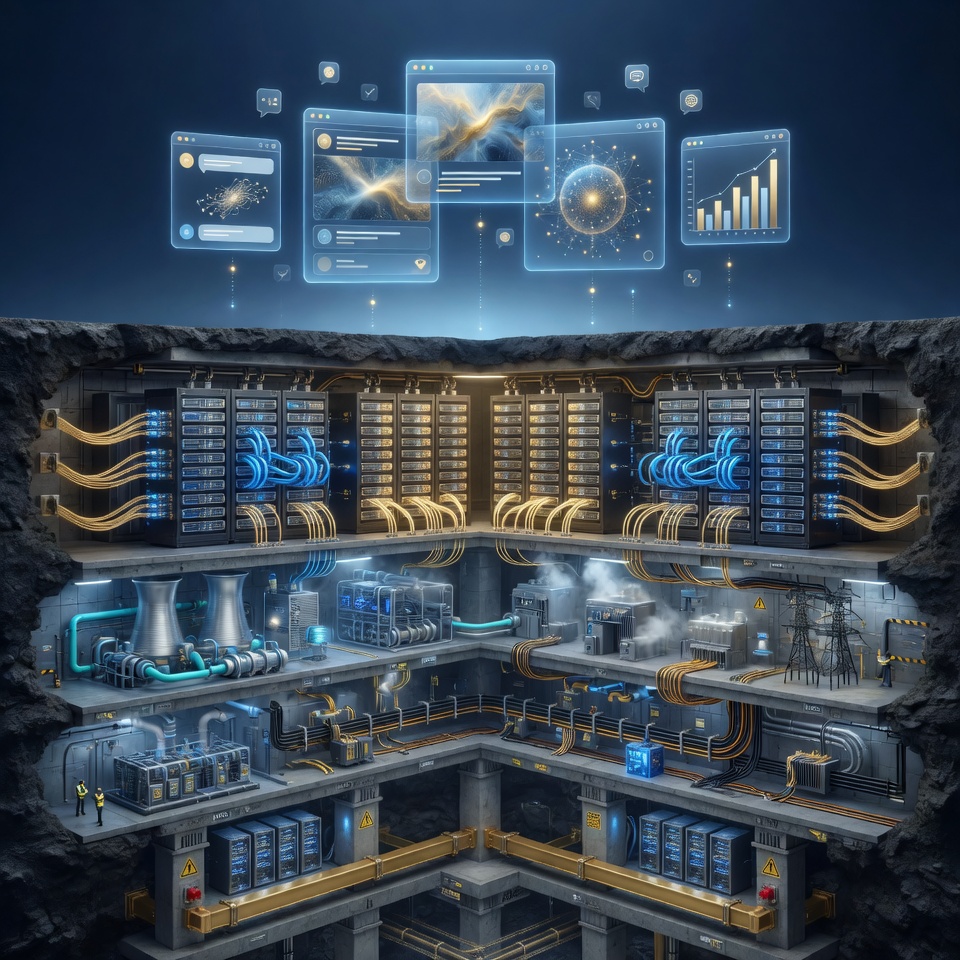
A cutaway of a facility shows cooling treated as part of the building itself: dedicated airflow paths, liquid cooling, and redundant systems sized for concentrated heat loads. Nothing about it resembles a window unit cooling a bedroom.
That is the real difference. A home adds a cooling appliance to a room and hopes it keeps up. A facility designs the entire space around removing heat from dense hardware continuously, which is why the same GPU stays comfortable there.
Industrial cooling is a different discipline
Data centers treat cooling as a primary engineering problem, not an afterthought. They use industrial systems built to remove large, concentrated heat loads continuously, with engineered airflow, liquid cooling, and redundancy designed around exactly the kind of high-density hardware AI runs on.
That is why the same GPU that struggles in a spare room runs comfortably in a facility. The hardware did not change. The environment around it did, and for high-density compute the environment is most of the battle.
Redundancy matters here too. If one cooling path fails in a facility, another takes over, so a single fault does not cook the hardware. At home, the cooling is usually a single appliance with nothing behind it if it falters on a hot day.
How heat quietly steals performance and lifespan
Inadequate cooling rarely announces itself with a dramatic failure. More often it shows up as a slow, quiet tax. When a GPU runs hot, it throttles, deliberately reducing its own speed to stay within safe temperatures. The machine still runs, but it does less work than it should, and you may not even realize it is happening.
Over a longer horizon, sustained heat shortens hardware life. Components age faster at high temperatures, so a cooling shortfall today becomes earlier failures and replacements tomorrow. Both effects make a poorly cooled home rig more expensive and less productive than it looks, which is why cooling is not a detail but a deciding factor for serious AI hardware.
Why adding another air conditioner is not the fix
The instinctive solution is to point more cooling at the problem: a bigger air conditioner, another unit, a dedicated room. This can help a little, but it does not close the gap, because home cooling spreads mild cooling across a space while the GPU concentrates intense heat in one spot.
It also makes the other home-hosting problems worse. More cooling equipment means more noise, more power draw, and more space consumed, so you end up fighting the machine on several fronts at once. The honest conclusion is that you cannot easily bolt facility-grade cooling onto a house, which is the core reason serious AI hardware belongs somewhere built for it.
Giving the hardware the climate it needs
If you want sustained AI compute, the cooling question decides almost everything else. A home fights the heat with comfort equipment, while a facility removes it by design. That is a core reason managed cooling and power inside a data center is the better home for AI hardware.
Under managed ownership you keep the hardware as your asset, and it lives in a place engineered to keep it cool and running, rather than in a room slowly losing the fight against its own heat.
Even with proper cooling, no environment can promise a specific result. Operational benefits are not guaranteed and depend on utilization, uptime, demand, costs, hardware performance, and market conditions.
Questions about cooling AI hardware
Home cooling is designed for human comfort, spreading mild cooling across a room. A GPU concentrates a large, steady heat load in a small space, which overwhelms equipment that was never built for it.
It throttles, slowing itself to avoid damage, which cuts the work it can do, often without you noticing. Sustained high temperatures also age components faster, shortening the useful life of the hardware.
It helps a little but does not close the gap, because home cooling spreads mild cooling across a space while a GPU concentrates intense heat in one spot. It also adds noise, power draw, and space use, making other problems worse.
Yes. Components age faster at sustained high temperatures, so a cooling shortfall today tends to mean earlier failures and replacements later, on top of the lost performance from throttling.
They use industrial cooling built specifically for concentrated heat, including engineered airflow, liquid cooling, and redundancy, so high-density compute stays within safe temperatures continuously even if one cooling path fails.
Yes. Managed ownership lets you own the physical machine while it runs in a facility with cooling built into the architecture. You keep the asset and the hardware gets the climate it needs. Outcomes are never guaranteed.
Talk with us about AI infrastructure ownership
Share your name, phone, email, and which managed device tier interests you. We will reach out with a clear walkthrough. No pressure.
Request received
Thank you. We will contact you at the phone number or email you provided.
Give AI hardware the cooling it actually needs.
Talk through managed cooling and power inside a facility built for high-density compute.
Operational benefits are not guaranteed and depend on utilization, uptime, demand, costs, hardware performance, and market conditions.