Article on the AI economy
From chips to intelligence
AI capability does not appear from nowhere. It is built up a pipeline that starts with chips. Here is how chips become intelligence, and why hardware sits at the base, with real data.
Key takeaways
- AI capability is built up a pipeline: chips, then GPUs and systems, then trained models, then applications.
- NVIDIA describes the GPU as the core compute engine for AI, with its Blackwell platform built for trillion-parameter scale.
- The higher layers of intelligence only exist because of the hardware at the base.
- This is why control of the hardware layer is so strategically valuable.
How chips become intelligence
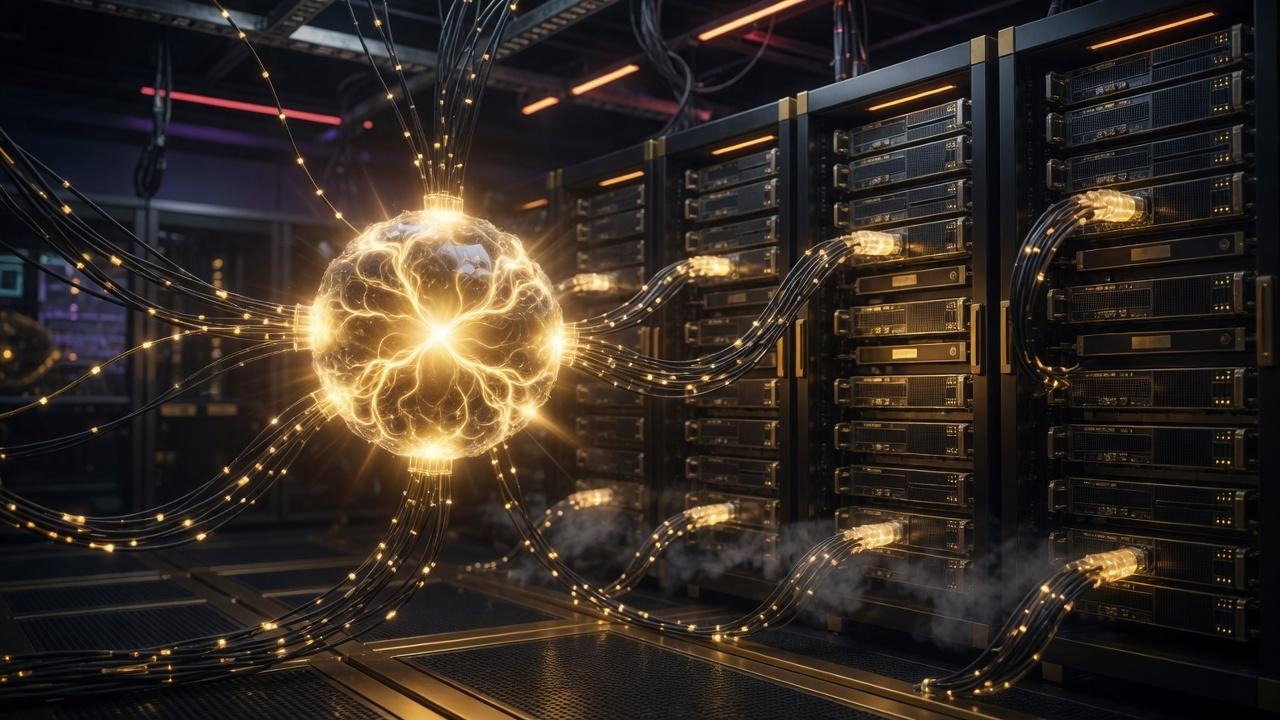
AI capability is the top of a stack, not a thing on its own. At the bottom are semiconductor chips. Those chips are built into GPUs and servers. Those systems train and run models. Those models power the applications people actually use. Intelligence is what emerges at the top of that pipeline.
Seeing AI this way is clarifying. The chatbots and tools that feel like magic are the visible surface. Underneath them is a chain of hardware that has to exist before any intelligence can run.
It also reframes where the value sits. The applications get the attention, but each layer depends entirely on the one below it. Without the chips and the systems built from them, none of the intelligence at the top would be possible.
Each layer also adds something the one below cannot. Raw chips become useful only when assembled into systems. Systems become valuable only when they train models. Models matter only when they reach people through applications. The pipeline is a chain of conversions, and a weakness at any link limits everything above it.
The stages from chips to capability
- Chips. Advanced semiconductors are fabricated in a small number of specialized plants, the raw foundation of everything above.
- GPUs and systems. Chips are assembled into GPUs and servers. NVIDIA describes the GPU as the core compute engine for AI.
- Trained models. GPUs run the heavy math of training. The NVIDIA Blackwell platform is built for trillion-parameter scale training and inference.
- Applications. Trained models power the tools and services that deliver AI capability to users.
Where the foundation actually sits
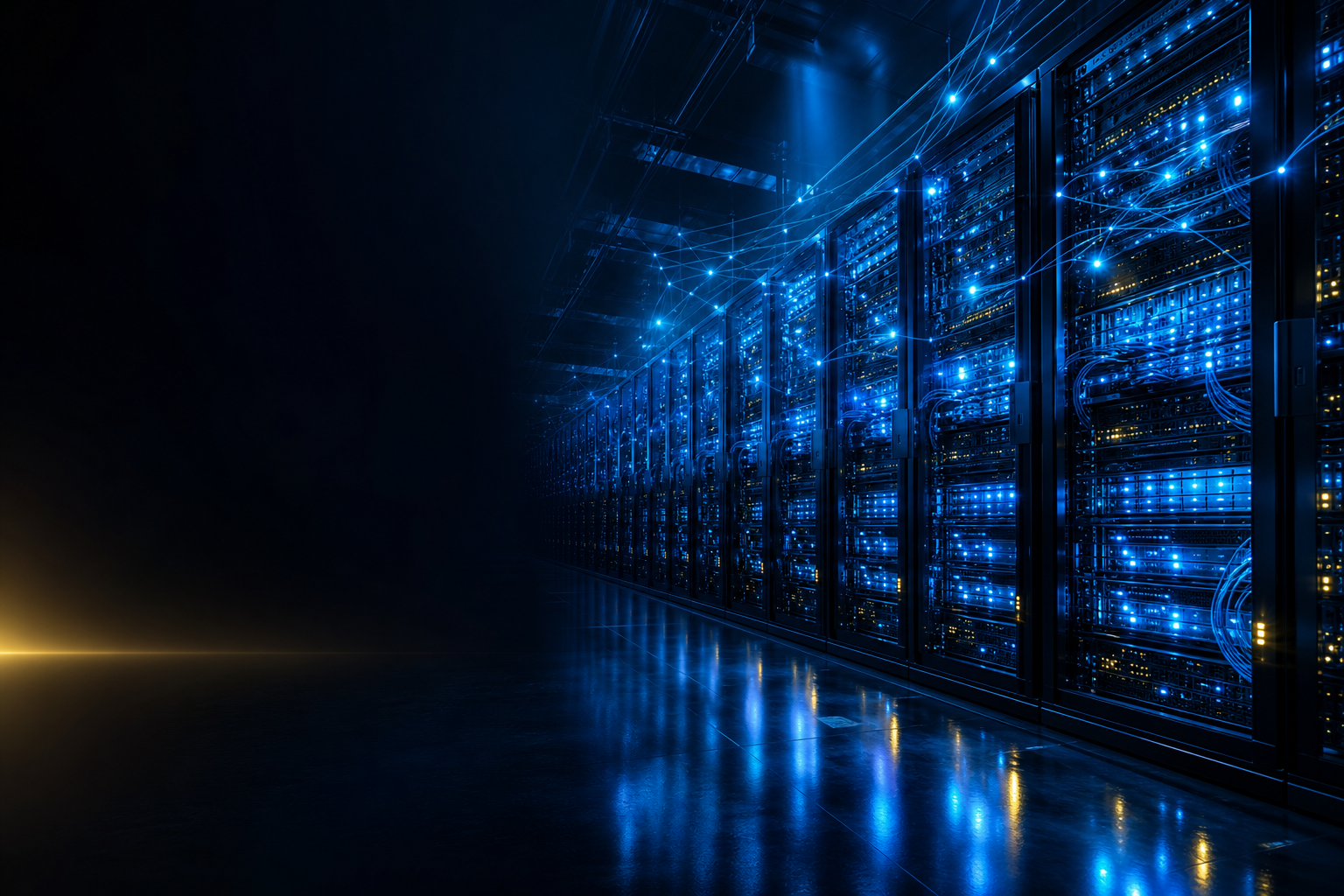
Pipelines and stacks are useful pictures, but the base of the stack is physical. It is halls of GPU servers, drawing power and producing heat, running the math that everything above depends on. The intelligence people interact with is the visible tip of this very tangible foundation.
Why the GPU sits at the center
The GPU is the pivot point of the whole pipeline. NVIDIA describes the GPU as the core compute engine for AI, and introduced its Blackwell platform specifically for trillion-parameter scale AI training and inference. Without that engine, the layers above cannot function.
This is why so much attention and money focus on GPUs. They are the narrow part of the pipeline through which all AI capability has to pass.
It is also why securing GPU hardware has become a strategic priority. When a single layer is the gateway for everything above it, control of that layer carries weight far beyond its size in the overall system.
The same logic applies to the chips beneath the GPUs. Advanced semiconductors are made in a small number of highly specialized plants, which makes the very bottom of the pipeline narrow as well. Two tight points near the base, the chips and the GPUs built from them, shape how much intelligence the whole system can ultimately produce.
The scale at the base
Trillion
Parameter scale NVIDIA built the Blackwell platform to train and run, according to NVIDIA.
Source: NVIDIA Newsroom, March 2024
4 to 5x
Annual growth in training compute for frontier models since 2010, according to Epoch AI.
Source: Epoch AI, May 2024
What each layer of the pipeline contributes
Silicon foundation
Advanced chips fabricated in a handful of plants set the limit on what any AI system can do.
Compute systems
GPUs and servers turn raw chips into usable compute, the engine room of the whole pipeline.
Learned models
Training transforms data into weights, the numbers that hold what a model has learned.
Useful applications
Finished models become the tools and services that deliver AI capability to people and businesses.
Common misconceptions about the pipeline
A common misconception is that AI is mostly software. Software matters, but it runs on a deep hardware foundation. Without the chips, systems, and data centers beneath it, the most advanced model is just an idea that cannot run.
Another misconception is that the application layer holds all the value. In reality, the layers below act as gateways. When hardware is scarce, control of the base shapes who can build and run anything at the top.
A third misconception is that owning hardware at the base guarantees an outcome. It does not. Holding the foundation is a position, not a promise, and what it delivers depends on how the hardware is operated and on conditions no one controls.
A final misconception is that the base layer is simple because it sits at the bottom. In truth it is among the most demanding parts of the whole pipeline, requiring advanced manufacturing, heavy power, serious cooling, and constant operation. The foundation looks plain from the top, but building and running it well is anything but easy.
Owning the base of the pipeline
If intelligence is built on hardware, then the hardware layer is where the foundation is laid. Controlling real GPUs in real data centers means holding the base of the pipeline that produces AI capability.
For people who want a position at that base rather than only using the applications on top, one response is managed GPU ownership, where you hold physical NVIDIA-powered hardware and a professional team handles operations.
It is not a promise of any result. Operational benefits are not guaranteed and depend on utilization, uptime, demand, costs, hardware performance, and market conditions.
References and data
- NVIDIA Blackwell Platform Arrives to Power a New Era of Computing. NVIDIA Newsroom. March 2024.
- Training compute of frontier AI models grows by 4 to 5x per year. Epoch AI. May 2024.
Common questions about the AI hardware pipeline
It runs from semiconductor chips, to GPUs and servers, to trained models, to applications. Intelligence is what emerges at the top, but every layer depends on the hardware beneath it.
NVIDIA describes the GPU as the core compute engine for AI and built its Blackwell platform for trillion-parameter scale training and inference. The GPU is the narrow point through which all AI capability passes.
Because the higher layers of intelligence only exist because of the hardware at the base. Controlling real GPUs in real data centers means holding the foundation of the pipeline that produces AI capability.
Software and data are essential, but they run on a deep hardware foundation. Without the chips, systems, and data centers beneath them, even the most advanced model is just an idea that cannot run at scale.
Because every layer above it depends on it. When advanced chips and GPUs are scarce, access to them shapes who can train and run models, so control of the base carries weight far beyond its size in the system.
No. Holding the foundation is a position, not a promise. What it delivers depends on how the hardware is operated and on factors like utilization, uptime, demand, costs, and market conditions, which are not guaranteed.
Talk with us about AI infrastructure ownership
Share your name, phone, email, and which managed device tier interests you. We will reach out with a clear walkthrough. No pressure.
Request received
Thank you. We will contact you at the phone number or email you provided.
Want a real position at the base of AI?
Talk through what owning managed NVIDIA GPU hardware would look like, with no pressure and straight answers.
Operational benefits are not guaranteed and depend on utilization, uptime, demand, costs, hardware performance, and market conditions.