Article on timing
The AI infrastructure land grab
The biggest technology companies are racing to secure chips, power, and data center space ahead of demand. Here is what that race looks like and why it matters, without hype.

Key takeaways
- Large players are committing capital early to secure GPUs, power, and data center space ahead of demand.
- Global corporate AI investment more than doubled in 2025, with the United States leading, according to Stanford HAI.
- When the biggest buyers lock up supply, later entrants face longer queues and fewer options.
- Securing capacity early can mean more options, but it never guarantees an outcome.
Why the biggest players are moving first
An infrastructure land grab happens when buyers compete to claim a scarce resource before it is fully available. In AI, that resource is a combination of advanced GPUs, electrical power, and physical data center space. The largest technology companies are committing to multi-year hardware purchases, signing long-term power agreements, and building their own facilities, often well ahead of the demand they expect to serve.
This behavior is rational rather than reckless. When a resource is scarce and slow to build, waiting until you need it can mean waiting in a long line behind everyone else who waited. Committing early secures a place. The predictable result is that a large share of new capacity is spoken for before it even comes online, which tightens the market further for anyone moving later.
The phrase land grab can sound dramatic, but the underlying logic is mundane. It is what any careful buyer does when supply is constrained and lead times are long. Understanding that logic is more useful than reacting to the drama of the term.
How fast the money is moving
2x+
Global corporate AI investment more than doubled in 2025, with the U.S. leading, according to Stanford HAI.
Source: Stanford Institute for Human-Centered AI (HAI), April 2026
~53%
Share of the population using generative AI within three years, faster than the internet or PC, according to Stanford HAI.
Source: Stanford Institute for Human-Centered AI (HAI), April 2026
~50%
Surge in AI-focused data centre electricity use in 2025, according to the IEA.
Source: International Energy Agency (IEA), 2025
What the race means for everyone else
When the largest buyers lock up supply, the effect ripples outward. Stanford HAI reports that global corporate AI investment more than doubled in 2025, with the United States leading. That capital is not abstract. It buys chips, signs power agreements, and reserves data center space, which removes those resources from the pool available to later entrants.
The IEA's observation that AI-focused data centre electricity surged about 50 percent in 2025 tells the same story from the energy side. The buildout is not evenly spread across a decade. It is concentrated now, while the resources are still being claimed. That concentration is exactly what makes timing a live question for smaller buyers.
For a smaller buyer, this does not mean access is impossible. It means the practical question shifts. The issue is no longer simply whether hardware exists, but how to secure a position before the queue grows longer and the most accessible capacity is reserved by larger players.
What large players are actually securing
Chip allocations
Multi-year commitments reserve a share of future GPU production, so much of what factories will make is claimed before it ships.
Power agreements
Long-term contracts for electricity and grid interconnection lock up the energy needed to run hardware, often years in advance.
Land and facilities
Sites with the right power, water, and connectivity are bought or leased early, then built out to convert into usable capacity.
Supply chains
Transformers, cooling equipment, and skilled labor are themselves scarce, and early buyers reserve those too.
The physical capacity at the center of the race
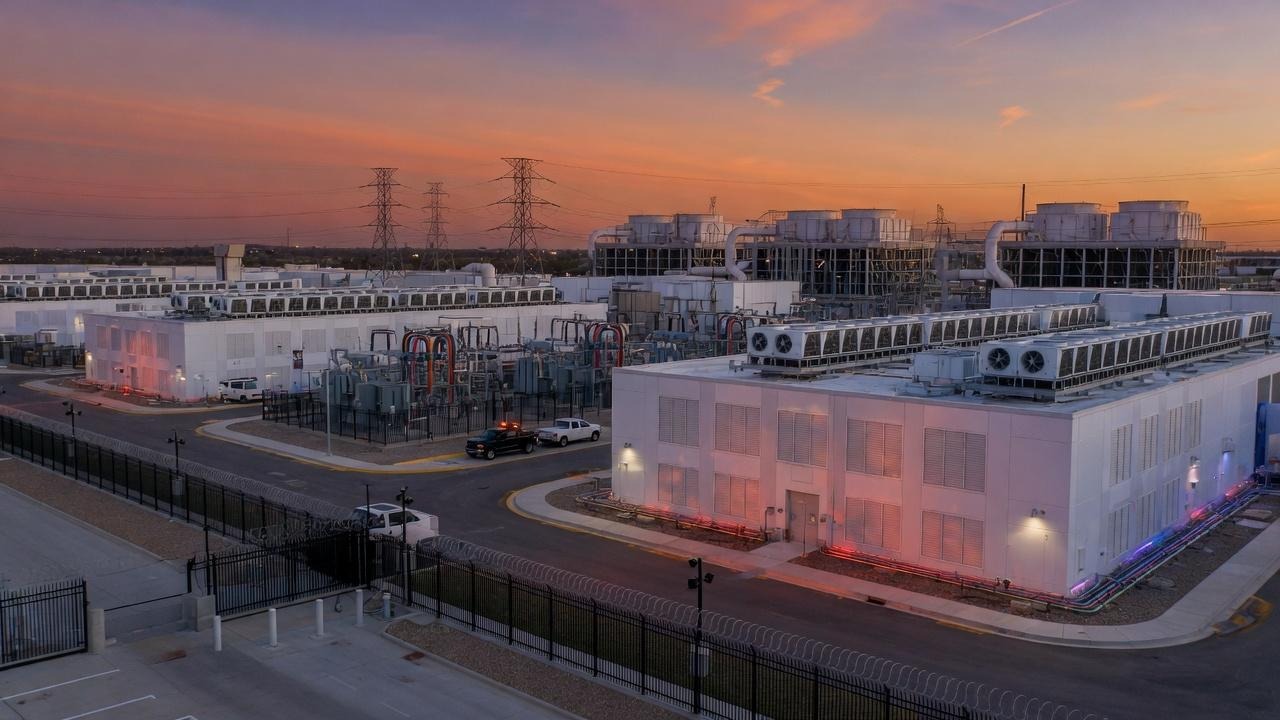
The land grab is not just a financial maneuver. It is a race for physical assets that take years to build, like the campus pictured here.
Because each site requires land, power, and construction measured in years, the capacity is contested long before it is ready to run a single workload.
Securing capacity is not the same as a guaranteed result
It is worth being careful here. The fact that large players are moving early does not mean acting early produces a promised result. Securing scarce hardware can widen your options and improve your position, but it carries real costs and risks. Operational benefits are not guaranteed and depend on utilization, uptime, demand, costs, hardware performance, and market conditions.
The land grab is a description of behavior in a scarce market, not a forecast about returns. The big players could be wrong about how demand unfolds, and so could anyone following their lead. Understanding the race helps you decide deliberately rather than assume that access will always be there when you finally want it. That is the entire point, and it is a more modest claim than the headlines often suggest.
Why smaller buyers are not automatically shut out
It would be easy to read the land grab as a story where only giants can participate. That is not quite right. The same operations layer that large players rely on, professional sourcing, hosting, power, and cooling, can serve smaller owners too. What changes is that timing and structure matter more for a smaller buyer than they would in an abundant market.
In practice, this is why managed models exist. Rather than competing directly with the largest companies for every input, a smaller owner can hold hardware that a professional operator places into capacity it has already secured. That does not remove the scarcity, and it does not promise a result. It simply offers a realistic path into a market that is otherwise dominated by buyers with enormous scale.
From watching the race to taking a position
If you would rather hold a real position than watch the largest buyers claim capacity, one route is owning physical NVIDIA hardware that a professional team sources and operates. You hold the scarce asset, and the operator handles the parts that are hard to do alone. Golden Core Mining is built around this model, and you can read how it works on our managed GPU ownership page.
Decide on your own terms and timeline. Owning hardware involves real costs and risks, and none of the benefits are guaranteed. The land grab explains why timing is a real consideration, but it is not a reason to act without weighing the trade-offs for yourself.
References and data
- The 2026 AI Index Report. Stanford Institute for Human-Centered AI (HAI). April 2026.
- Key Questions on Energy and AI. International Energy Agency (IEA). 2025.
Questions about the AI infrastructure race
It is the race among large buyers to secure GPUs, power, and data center capacity ahead of demand. Because these resources are scarce and slow to build, committing early reserves a place in line, which removes capacity from the pool available to later entrants.
Several things at once: multi-year chip allocations, long-term power and grid agreements, land and facilities, and even the supply chains for transformers, cooling, and skilled labor. Each is scarce, so early commitments secure a share of all of them.
Not necessarily. The question shifts from whether hardware exists to how to secure a position before queues grow longer. Managed models let smaller owners hold hardware that a professional operator places into capacity it has already secured.
No. Acting early can mean more options, but it carries real costs and risks. Operational benefits are not guaranteed and depend on utilization, uptime, demand, costs, and market conditions. The large players could also be wrong about how demand unfolds.
Because demand, capital, and energy needs are converging at once, and because capacity takes years to build. Stanford HAI reports corporate AI investment more than doubled in 2025, and the IEA reports AI-focused data centre electricity surged about 50 percent that year.
Talk with us about AI infrastructure ownership
Share your name, phone, email, and which managed device tier interests you. We will reach out with a clear walkthrough. No pressure.
Request received
Thank you. We will contact you at the phone number or email you provided.
Want a position before capacity is claimed?
Talk through what owning managed NVIDIA GPU hardware would look like, with no pressure and straight answers.
Operational benefits are not guaranteed and depend on utilization, uptime, demand, costs, hardware performance, and market conditions.