Article on timing
The cost of sitting on the sidelines
Staying on the sidelines feels safe, but it carries an opportunity cost when supply is scarce. Here is a careful look at that cost, framed without hype and without promises.
Key takeaways
- Sitting out is a decision, not a neutral default, in a scarce and fast-moving market.
- Opportunity cost is the value of options you give up by not acting, which is hard to see day to day.
- Staying on the sidelines also avoids real costs and risks, so it is not automatically wrong.
- Neither sitting out nor acting guarantees an outcome.
Why sitting out is itself a choice
Sitting on the sidelines feels like the safe, neutral option. In a calm market, it often is, because nothing much changes while you wait and the same opportunities are there later. In a scarce, fast-moving market, the picture is different. Sitting out becomes a real decision with consequences, even though those consequences are largely invisible from one day to the next.
The cost is not a loss you can point to on a statement. It is an opportunity cost, the value of the options you quietly give up by not acting. When access is allocated in order and supply is constrained, the main thing you give up is your place in line. That is easy to overlook precisely because it does not show up as a number anywhere.
Naming this is not an argument for acting. It is an argument for honesty. Treating the sidelines as free hides one side of the decision, and a clear choice requires seeing both sides plainly.
Understanding opportunity cost without hype
Opportunity cost is a careful idea, and it is easy to twist into pressure, so let us be precise. It does not mean you are losing money by waiting, and it does not mean acting would have paid off. It means that every choice closes some doors, and waiting closes the door of acting now, at today's conditions, with today's available capacity.
In a market where the International Energy Agency projects data centre electricity demand to more than double by 2030 and capacity takes years to build, the door that waiting closes is access to scarce hardware before more of it is claimed. The IEA also reports that AI-focused data centre electricity surged about 50 percent in 2025, a sign that capacity is being claimed quickly. That is the honest shape of the cost: a narrowing of options, not a guaranteed loss.
Framed this way, opportunity cost is neither a scare tactic nor a non-issue. It is one real factor among several, to be weighed alongside the costs and risks of acting.
Why the market does not wait
945 TWh
Projected data centre electricity demand by 2030, more than double the 2024 level, according to the IEA.
Source: International Energy Agency (IEA), April 2025
~50%
Surge in AI-focused data centre electricity use in 2025, according to the IEA.
Source: International Energy Agency (IEA), 2025
What the sidelines look out on
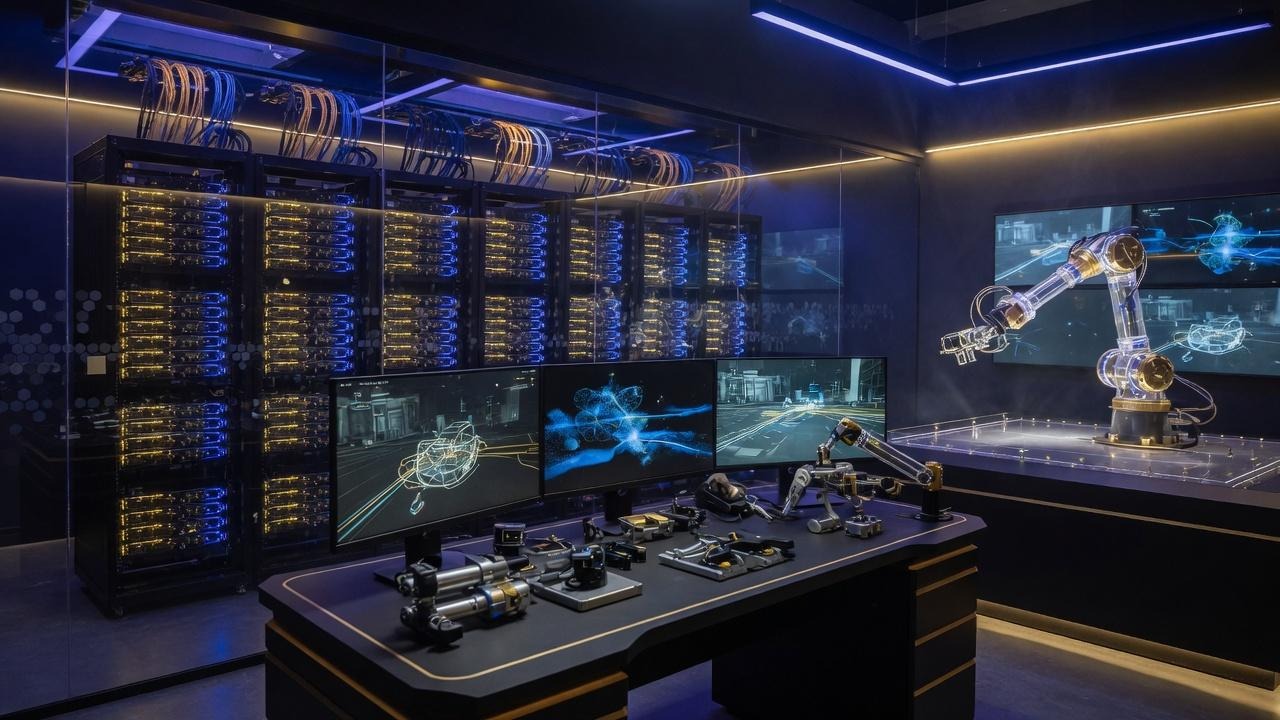
The sidelines are not a pause button on the wider market. While anyone waits, operations rooms like this keep running, and capacity keeps being reserved by those who have already committed.
That is the quiet mechanism behind opportunity cost. The market does not hold your place while you decide, which is what makes waiting a real choice rather than a neutral one.
Why the sidelines can also be the right call
Fairness requires the other side of the ledger, and it is just as real. Sitting out also avoids genuine costs and risks. You do not commit capital, you do not take on operational responsibility, and you keep your flexibility while you learn. For many people and many timelines, that is a perfectly reasonable choice, not a failure of nerve.
The point is not that acting is right and waiting is wrong. It is that both carry costs, and pretending the sidelines are free hides one of them just as surely as pretending acting carries no risk would hide the other. A clear decision weighs both honestly and lands wherever the weighing leads.
What the sidelines avoid and what they give up
Avoids committing capital
Staying out keeps your capital free and uncommitted, which has real value, especially if your goals are uncertain or far off.
Avoids operational risk
No hardware means no responsibility for running it and no exposure to the costs and uncertainties of operating infrastructure.
Gives up position in line
In a queue ordered by commitment, waiting cedes your place to those who act, and the queue can lengthen over time.
Gives up current conditions
The access and conditions available today may not be the same later, in either direction, since nothing is guaranteed.
No promises in either direction
Whatever you decide, no one should sell you a guarantee. Acting does not promise a reward, and waiting does not promise safety. Operational benefits are not guaranteed and depend on utilization, uptime, demand, costs, hardware performance, and market conditions. The opportunity cost of the sidelines is real, but so are the costs of acting, and neither side comes with a promised result.
The reason to understand the cost of the sidelines is simply to decide on purpose. Choose your timeline because you weighed both sides, not because you defaulted into one out of inertia or out of fear. That is the whole of the argument, and it is deliberately a modest one.
From weighing the sidelines to taking a position
If you decide a position in AI compute fits your goals, one practical route is owning a physical NVIDIA machine that a professional team operates. Golden Core Mining is built around that model, and you can read how it works on our managed GPU compute page.
Decide on your own timeline and for your own reasons. Owning hardware carries real costs and risks, and none of the benefits are guaranteed. The purpose here is clarity about both sides, so that whether you step in or stay out, you do it deliberately.
References and data
- Energy and AI. International Energy Agency (IEA). April 2025.
- Key Questions on Energy and AI. International Energy Agency (IEA). 2025.
Questions about staying on the sidelines
It is an opportunity cost, the value of options you give up by not acting. In a scarce market where access is allocated in order, the main thing you give up is your place in line for hardware before more capacity is claimed.
No. Opportunity cost does not mean a loss you can point to, and it does not mean acting would have paid off. It means waiting closes the door of acting at today's conditions. Waiting also avoids real costs and risks, and neither choice guarantees an outcome.
It avoids committing capital and taking on operational responsibility, and it preserves flexibility while you learn. Those are genuine benefits, which is why sitting out is a reasonable choice for many people and timelines.
Not necessarily. Sitting out avoids committing capital and operational responsibility and keeps flexibility. The goal is to weigh both sides and decide deliberately, since operational benefits are never guaranteed in either direction.
Because capacity is allocated in roughly the order buyers commit, and the buildout continues regardless of any one observer. The IEA reports AI-focused data centre electricity surged about 50 percent in 2025, a sign that capacity is being reserved quickly while others wait.
Talk with us about AI infrastructure ownership
Share your name, phone, email, and which managed device tier interests you. We will reach out with a clear walkthrough. No pressure.
Request received
Thank you. We will contact you at the phone number or email you provided.
Weighing whether to stay on the sidelines?
Talk through what owning managed NVIDIA GPU hardware would look like and decide on your own timeline, with no pressure.
Operational benefits are not guaranteed and depend on utilization, uptime, demand, costs, hardware performance, and market conditions.