Article on timing
Why timing matters in infrastructure
Timing rarely matters when supply is abundant. It matters when scarcity and time interact. Here is how those two forces combine to shape access to infrastructure, without hype.

Key takeaways
- Timing matters only when a resource is scarce and slow to build.
- Scarcity creates a queue, and time determines your place in it.
- Compounding demand widens the gap between acting and waiting.
- Understanding timing supports deliberate decisions, but it guarantees no outcome.
Timing is scarcity and time working together
Timing is a word that gets used loosely, so it helps to ground it. Timing matters when two conditions hold at once. A resource is scarce, and it takes time to produce more of it. When both are true, the moment you commit affects what you can access. When either condition is false, timing barely matters at all.
Consider the contrast. For an abundant good that can be made on demand, it makes no difference whether you buy today or next month, because supply simply expands to meet you. Timing only becomes meaningful when supply cannot stretch to meet everyone at once and cannot be expanded quickly. That is the precise situation that defines infrastructure.
Physical capacity is scarce and slow to build, so the order in which buyers commit shapes who gets served first. That is why timing is a serious topic in infrastructure and a trivial one in markets with abundant supply. It is not a matter of opinion. It follows directly from the two conditions.
How scarcity turns into a queue
When demand exceeds what exists today, supply has to be rationed by some mechanism. Often that mechanism is a queue based on who committed first. Advanced GPUs, electrical power, grid interconnection, and data center space all behave this way. There is not enough for everyone at once, so access is ordered rather than instant.
Time decides your place in that queue. Commit early and you are served from existing capacity. Commit late and you wait for facilities still being built, which can take years. This is the mechanical reason timing matters, entirely separate from any prediction about prices or demand. You do not need a forecast to understand a line.
The queue is also not static. As more buyers commit, it lengthens, and the wait for those at the back grows. That is what makes the interaction between scarcity and time dynamic rather than fixed, and it is why the same decision can look different a year apart.
Why compounding makes timing sharper
4 to 5x
Annual growth in training compute for frontier AI models since 2010, according to Epoch AI.
Source: Epoch AI, May 2024
~30%/yr
Growth in electricity used by accelerated AI servers, according to the IEA.
Source: International Energy Agency (IEA), April 2025
~50%
Surge in AI-focused data centre electricity use in 2025, according to the IEA.
Source: International Energy Agency (IEA), 2025
What makes capacity slow to build
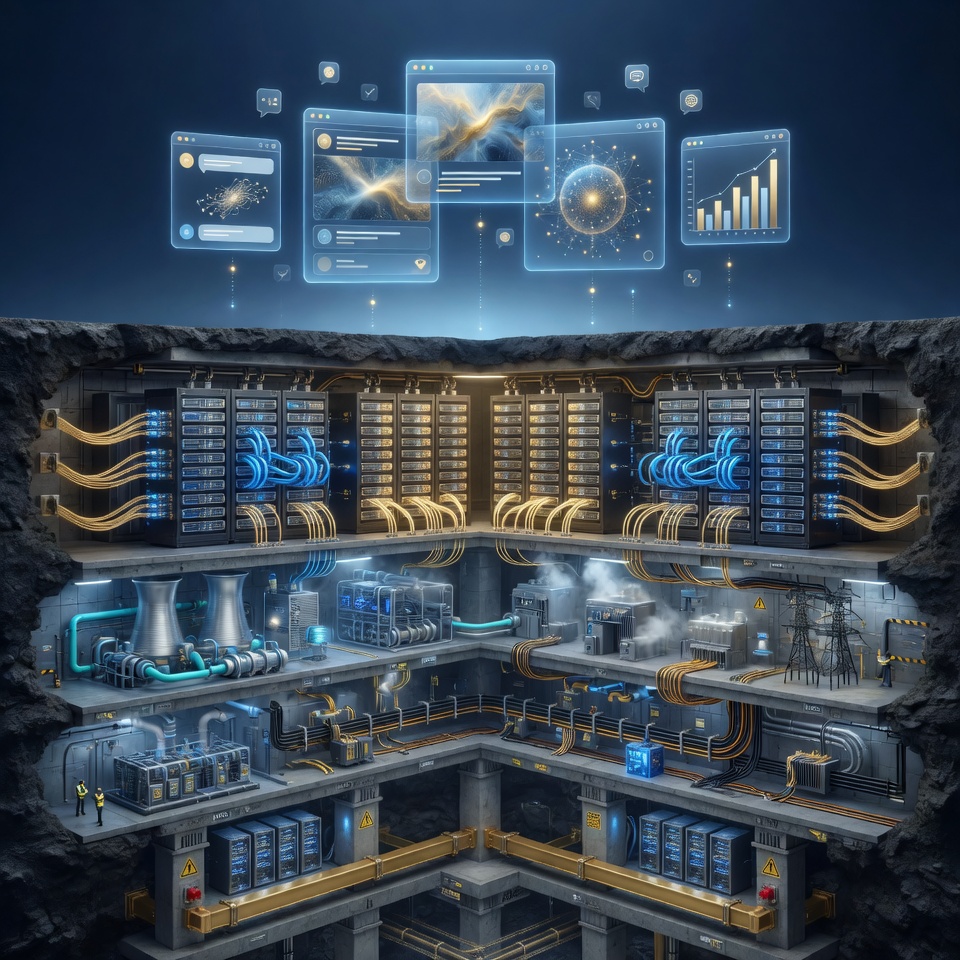
The reason timing matters becomes obvious when you see what a facility actually contains. Power distribution, cooling, networking, and racks are deeply interdependent systems that each take time to design, build, and commission.
Because none of these layers can be rushed into place, capacity stays scarce during the buildout, which is exactly the condition that makes the order of commitments matter.
When timing matters and when it does not
Scarce and slow
When a resource is both scarce and slow to expand, timing matters a great deal, because the queue is real and lengthening.
Scarce but fast
If supply could expand quickly, scarcity would be temporary and timing would matter little, since you could simply wait for more.
Abundant
When supply is plentiful, the order of buyers is irrelevant. Timing is a non-issue in such markets, which is most everyday goods.
Compounding demand
When demand grows several times per year on top of scarcity, the gap between acting and waiting widens fastest, sharpening the effect of timing.
What timing does not mean
Timing is not prediction. It does not mean anyone can foresee prices, demand, or outcomes, and it does not mean acting at a particular moment produces a reward. Epoch AI finds training compute growing 4 to 5 times per year and the IEA reports accelerated AI server electricity growing about 30 percent per year, which sharpens the gap between acting and waiting, but none of that removes uncertainty about what comes next.
The honest version is about position and options. Operational benefits are not guaranteed and depend on utilization, uptime, demand, costs, hardware performance, and market conditions. Timing helps you decide deliberately by clarifying how scarcity and time interact. It never promises a result, and any framing that suggests otherwise has crossed from explanation into sales.
Understanding timing should reduce pressure, not add it
It might seem that emphasizing timing is a way of pushing people to act. The opposite is the intent. Understanding why timing matters should make a decision calmer, because it replaces vague urgency with a clear mechanism you can reason about. Once you see that the question is about a queue and not a prophecy, the pressure to guess the market disappears.
That clarity cuts in both directions. For some, recognizing the queue will make acting feel sensible. For others, weighing the costs and risks will make waiting the right call. Both are legitimate. The purpose of understanding timing is to choose on purpose, with eyes open, rather than to feel rushed into anything.
From understanding timing to taking a position
If timing matters to your goals, one practical route is owning a physical NVIDIA machine that a professional team operates, so you hold a place in the queue for scarce compute. Golden Core Mining offers that managed model, and you can read how it works on our managed GPU compute page.
Decide on your own timeline. Understanding timing is not the same as predicting it, and none of the benefits of owning hardware are guaranteed. The aim of this article is clarity about how scarcity and time interact, so any decision you make is a deliberate one.
References and data
- Training compute of frontier AI models grows by 4 to 5x per year. Epoch AI. May 2024.
- Energy and AI. International Energy Agency (IEA). April 2025.
- Key Questions on Energy and AI. International Energy Agency (IEA). 2025.
Questions about timing in infrastructure
Because infrastructure is scarce and slow to build. Those two conditions create a queue ordered by who commits first, so the moment you act affects what you can access. In markets with abundant supply, timing barely matters.
When demand exceeds what exists today, supply is rationed, often by order of commitment. Advanced GPUs, power, grid interconnection, and data center space all work this way. Commit early and you are served from existing capacity. Commit late and you wait for facilities still being built.
No. Timing is about position in a queue and the options available, not prediction. Operational benefits are not guaranteed and depend on utilization, uptime, demand, costs, and market conditions.
It widens the gap between acting and waiting. Epoch AI finds training compute growing 4 to 5 times per year and the IEA reports accelerated AI server electricity growing about 30 percent per year, so the queue lengthens quickly and the effect of timing sharpens.
No. Understanding timing should reduce pressure by replacing vague urgency with a clear mechanism. For some it makes acting sensible, for others it makes waiting right. The point is to decide deliberately, since no outcome is guaranteed either way.
Talk with us about AI infrastructure ownership
Share your name, phone, email, and which managed device tier interests you. We will reach out with a clear walkthrough. No pressure.
Request received
Thank you. We will contact you at the phone number or email you provided.
Thinking about your timing in AI compute?
Talk through what owning managed NVIDIA GPU hardware would look like, with no pressure and straight answers.
Operational benefits are not guaranteed and depend on utilization, uptime, demand, costs, hardware performance, and market conditions.