Article on timing
Why early access to AI compute matters
When a resource is scarce, it does not appear the moment you ask for it. It is allocated to those who commit early. Here is what that means for AI compute, without hype.

Key takeaways
- Scarce compute is allocated in a queue, so the timing of a commitment shapes what you can access.
- Advanced GPUs and the power to run them cannot be expanded on short notice.
- Early access is about position in line, not about any promised result.
- Outcomes depend on utilization, demand, and costs, and are never guaranteed.
What early access actually means
When people talk about early access to AI compute, they often picture an advantage that is hard to define. The reality is simpler and more concrete. Advanced GPU hardware is produced in limited quantities, and the data centers and power needed to run it take years to build. That means access is allocated, roughly in the order that buyers commit, rather than appearing on demand whenever someone decides they want it.
Early access, then, is not a prediction about prices or future demand. It is a description of where you sit in a line for a scarce resource. The earlier the commitment, the more options tend to be available, because supply has not yet been claimed by others. The later the commitment, the more of that supply has already been spoken for.
This is a mechanical point, not a marketing one. It would be true of any scarce, slow-to-build resource, whether that is waterfront land, fiber routes, or grid interconnection slots. Compute simply happens to be the scarce resource of this particular moment.
Why supply stays behind demand
4 to 5x
Annual growth in training compute for frontier AI models since 2010, according to Epoch AI.
Source: Epoch AI, May 2024
945 TWh
Projected data centre electricity demand by 2030, more than double the 2024 level, according to the IEA.
Source: International Energy Agency (IEA), April 2025
~50%
Surge in AI-focused data centre electricity use in 2025, according to the IEA.
Source: International Energy Agency (IEA), 2025
Why the order of commitments matters
In a market with plenty of supply, the order of buyers barely matters. Anyone can decide to participate and receive what they need quickly, so being first carries no special meaning. Compute does not work that way right now. The International Energy Agency projects that data centre electricity demand could more than double to roughly 945 TWh by 2030, while new capacity takes years to bring online.
When demand grows faster than supply can be built, the queue lengthens. Buyers who commit early are served from existing capacity, while later buyers wait for facilities that may still be under construction. The IEA also reports that AI-focused data centre electricity use surged about 50 percent in 2025, a sign that the gap between appetite and available capacity is widening rather than closing.
This is why timing affects access even when no one can predict the market. You do not need a forecast about prices to understand a queue. You only need to know that the resource is scarce, slow to expand, and allocated in roughly the order people commit.
What actually sits in the queue
Advanced GPUs
The newest accelerators are produced in limited volumes and are often reserved far in advance, so availability depends on when you commit.
Electrical power
Grid interconnection and high density power are allocated through long queues of their own, independent of chip supply.
Data center space
Purpose-built capacity with the right power and cooling is finite, and much of it is reserved before it is even finished.
Operations capacity
Skilled teams to source, host, cool, and maintain hardware are themselves a limited resource that early commitments help secure.
The scarce asset behind the queue
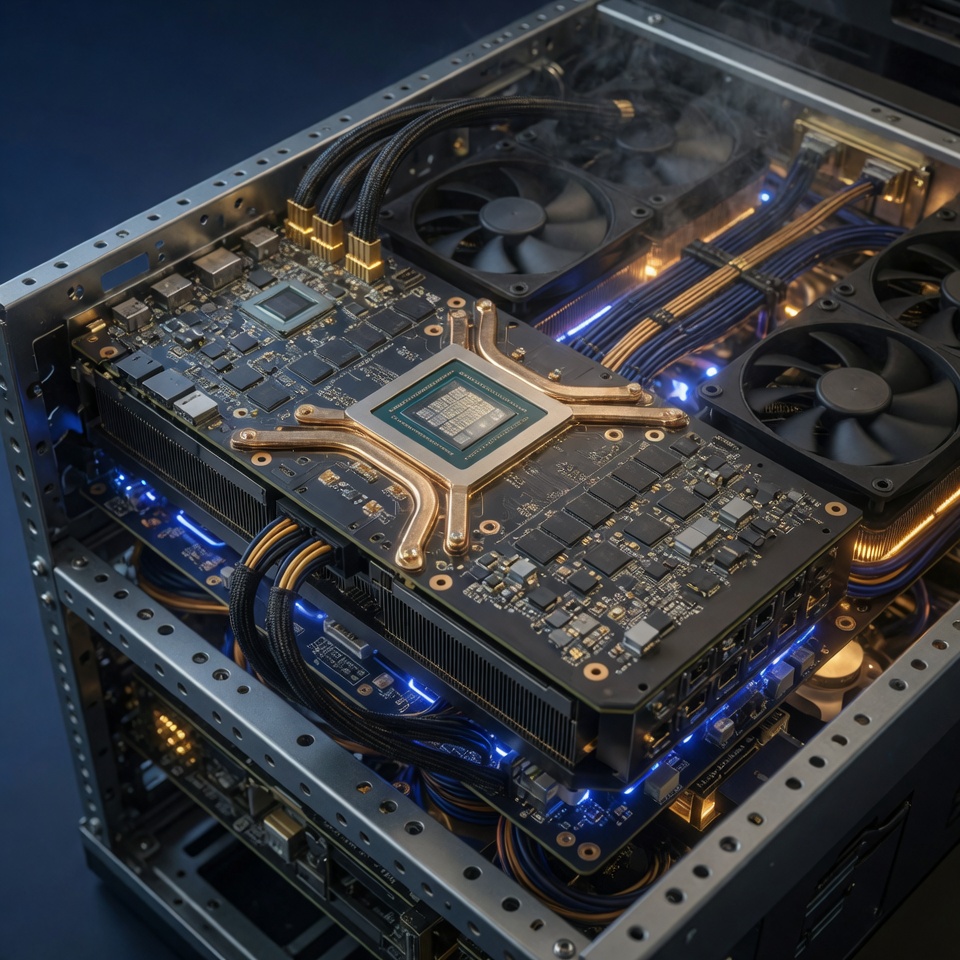
The abstract idea of a compute queue becomes concrete when you look at the hardware itself. Each of these cards represents months of manufacturing, packaging, and supply chain effort that cannot be rushed.
When demand outpaces how fast these can be built and deployed, the order in which buyers commit becomes the practical mechanism that decides who gets served first.
What early access does not promise
Early access is easy to misread as a shortcut to a result. It is not. Holding scarce hardware sooner can mean more flexibility and a wider set of choices, but it carries real costs and risks, and it never guarantees an outcome. Operational benefits are not guaranteed and depend on utilization, uptime, demand, costs, hardware performance, and market conditions.
The honest framing is about options, not promises. Acting early may widen the choices in front of you, and it may secure access that later buyers cannot get as easily. It does not remove uncertainty, it does not predict the market, and it should not be sold as if it does. Anyone who frames early access as a sure thing is overstating what a queue can offer.
Early is not the same as rushed
There is a difference between recognizing that timing matters and feeling pressured to act immediately. Understanding a queue should make you more deliberate, not more impulsive. The goal is to decide on your own timeline, with a clear view of the trade-offs, rather than defaulting into either rushing or waiting without thinking about it.
It is also worth remembering that early access is only valuable if the rest of the picture fits your goals. Securing a position in a scarce resource you do not actually want is not an advantage. The point is to make timing a conscious input into a decision, alongside cost, risk, and purpose, rather than the only thing that drives it.
From understanding access to holding hardware
If early access to scarce compute matters to your goals, one practical route is owning a physical NVIDIA machine that a professional team operates on your behalf. You hold the scarce asset, and the operator handles power, cooling, monitoring, and connections to demand. Golden Core Mining works this way, and you can read how it functions on our managed GPU ownership page.
Decide on your own timeline and for your own reasons. Owning hardware involves real costs and risks, and none of the benefits are guaranteed. Understanding why timing matters is meant to support a clear decision, not to apply pressure toward one.
References and data
- Training compute of frontier AI models grows by 4 to 5x per year. Epoch AI. May 2024.
- Energy and AI. International Energy Agency (IEA). April 2025.
- Key Questions on Energy and AI. International Energy Agency (IEA). 2025.
Questions about early access to compute
Because access to scarce hardware is allocated in roughly the order buyers commit. Early commitments are served from existing capacity, while later ones wait for facilities still being built. That is about position in line, not about predicting prices or demand.
Several inputs at once: advanced GPUs, electrical power and grid interconnection, purpose-built data center space, and the skilled teams to operate it all. Each has its own queue, and early commitments help secure a place in each.
No. Acting early can mean more options and flexibility, but it carries real costs and risks. Operational benefits are not guaranteed and depend on utilization, uptime, demand, costs, and market conditions.
Not necessarily. Understanding that timing matters should make a decision more deliberate, not more rushed. Early access is only valuable if owning hardware fits your goals, timeline, and tolerance for risk in the first place.
Options include renting cloud GPU time or owning physical hardware that a professional team operates. Owning means holding the scarce asset itself rather than competing for it later. Outcomes are never guaranteed in either case.
Talk with us about AI infrastructure ownership
Share your name, phone, email, and which managed device tier interests you. We will reach out with a clear walkthrough. No pressure.
Request received
Thank you. We will contact you at the phone number or email you provided.
Thinking about a position in scarce AI compute?
Talk through what owning managed NVIDIA GPU hardware would look like, with no pressure and straight answers.
Operational benefits are not guaranteed and depend on utilization, uptime, demand, costs, hardware performance, and market conditions.