Article on timing
Waiting versus acting on AI hardware
Waiting and acting both carry trade-offs. Neither is automatically right. Here is a balanced look at each side so you can make a deliberate decision, not a rushed one.

Key takeaways
- Waiting is not neutral. It is a choice with its own trade-offs in a scarce, fast-moving market.
- Acting early can mean more options, but it carries real costs and operational responsibilities.
- The right answer depends on your goals, your timeline, and your tolerance for uncertainty.
- Neither waiting nor acting guarantees an outcome.
Two real choices, not one obvious answer
It is tempting to frame timing as a single correct move, as if there were a right answer hiding behind the question. The honest version is that both waiting and acting are real choices, each with costs and benefits. The goal is not to pick the option that sounds bolder or safer. It is to understand the trade-offs clearly enough to decide on purpose.
This matters more in a scarce, fast-growing field than it would in a calm market. When supply is constrained and demand compounds, the consequences of each choice are larger, because the landscape can shift meaningfully in the time you spend deciding. The same decision that would be low stakes in a stable market becomes higher stakes here.
So the right framing is not waiting versus acting as good versus bad. It is two paths, each with a cost, and the work is weighing them against your own situation rather than against a slogan.
Waiting and acting, side by side
| Consideration | Waiting | Acting now |
|---|---|---|
| Access to scarce hardware | May face longer queues as capacity is claimed | Position secured sooner, subject to availability |
| Cost certainty | Prices and availability may change in either direction | Costs are committed earlier, with less flexibility later |
| Operational responsibility | No hardware to manage yet | Real responsibility for running or having hardware run |
| Information | More time to learn before deciding | Decision made with current, incomplete information |
| Flexibility | Capital and options stay open | Capital committed, but a position is held |
Why waiting is not free
Most decisions can wait at little cost, which is why waiting feels safe by default. Compounding markets are different. Epoch AI finds that training compute for frontier AI models has grown roughly 4 to 5 times per year since 2010, and the International Energy Agency projects data centre electricity demand to more than double by 2030. When demand grows that fast and supply is slow to build, time has a price even when nothing visible changes from one day to the next.
The cost of waiting in this setting is mostly about position. As capacity is claimed by earlier buyers, the queue for what remains can lengthen, and the most accessible options can narrow. That is not a loss you can point to on a statement. It is the quiet erosion of choices that were available earlier.
None of this means waiting is wrong. It means waiting is a decision with consequences, not a way to avoid deciding. Recognizing that is the first step toward choosing deliberately rather than drifting into a default.
Why acting carries its own weight
Acting early is not a free win either, and it would be dishonest to present it that way. Committing to hardware means committing capital and accepting operational responsibility, whether you run the machine yourself or have a professional team run it. It also means deciding with the information available today, which is always incomplete, and accepting that conditions may change after you commit.
Above all, acting early does not guarantee a result. Operational benefits are not guaranteed and depend on utilization, uptime, demand, costs, hardware performance, and market conditions. The case for acting is about options and position, never about a promised payoff. Anyone who tells you otherwise is selling certainty that does not exist in this market.
Acting means owning a real operational reality
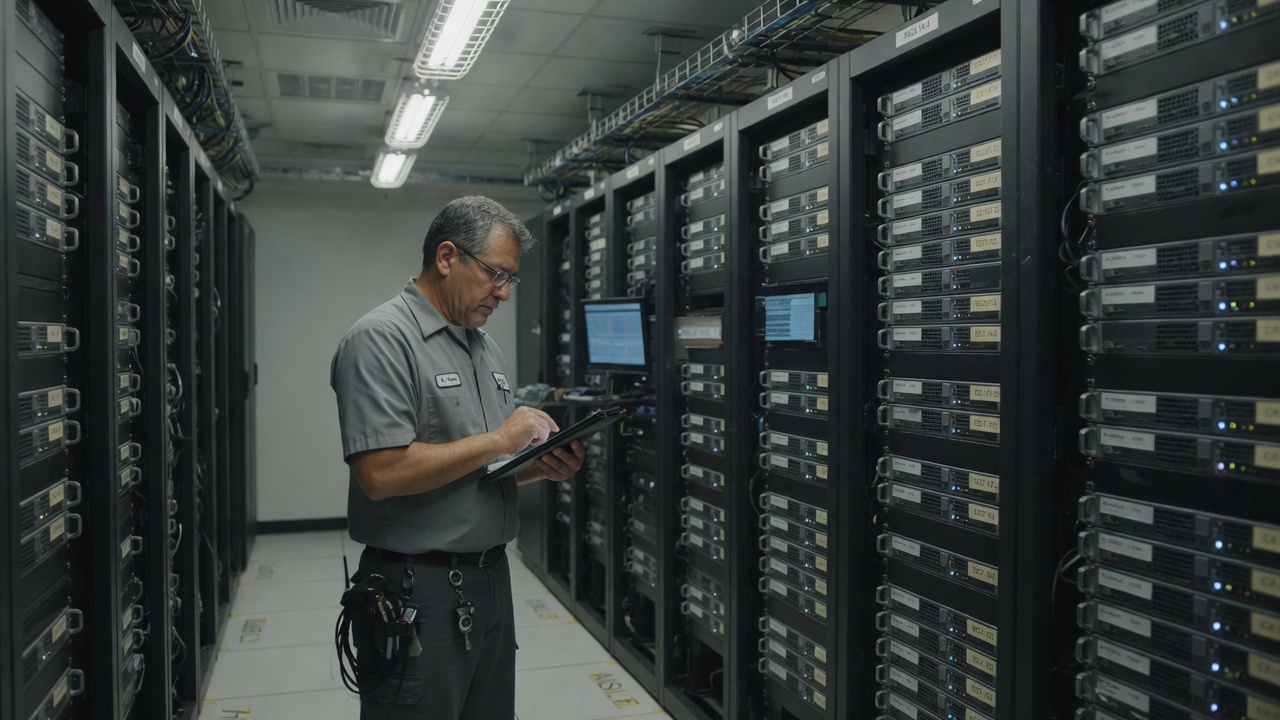
It helps to picture what acting actually involves. Behind any decision to own hardware is a physical machine that must be hosted, powered, cooled, monitored, and maintained over time.
That operational reality is part of the cost of acting, and it is the reason many owners choose a managed model where a professional team handles it rather than doing it alone.
Questions that point toward one path or the other
What is your timeline?
If your goals are years out and flexible, waiting may cost little. If you want a position while access is realistic, acting deserves more weight.
How much certainty do you need?
If you need a clear picture before committing, waiting buys information. If you accept that decisions are always made with incomplete data, acting becomes feasible.
What is your tolerance for cost and risk?
Owning commits capital and carries risk. If that is uncomfortable, the sidelines may suit you, since outcomes are never guaranteed either way.
Do you want to operate hardware?
If running infrastructure yourself is unappealing, a managed model can make acting realistic without the hands-on burden.
From weighing the choice to taking a position
If you weigh the trade-offs and decide a position fits your goals, one practical route is comparing owning versus renting compute and, if owning suits you, holding a managed NVIDIA machine that a professional team operates. Golden Core Mining offers that managed model, and you can read how owning compares to renting on our own versus rent GPU compute page.
Decide on your own timeline and for your own reasons. Owning hardware carries real costs and risks, and none of the benefits are guaranteed. The purpose of weighing waiting against acting is clarity, so that whichever path you choose, you choose it on purpose rather than by default.
References and data
- Training compute of frontier AI models grows by 4 to 5x per year. Epoch AI. May 2024.
- Energy and AI. International Energy Agency (IEA). April 2025.
Questions about waiting versus acting
No. Acting early can mean more options and an earlier position, but it commits capital and operational responsibility, and it never guarantees an outcome. Waiting buys time to learn but carries the cost of a longer queue in a scarce market. The right answer depends on your goals.
Because in a field where demand compounds several times per year and supply is slow to build, time has a price. As capacity is claimed by earlier buyers, the options that remain can narrow. Waiting is a real decision with trade-offs, not a way to avoid deciding.
Acting means committing capital and accepting that a real machine has to be hosted, powered, cooled, monitored, and maintained. Many owners choose a managed model so a professional team handles that operational reality rather than doing it themselves.
No. Decisions are always made with incomplete information, and operational benefits are not guaranteed and depend on utilization, demand, costs, and market conditions. Acting changes your position, not the underlying uncertainty.
Weigh your timeline, your need for certainty, your tolerance for cost and risk, and whether you want to operate hardware at all. Those questions usually point more clearly toward waiting or acting than any general rule can.
Talk with us about AI infrastructure ownership
Share your name, phone, email, and which managed device tier interests you. We will reach out with a clear walkthrough. No pressure.
Request received
Thank you. We will contact you at the phone number or email you provided.
Weighing whether to act on AI hardware?
Talk through owning versus renting managed GPU compute and decide on your own timeline, with no pressure.
Operational benefits are not guaranteed and depend on utilization, uptime, demand, costs, hardware performance, and market conditions.