Article on AI infrastructure
The data center buildout race
Chips alone do not run AI. They need buildings, power, and cooling. Here is why the data center buildout has become a race, with real data.
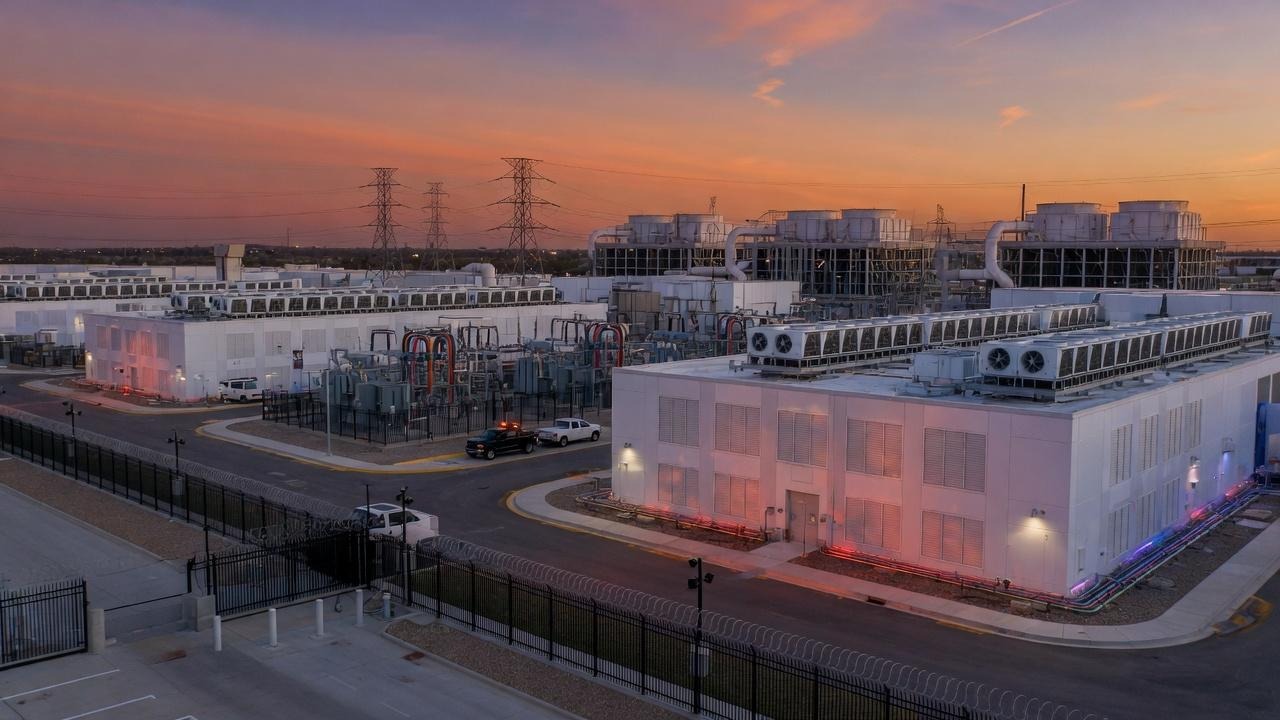
Key takeaways
- Data centres used about 415 TWh worldwide in 2024 and could more than double to around 945 TWh by 2030, according to the IEA.
- U.S. data center electricity could reach 325 to 580 TWh by 2028, according to Lawrence Berkeley National Laboratory.
- Land, grid connections, and cooling take years to build, so capacity lags demand.
- Access to operating capacity has become almost as valuable as the chips themselves.
Why everyone is racing to build capacity
A GPU sitting in a warehouse does no work. To turn chips into useful AI compute, you need a data center: a building with dense power delivery, heavy cooling, fast networking, and round-the-clock operations. As demand for AI has surged, the shortage has shifted from just chips to the places that can actually run them.
That is why a global buildout is underway. Operators are racing to add capacity because the bottleneck is increasingly physical space with the right power and cooling, not only the hardware itself. A company can hold a stockpile of accelerators and still be unable to deploy them without somewhere to put them.
The race has a clear logic. Whoever brings working capacity online first can serve demand that competitors cannot reach yet, and demand for AI services has been arriving faster than buildings can be finished.
What the data shows
415 TWh
Electricity used by data centres worldwide in 2024, about 1.5 percent of global supply, according to the IEA.
Source: International Energy Agency (IEA), April 2025
945 TWh
Projected global data centre electricity by 2030, more than double the 2024 level, according to the IEA.
Source: International Energy Agency (IEA), April 2025
325 to 580 TWh
Projected U.S. data center electricity by 2028, according to Lawrence Berkeley National Laboratory.
Source: Lawrence Berkeley National Laboratory, December 2024
What slows the buildout down
Building a modern data center is a multi-year project. It needs land in the right place, a grid connection that can deliver large and steady power, water or other cooling capacity, and skilled teams to operate it. Each of these can become the limiting factor, and they rarely line up neatly.
Power is often the hardest. Lawrence Berkeley National Laboratory projects U.S. data center electricity could reach 325 to 580 TWh by 2028, and connecting that much new load to the grid takes planning and time. A site can have approvals and hardware and still wait on power for a year or more.
These constraints compound. A facility might secure land quickly but wait on a substation upgrade, or finish construction but lack the skilled operators to bring it fully online. The slowest piece sets the pace for the whole project.
What goes into a finished facility
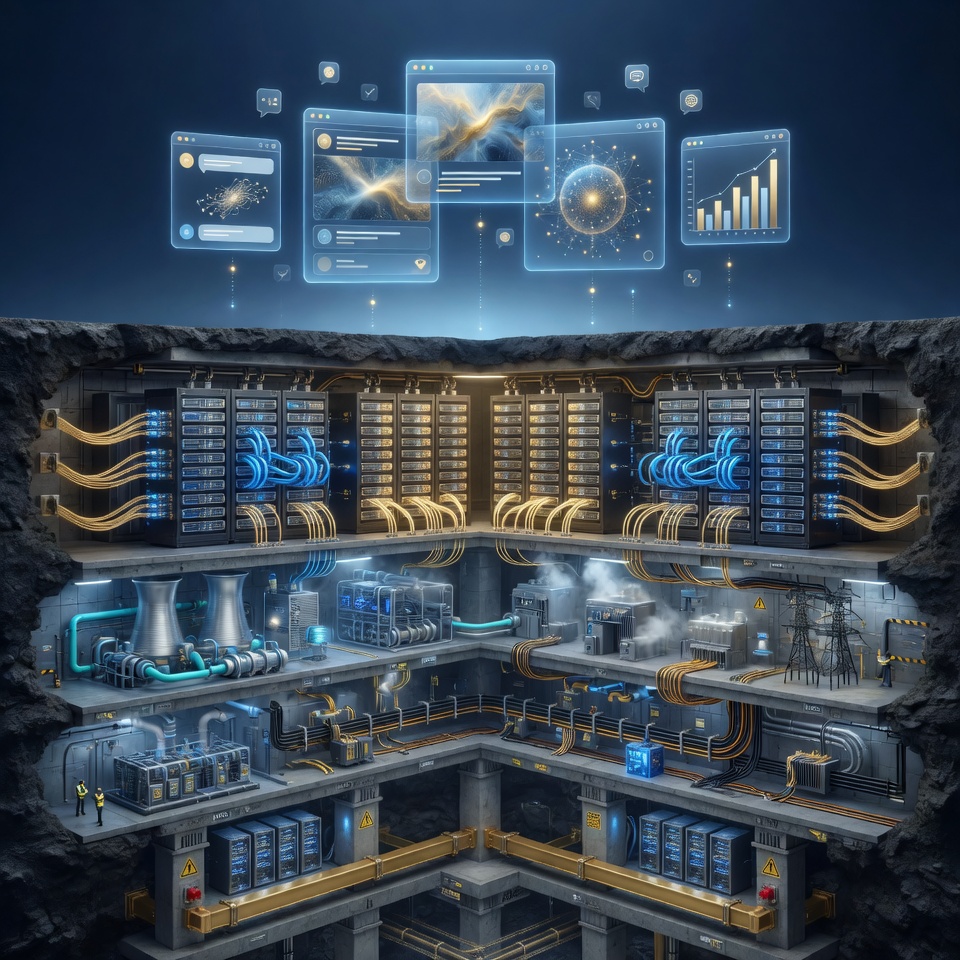
A data center is far more than a room full of servers. This cutaway view shows the layers a buildout has to assemble: power distribution, cooling loops, networking, and the racks themselves. Coordinating all of them is why bringing new capacity online takes years rather than months.
Why capacity clusters in a few places
Because the right mix of power, land, cooling, and connectivity is rare, capacity tends to concentrate in specific regions. The IEA notes the United States accounted for about 45 percent of global data centre electricity in 2024, a sign of how clustered the buildout has become.
This concentration means access matters. Having a place inside a well-run, well-located facility is its own advantage, separate from owning the chips. As prime locations fill up, the value of an existing spot with secured power only rises.
Concentration also brings friction. When capacity clusters in a few regions, those areas face rising pressure on local grids, water, and community patience, which can slow new approvals. The result is a push to find new locations with spare power, sometimes far from existing hubs, and a premium on facilities that already have their power and permits in hand.
The stages of bringing capacity online
- Secure land and power. Operators first lock in a site with access to a grid connection capable of delivering large, steady power. This step alone can take years of planning and approvals.
- Build the shell and systems. Construction adds the building, power distribution, and cooling infrastructure. The cooling design has to match the heat the planned hardware will produce.
- Install and network hardware. Servers are racked, cabled, and connected to high-speed networking. Testing confirms the systems run reliably under load before going live.
- Operate around the clock. Skilled teams monitor, maintain, and keep the hardware busy. Without continuous operations, even a finished facility cannot deliver dependable compute.
Why faster is not always better
With so much pressure to bring capacity online, there is a temptation to build fast and worry about the details later. That rarely pays off. A facility rushed into service with undersized cooling or thin operations can throttle hardware, waste power, and suffer downtime that erases the advantage of arriving early.
The operators who do well tend to balance speed with durability. They secure power and cooling that match the hardware, design for the density AI demands, and staff for round-the-clock operations from the start. Building it right the first time avoids costly retrofits and keeps expensive hardware productive.
This is why the buildout is as much about engineering discipline as raw construction speed. The goal is not just a building, but a facility that can run dense AI hardware reliably for years, which is a harder and more valuable thing to deliver.
Why hosting access is part of the asset
If operating capacity is as scarce as chips, then access to a professionally run data center is a real part of what makes hardware useful. The managed ownership model is built around this: you own the physical GPU hardware, and a team hosts and operates it inside American data centers with the power and cooling already in place.
This is also why hosting cannot be treated as a commodity afterthought. A facility with secured power, sound cooling, and capable operators is the product of the same multi-year race described here. Being inside one means you are not waiting in the queue for capacity that has not been built yet.
Our service on data center GPU hosting explains how that hosting works. It does not remove the uncertainty that comes with any infrastructure. Owning hardware does not guarantee any result. Operational benefits are not guaranteed and depend on utilization, uptime, demand, costs, hardware performance, and market conditions.
References and data
- Energy and AI. International Energy Agency (IEA). April 2025.
- 2024 United States Data Center Energy Usage Report. Lawrence Berkeley National Laboratory. December 2024.
Common questions about the data center buildout
Chips need buildings with dense power, heavy cooling, and operations to do useful work. As AI demand surged, operating capacity became a bottleneck, so operators are racing to add data centers that can actually run the hardware.
Land, grid power, cooling, and skilled operations all take years to assemble. Power is often the hardest constraint, since connecting large new loads to the grid requires planning and time, and the slowest piece sets the pace.
A modern facility is a multi-year project. Securing land and power can take years on its own, followed by construction, hardware installation, testing, and staffing before it delivers dependable compute.
The right combination of power, land, cooling, and connectivity is rare, so capacity clusters in a few regions. The IEA notes the U.S. accounted for about 45 percent of global data centre electricity in 2024.
Increasingly, yes. A chip with nowhere to run is not working compute. Access to a well-located, well-run facility with secured power has become a real part of what makes hardware valuable.
Talk with us about AI infrastructure ownership
Share your name, phone, email, and which managed device tier interests you. We will reach out with a clear walkthrough. No pressure.
Request received
Thank you. We will contact you at the phone number or email you provided.
Want hardware that already has a home?
Talk through what owning managed NVIDIA GPU hardware inside an American data center would look like, with no pressure.
Operational benefits are not guaranteed and depend on utilization, uptime, demand, costs, hardware performance, and market conditions.