Article on AI energy
Power is the new bottleneck for AI
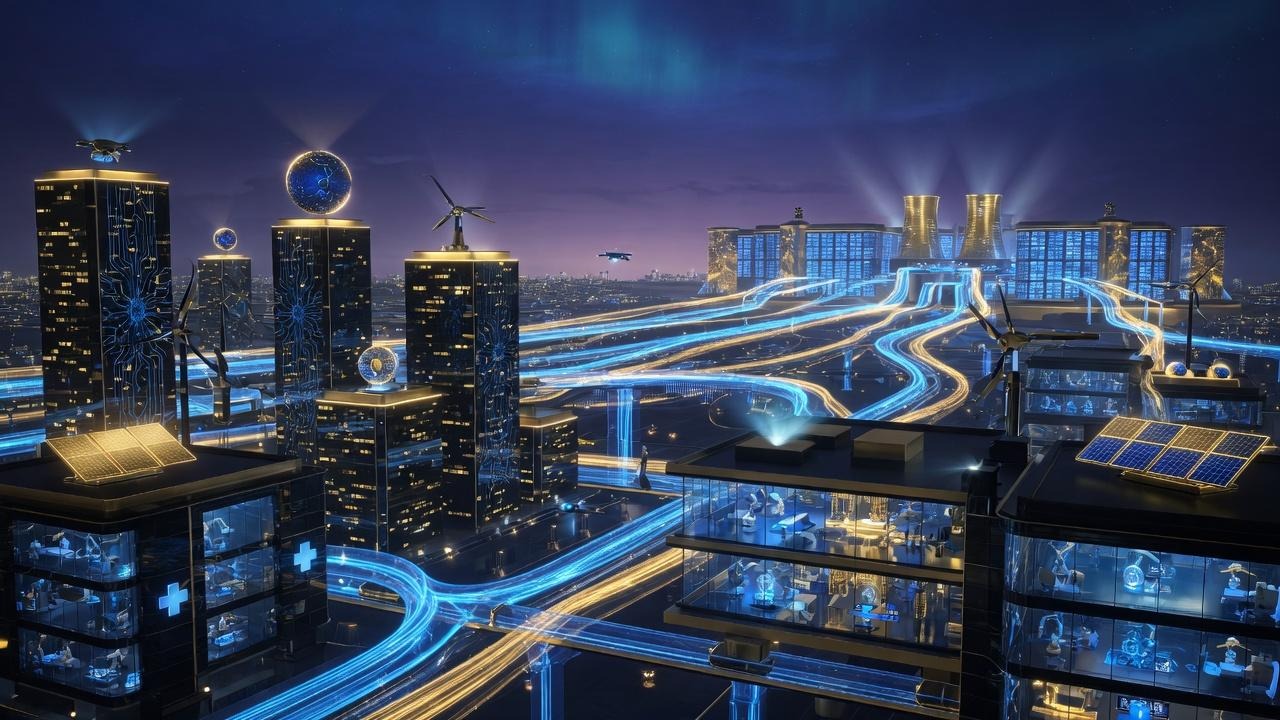
Everyone talks about chip shortages. The quieter constraint is electricity. AI hardware needs enormous, reliable power, and building that capacity takes years, not weeks.
Key takeaways
- Data center electricity demand is projected to more than double by 2030, according to the IEA.
- U.S. data center power use rose to 176 TWh in 2023 and could reach 325 to 580 TWh by 2028, per Lawrence Berkeley National Laboratory.
- Power, grid connections, and cooling take years to build, so capacity, not only chips, now limits how fast AI can grow.
- Access to professionally powered and cooled facilities has become almost as valuable as the chips themselves.
Why electricity became the real constraint
For most of the AI boom, the story was about chips. The phrase on everyone's lips was the shortage of advanced GPUs, and that shortage is real. Yet a quieter constraint has moved to the front of the conversation. A GPU you cannot power is just an expensive paperweight. AI hardware draws heavy, continuous electricity, and a single large cluster can consume as much power as a small town. The chips can sit on a loading dock, but until there is a facility with the energy and cooling to run them, they produce nothing.
The International Energy Agency projects data centre electricity demand to more than double to around 945 TWh by 2030. That is not a gentle increase. It is a structural shift in how much of the world's electricity flows toward computation. When demand for power climbs that steeply and the supply of power expands slowly, the binding constraint stops being silicon and starts being the grid.
This is the part of the AI buildout that does not make headlines, because it is unglamorous. Substations, transformers, transmission lines, and cooling loops are not exciting. But they are now the rate limiter. The chips set the ceiling on what is theoretically possible. The power available decides what actually runs.
What the energy data shows
945 TWh
Projected global data centre electricity demand by 2030, more than double the 2024 level, according to the IEA.
Source: International Energy Agency (IEA), April 2025
6.7 to 12%
Share of U.S. electricity that data centers could use by 2028, according to Lawrence Berkeley National Laboratory.
Source: Lawrence Berkeley National Laboratory, December 2024
100+ MW
Power drawn by the largest single AI training runs today, according to Epoch AI.
Source: Epoch AI, 2025
Facilities cannot be built overnight
Lawrence Berkeley National Laboratory estimates that U.S. data center electricity use rose to 176 TWh in 2023, up from roughly 58 TWh in 2014, and could reach between 325 and 580 TWh by 2028. Meeting demand on that scale means new generation, new grid connections, new substations, and new cooling, none of which appear quickly. A new high density facility is a multi-year project involving land, permits, power agreements, construction, and commissioning before a single GPU comes online.
Epoch AI reports that the power required for frontier training runs has been growing roughly 2.2 times per year, with the largest runs now exceeding 100 MW and potentially reaching several gigawatts by 2030. A gigawatt is the output of a large power plant. When individual computing projects start to rival power stations in their appetite, electricity stops being a line item and becomes the gating factor for the entire field.
This is why access to professionally powered, cooled, and connected data center capacity has become almost as valuable as the chips themselves. Owning hardware without a place to run it solves only half of the problem. The other half, reliable power at scale, is the part that takes years and serious capital to secure.
The four hard parts of powering AI
Generation
Enough electricity has to be produced in the first place. New plants and renewable projects take years to plan, permit, and connect, and they compete with every other user on the grid.
Transmission
Power has to reach the site. Substations, transformers, and high voltage lines are long lead-time equipment, and grid interconnection queues in many regions now stretch for years.
Density
Modern AI racks pack enormous power into a small footprint. Delivering tens of kilowatts to a single rack reliably is an engineering problem older facilities were never designed to solve.
Cooling
Every watt that goes into a GPU comes back out as heat. Removing that heat at scale, increasingly with liquid cooling, is now inseparable from the power problem itself.
Cooling and power are the same problem
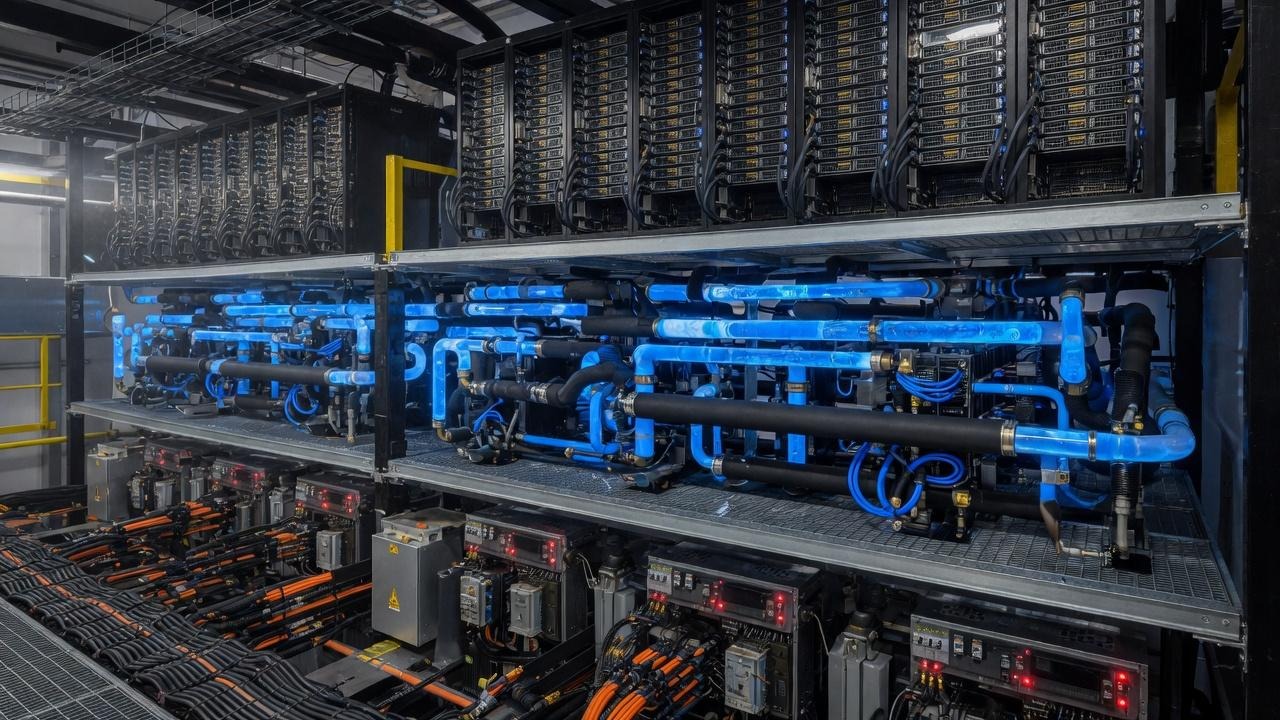
It is easy to picture the power problem as a single number on an electricity bill. In practice it is physical plumbing and steel. The same density that makes AI racks powerful also makes them run hot, so the cooling system has to scale in lockstep with the power feed.
This is one reason home setups and improvised spaces struggle with serious AI hardware. The electricity, the heat, and the reliability all have to be solved together, which is precisely what a purpose-built facility is designed to do.
Two common misconceptions about AI and power
The first misconception is that more efficient chips will simply solve the problem. Efficiency does improve, and each new generation of hardware does more work per watt. But efficiency gains tend to be met with even larger workloads, so total power demand keeps climbing rather than falling. Better chips raise the ceiling, they do not remove the constraint.
The second misconception is that power is somebody else's problem. For anyone who wants to run AI hardware, where that hardware lives is now a first-order question. A machine in a region with constrained power, slow interconnection, or inadequate cooling will spend time idle no matter how capable the silicon is. The location and the facility are not background details. They are central to whether the hardware can do useful work at all.
Why this favors professional operations
Because power and facilities are the constraint, running AI hardware inside a professional data center matters more than ever. That is the model behind managed GPU ownership. You own the physical hardware, and a facility with serious power, grid connections, and cooling runs it on your behalf, handling the parts that are hardest and slowest to build alone. Golden Core Mining operates this way inside American data centers, connecting owned hardware to the power and demand it needs.
None of this guarantees any outcome. Owning hardware carries real costs and responsibilities, and the value it produces depends on many factors outside anyone's control. Operational benefits are not guaranteed and depend on utilization, uptime, demand, costs, hardware performance, and market conditions. The honest point is narrower. In a world where power is the bottleneck, where your hardware runs is no longer an afterthought.
References and data
- Energy and AI. International Energy Agency (IEA). April 2025.
- 2024 United States Data Center Energy Usage Report. Lawrence Berkeley National Laboratory. December 2024.
- How much power will frontier AI training demand in 2030?. Epoch AI. 2025.
Questions about AI and power
AI hardware needs heavy, continuous electricity, and building the power, grid connections, and data centers to supply it takes years. So capacity, not just chip supply, limits how fast AI can grow. The IEA projects data centre electricity demand to more than double by 2030, while new capacity is slow to build.
The IEA estimates data centres used about 415 TWh globally in 2024, projected to more than double to around 945 TWh by 2030. In the U.S., Lawrence Berkeley National Laboratory estimates use rose to 176 TWh in 2023 and could reach 6.7 to 12 percent of national electricity by 2028.
Not on their own. Each new generation of hardware does more work per watt, but those efficiency gains are usually met with even larger workloads. Total power demand keeps rising, so better chips raise the ceiling rather than remove the constraint.
Every watt that flows into a GPU comes back out as heat. Removing that heat at scale, increasingly with liquid cooling, requires its own infrastructure that has to scale alongside the power feed. Power and cooling are effectively two sides of the same engineering problem.
A capable GPU in a location with constrained power, slow grid interconnection, or inadequate cooling will sit idle. Reliable, professionally managed power and cooling are what let hardware do useful work, which is why facility access has become almost as important as the chips.
Talk with us about AI infrastructure ownership
Share your name, phone, email, and which managed device tier interests you. We will reach out with a clear walkthrough. No pressure.
Request received
Thank you. We will contact you at the phone number or email you provided.
Want hardware run where the power is?
Talk through managed GPU ownership in professionally powered and cooled U.S. data centers, with no pressure and straight answers.
Operational benefits are not guaranteed and depend on utilization, uptime, demand, costs, hardware performance, and market conditions.