Article on AI and energy
How much electricity does AI use
AI runs on electricity, and the amount is large and rising. Here is what the latest data shows about AI power use, in plain language, with real sources you can check.

Key takeaways
- Data centres used about 415 TWh of electricity worldwide in 2024, roughly 1.5 percent of global supply, according to the IEA.
- U.S. data center electricity use rose to 176 TWh in 2023, up from about 58 TWh in 2014, according to Lawrence Berkeley National Laboratory.
- The IEA projects global data centre electricity could more than double to around 945 TWh by 2030.
- Electricity is now a core constraint on how fast AI can grow, not an afterthought.
Why AI runs on electricity
Every AI answer, image, or model update is the result of billions of mathematical operations running on specialized chips. Those chips draw power while they work, and the buildings that hold them draw still more power for networking, storage, and cooling. The result is that artificial intelligence is, at the physical level, an electricity story before it is anything else.
When people ask how much electricity AI uses, the honest answer is that it is hard to measure AI on its own, because AI shares data centers with ordinary cloud computing, storage, and streaming. The clearer picture comes from looking at total data center electricity, which has become one of the fastest growing parts of the power system and which researchers track carefully.
That framing matters because it keeps the discussion grounded. Instead of guessing at the cost of a single chat reply, it is more useful to look at measured totals from credible sources and watch how quickly they are changing.
What the data shows
415 TWh
Electricity used by data centres worldwide in 2024, about 1.5 percent of global supply, according to the IEA.
Source: International Energy Agency (IEA), April 2025
176 TWh
U.S. data center electricity use in 2023, up from about 58 TWh in 2014, according to Lawrence Berkeley National Laboratory.
Source: Lawrence Berkeley National Laboratory, December 2024
945 TWh
Projected global data centre electricity by 2030, more than double the 2024 level, according to the IEA.
Source: International Energy Agency (IEA), April 2025
What is pushing the numbers higher
Two trends sit behind the rising totals. The first is scale. Modern AI models are larger and more capable than earlier ones, and running them takes more compute per task. The second is adoption. As more people and companies use AI tools every day, the number of requests served keeps climbing, and each request consumes power.
The International Energy Agency notes that electricity use by accelerated AI servers has been growing around 30 percent per year. In the United States, Lawrence Berkeley National Laboratory projects that data center electricity could reach 325 to 580 TWh by 2028, depending on how fast the buildout continues. These are not distant forecasts. They describe a curve that is bending sharply right now.
There is also a feedback loop. As AI becomes more useful, it gets embedded in more products, which draws in more users, which raises the number of inference calls, which lifts power demand again. Each turn of that loop pushes electricity higher.
Where all that electricity actually goes
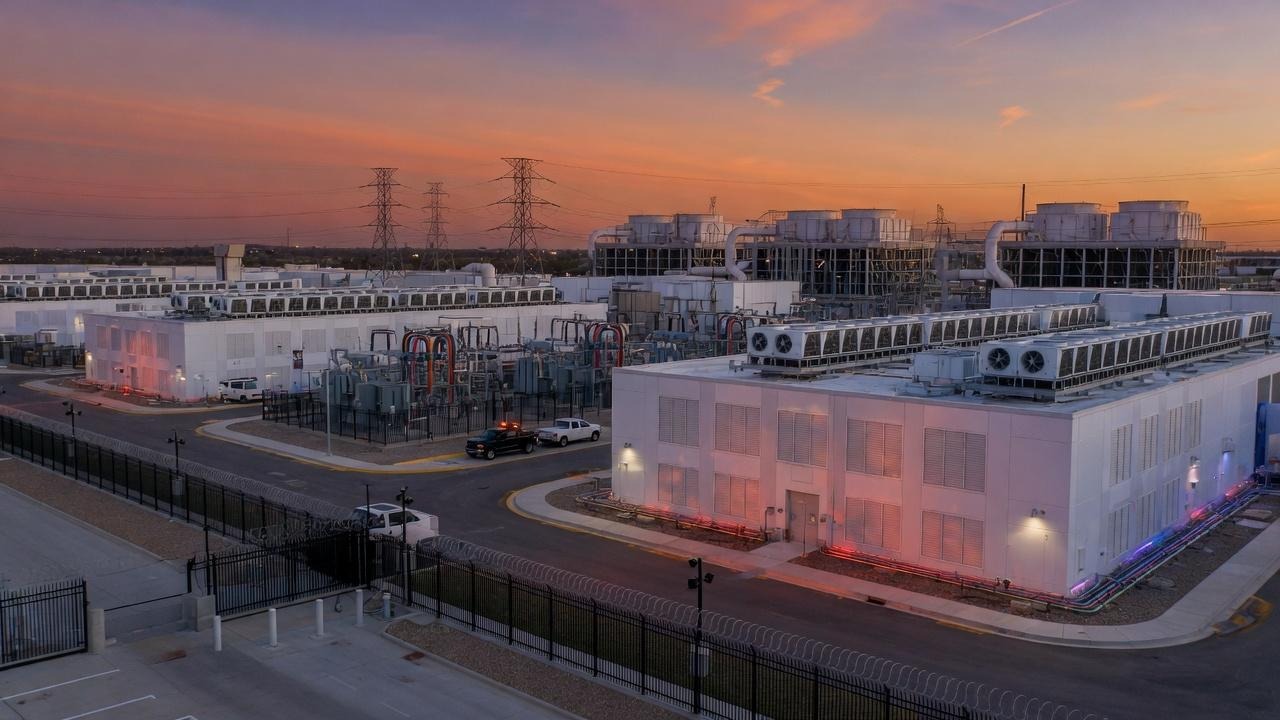
A single large AI campus can draw power on the order of a small city, and it does so continuously rather than in daily peaks. That steady, concentrated demand is why grid operators and energy researchers now track data centers so closely, and why a new facility can wait years for the power it needs.
Is this a lot of electricity
At about 1.5 percent of global electricity in 2024, data centres are still a modest slice of total demand. The reason the topic gets so much attention is the speed and the concentration. Demand is rising quickly, and it tends to cluster in a few regions where land, power, and connectivity come together.
That concentration is why electricity, not just chips, now shapes where and how fast AI can expand. A region can have hardware available and still wait years for the grid capacity to run it. The IEA notes that the United States alone accounted for roughly 45 percent of global data centre electricity in 2024, a sign of how uneven the map has become.
So the right way to read the numbers is less about the global percentage and more about local strain. In the places where AI capacity is being built, the demand is intense, fast-growing, and very real.
Three things people get wrong about AI power
It is mostly training
Training runs are large but happen occasionally. The steady drain is inference, the everyday running of finished models, which scales with the number of users.
One query is the right unit
The cost of a single query is tiny and hard to measure. Total data center electricity, tracked by the IEA and others, is the meaningful figure.
It will plateau on its own
Most projections show the opposite. The IEA expects global data centre electricity to more than double to around 945 TWh by 2030 as adoption widens.
What rising demand asks of the grid
Adding large new electricity loads is not as simple as plugging in. A data center that needs steady, heavy power requires new transmission, substation upgrades, and generation that can run around the clock. Those projects take years to plan and approve, which is why a site can sit ready with hardware while it waits for the grid to catch up.
This is also why location has become strategic. Operators look for places where power is available, affordable, and reliable, and where the local grid can absorb a large new customer without strain. The IEA notes that the United States accounted for roughly 45 percent of global data centre electricity in 2024, a sign of how the map is concentrating around regions that can deliver power at scale.
None of this means the growth stalls. It means the pace is set by the slowest physical input, and for now that input is increasingly power rather than chips. Understanding that shift is the key to reading where AI capacity will actually appear next.
Why power access shapes who can run AI hardware
Because electricity and cooling are real limits, simply owning GPU hardware is not enough. The hardware has to live somewhere with reliable power, proper cooling, and professional operations. This is the idea behind managed GPU ownership, where you hold the physical hardware and a dedicated team handles the power, cooling, and day-to-day running inside a data center.
This is also why location is part of the decision, not an afterthought. A facility with secured, reliable power in a region that can support it is far more useful than hardware sitting somewhere the grid cannot feed. The electricity story, in other words, runs straight through the question of where and how owned hardware actually lives.
If you want to see how that works, our service on GPU cooling and power explains the operational side in detail. None of it changes the basic uncertainty of any infrastructure. Owning hardware does not guarantee any result. Operational benefits are not guaranteed and depend on utilization, uptime, demand, costs, hardware performance, and market conditions.
References and data
- Energy and AI. International Energy Agency (IEA). April 2025.
- 2024 United States Data Center Energy Usage Report. Lawrence Berkeley National Laboratory. December 2024.
Common questions about AI electricity use
AI is hard to separate from other computing, but data centres as a whole used about 415 TWh of electricity in 2024, roughly 1.5 percent of global supply, according to the IEA. AI is one of the fastest growing parts of that total.
Most projections say yes. The IEA expects global data centre electricity to more than double to around 945 TWh by 2030, and Lawrence Berkeley National Laboratory projects strong U.S. growth through 2028, driven by larger models and wider adoption.
Lawrence Berkeley National Laboratory reports U.S. data center electricity rose to 176 TWh in 2023, up from about 58 TWh in 2014, and projects 325 to 580 TWh by 2028. The U.S. accounts for a large share of global data centre electricity.
Training runs are individually large but occasional. Inference, the everyday running of finished models, is the steady and growing drain because models are used millions of times a day. As adoption rises, inference becomes a larger share of total demand.
Because chips need reliable power and cooling to run, electricity capacity now limits where AI hardware can operate. That is why professional hosting and operations have become as important as the chips themselves.
Talk with us about AI infrastructure ownership
Share your name, phone, email, and which managed device tier interests you. We will reach out with a clear walkthrough. No pressure.
Request received
Thank you. We will contact you at the phone number or email you provided.
Curious how power and cooling actually get handled?
Talk through what owning managed NVIDIA GPU hardware inside a real data center would look like, with no pressure and straight answers.
Operational benefits are not guaranteed and depend on utilization, uptime, demand, costs, hardware performance, and market conditions.