Article on home hosting
The hidden cost of home GPU rigs
The sticker price of a home GPU rig is the smallest part of the bill. The real costs are electricity, cooling, downtime, and the hours you spend keeping it alive, and they keep arriving long after the purchase.
Key takeaways
- The purchase price is only the beginning of what a home rig actually costs.
- Electricity, cooling, and downtime are recurring costs that are easy to underestimate.
- Your own time spent on upkeep is a real cost, even when no invoice names it.
- A data center turns scattered hidden costs into one predictable operational line.
The purchase price hides the real bill
Buying a GPU machine feels like a one-time cost, a single number you can plan around. In reality it is the entry fee, not the whole price. The ongoing costs of running it, especially at the sustained load AI work demands, are where the money actually goes over the life of the hardware, and those costs rarely appear in the comparison people make before buying.
Those costs share an inconvenient property: they are easy to ignore at the moment of purchase and impossible to ignore once the machine is running day and night. Nothing on the receipt warns you about them, so they tend to arrive as a surprise on a monthly bill rather than as a line in the original decision. By the time they are obvious, the hardware is already bought and the spending is already committed.
Understanding the true cost of a home rig means counting everything that recurs, not just the thing you pay for once. When you do that honestly, the picture of running AI hardware at home looks very different from the picture you started with, and the gap between the two is exactly what catches people off guard.
The costs that keep coming
Electricity
A high-draw machine running continuously can dominate a home power bill, because the draw never pauses even when the visible work does. This is the single largest recurring cost for most home rigs.
Cooling
Removing constant heat means more air conditioning and higher bills, or accepting shortened hardware life as components age faster under sustained high temperatures.
Downtime
Every outage is lost work, and home setups have no redundancy. A tripped breaker or a failed fan stops everything until you notice and fix it.
Your time
Patching, monitoring, and repairs are hours you spend instead of a team. That time has a real value, even though no invoice ever names it.
What the hidden costs pay for
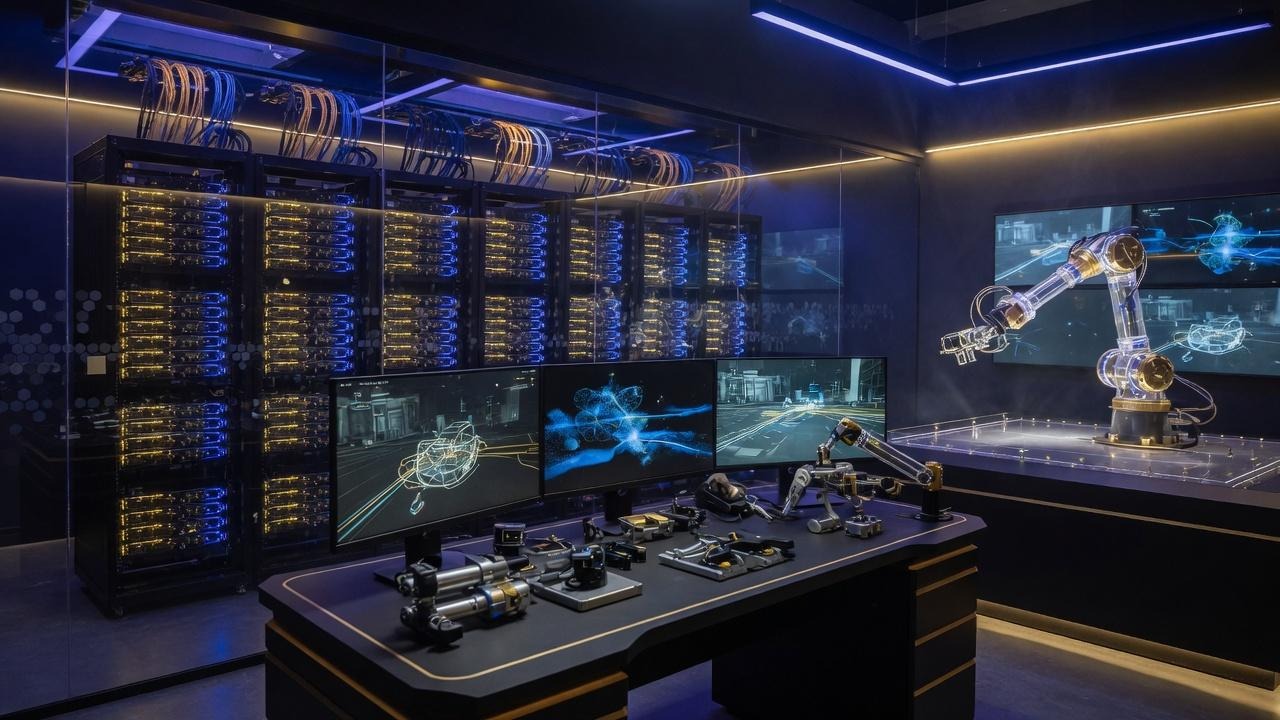
Most of the hidden costs of a home rig are really the cost of doing operations badly, one machine at a time. In a facility, those same functions, power, cooling, monitoring, and repair, are concentrated, professionalized, and spread across many machines, so each one is handled more efficiently than a lone owner ever could.
That is why a control room like this is the quiet answer to the home-rig cost problem. The work still has to happen, but it happens once, efficiently, for many owners at the same time, rather than landing on each owner individually as a separate set of bills and lost evenings.
Why power is the cost that dominates
176 TWh
U.S. data center electricity use in 2023, up from about 58 TWh in 2014, according to Lawrence Berkeley National Laboratory.
Source: Lawrence Berkeley National Laboratory, December 2024
~30%/yr
Growth rate of electricity use by accelerated AI servers, according to the IEA.
Source: International Energy Agency (IEA), April 2025
Why a data center changes the math
A professional facility buys power and cooling at scale, has redundancy so downtime is rarer and shorter, and runs operations as a service rather than as a side task. The per-machine economics of a serious AI setup are simply different in a building designed for it than in a house that was not, and that difference grows the longer and harder the hardware runs.
The reason comes back to those national-scale energy figures. Power is the dominant recurring cost of running AI hardware, and a facility purchases it at industrial scale and uses it more efficiently than a home ever could. Cooling, networking, and maintenance follow the same logic, because each one is cheaper per machine when it is shared across a building full of hardware rather than carried alone.
That is the logic behind managed ownership: you own the hardware, and the recurring operational burden moves to a team and a facility built to absorb it. The hidden costs do not vanish, but they stop being scattered surprises and become a known quantity you can plan around instead of a series of bills you did not see coming.
Why a home rig looks cheaper than it is
There is a simple psychological reason home rigs look like a bargain: the purchase price is concrete and immediate, while the running costs are diffuse and arrive later. The human mind weighs the visible number heavily and discounts the costs it cannot see yet, so the rig feels affordable at exactly the moment the decision is made.
The recurring costs also hide inside bills you already pay. A higher electricity bill blends into your normal usage, the extra air conditioning is hard to attribute precisely, and your own time never shows up anywhere at all. None of these line items announces itself as the cost of the rig, so the true total stays fuzzy unless you deliberately add it up.
Seeing through this is straightforward once you decide to. The trick is to treat the rig as a system with a monthly running cost, not as a single object you buy once. The moment you price the whole system honestly, the comparison with a managed model becomes far more even than the sticker prices alone suggest.
How to total the real cost before you buy
- Start with the hardware. Write down the purchase price of the machine and any accessories. This is the only number most people count, and it is usually the smallest.
- Add continuous power. Estimate the machine running at sustained load and multiply by your local electricity rate over a full year. This is typically the largest line.
- Add cooling and downtime. Include the extra cooling load and a realistic allowance for lost work during outages, since a home setup has nothing standing by to take over.
- Value your time. Estimate the hours per month you will spend on patching, monitoring, and repairs, and put a number on them. Then compare the total to a single managed operational fee.
Counting the real cost
If you are weighing a home rig, count electricity, cooling, downtime, and your time, not just the purchase. Then set that total next to managed ownership, where a fixed operational fee covers the work and the hardware lives in a facility built for it. Comparing a full running cost to a full running cost is the only fair way to make the choice.
Framed that way, the decision is less about the price tag on the box and more about who carries the recurring costs and the operations. For sustained AI work, that is usually the more important question, and it is the one the sticker price quietly hides.
Owning hardware in any form carries cost and risk. Operational benefits are not guaranteed and depend on utilization, uptime, demand, costs, hardware performance, and market conditions.
References and data
- 2024 United States Data Center Energy Usage Report. Lawrence Berkeley National Laboratory. December 2024.
- Energy and AI. International Energy Agency (IEA). April 2025.
Questions about home rig costs
Far more than the purchase price. Electricity, cooling, downtime, and your own time spent on upkeep are recurring costs that are easy to underestimate and tend to add up to more than the hardware over its life.
Continuous electricity. A high-draw machine running day and night never pauses its power use even when the visible work does, which is why power usually dominates the running cost of a home rig.
Because the purchase price is concrete and immediate while the running costs are diffuse and arrive later, often hidden inside bills you already pay. Your own time never shows up anywhere, so the true total stays fuzzy unless you deliberately add it up.
Facilities buy power and cooling at scale, share fixed costs across many machines, and reduce downtime with redundancy, which changes the per-machine economics for sustained AI work compared with a single home setup.
Yes. Patching, monitoring, and repairs are hours you spend instead of a team, and that time has a real value even though no invoice names it. Ignoring it makes a home rig look cheaper than it is.
Yes. Managed ownership lets you own the physical NVIDIA-powered machine while a professional team operates it, so the scattered hidden costs become one predictable operational line. Outcomes are never guaranteed.
Talk with us about AI infrastructure ownership
Share your name, phone, email, and which managed device tier interests you. We will reach out with a clear walkthrough. No pressure.
Request received
Thank you. We will contact you at the phone number or email you provided.
Skip the recurring home-rig burden.
Talk through managed ownership where a fixed fee covers power, cooling, and upkeep.
Operational benefits are not guaranteed and depend on utilization, uptime, demand, costs, hardware performance, and market conditions.