Article on AI infrastructure
The physical side of AI
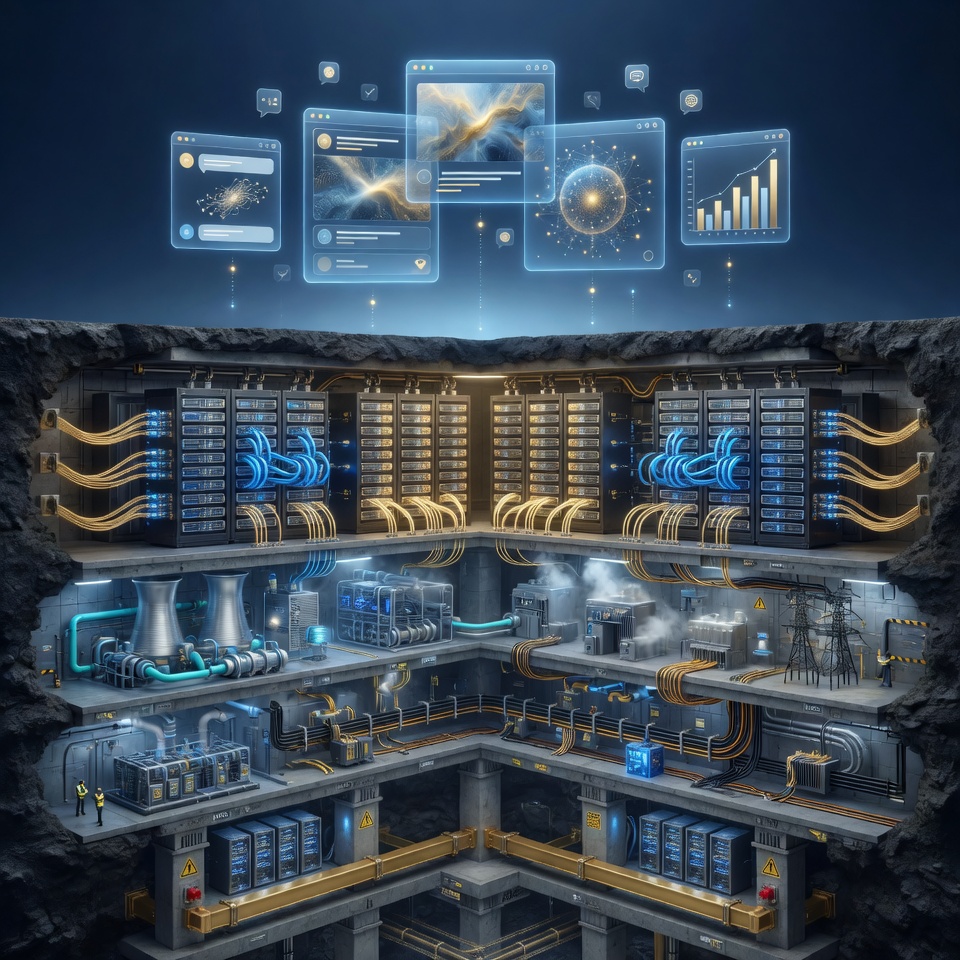
AI feels like software you reach through a screen, but underneath it is steel, silicon, power, and heat. Here is the physical side of AI, in plain language.
Key takeaways
- Every AI feature runs on physical hardware in real buildings that draw real power.
- Data centres used about 415 TWh of electricity worldwide in 2024, about 1.5 percent of global supply, according to the IEA.
- Chips, power, cooling, and operations are all physical limits on how fast AI can grow.
- Treating AI as only software hides the bottlenecks that actually shape access.
AI is more physical than it looks
Most people meet AI as text in a browser or a feature in an app. It feels weightless, like pure software. But behind every answer is a chain of physical things: a GPU drawing power in a server, a rack of those servers in a hall, a cooling system carrying away the heat, and a grid connection feeding it all.
Seeing that physical layer changes how the whole subject makes sense. The reasons AI is expensive, scarce, and concentrated in certain regions all come from the hardware, not the code. A clever model still cannot run without a powered, cooled machine somewhere in the world.
This is easy to forget because the software layer is the part we touch. But the limits that decide who can build and run AI live in the physical layer, which is why it is worth understanding in its own right.
The physical layers behind AI
Chips
GPUs do the parallel math behind AI. They are scarce, expensive, and depend on a complex global supply chain that cannot scale quickly.
Power
Those chips draw large, steady electricity. Grid capacity and connections take years to build, so power often limits where AI can run.
Cooling
The power chips draw becomes heat that must be removed. Cooling capacity caps how much compute a building can safely run.
Operations
Hardware needs monitoring, maintenance, and skilled teams to stay productive. Without operations, even good hardware sits idle or fails.
The physical footprint in numbers
415 TWh
Electricity used by data centres worldwide in 2024, about 1.5 percent of global supply, according to the IEA.
Source: International Energy Agency (IEA), April 2025
945 TWh
Projected global data centre electricity by 2030, more than double the 2024 level, according to the IEA.
Source: International Energy Agency (IEA), April 2025
The silicon under the software
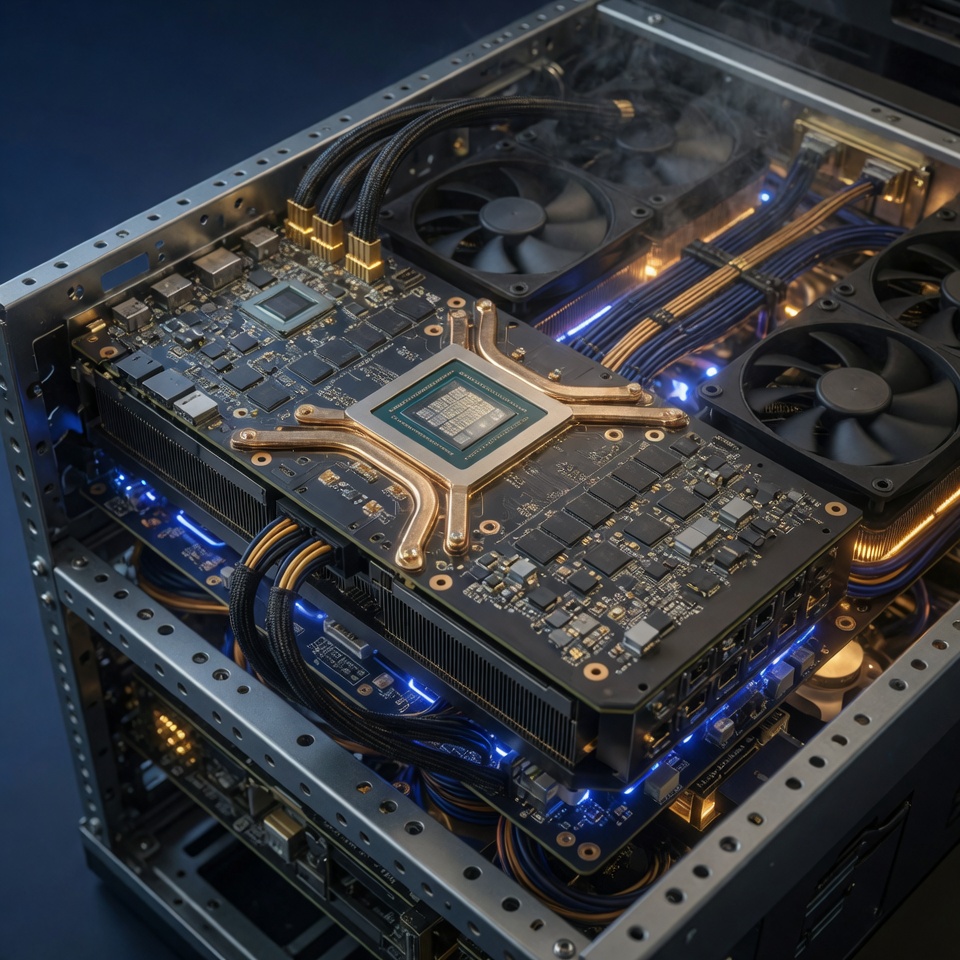
Strip away the app and the screen and this is what is left: physical accelerator cards drawing power and producing heat in a rack. Every AI answer ultimately traces back to silicon like this, which is why the physical layer sets the real limits on what AI can do and how fast it can grow.
Why the physical view matters
Treating AI as only software hides the bottlenecks that actually decide who gets access. The IEA reports data centres used about 415 TWh of electricity in 2024 and projects more than double that by 2030. Those are physical realities of power and buildings, not lines of code.
Once you see AI as infrastructure, the questions change. Instead of asking only which model is best, you start asking where the hardware lives, how it is powered, and who operates it. Those answers shape what is actually possible, and they explain why access tends to favor those who control physical capacity.
The physical view also makes the limits feel less abstract. A breakthrough in software can spread worldwide in days, but a new data center takes years, and a new fabrication plant takes longer still. That mismatch between how fast ideas move and how slowly hardware is built is the deep reason AI capability keeps running ahead of the capacity to deploy it.
What happens physically when AI answers you
- Your request travels. A prompt leaves your device and crosses the network to a data center where the model actually runs, often far from where you sit.
- A GPU does the math. An accelerator runs billions of operations to produce the response, drawing significant power for the fraction of a second it works.
- Heat is carried away. The power the chip used becomes heat, which the facility's cooling system removes so the hardware can keep running safely.
- Operations keep it running. Behind the scenes, monitoring and maintenance keep the hardware healthy and busy so it is ready for the next request.
Why AI has a geography
Software feels placeless, but the hardware behind AI sits in specific buildings in specific places. Those places are chosen for very physical reasons: available land, a grid that can deliver large steady power, water or a climate suited to cooling, fast network links, and access to skilled operators. Few locations offer all of these at once.
That is why AI capacity clusters rather than spreads evenly. The IEA notes the United States accounted for roughly 45 percent of global data centre electricity in 2024, a sign of how concentrated the physical map has become. Where the hardware lives shapes who can reach it quickly and who depends on distant facilities.
Geography also explains why access is not the same for everyone. Being near well-powered, well-run capacity is an advantage in itself, separate from owning chips. The physical map of AI is quietly becoming a map of who can build and run it.
Owning the physical layer behind AI
If AI ultimately rests on physical hardware, one direct way to hold a position in it is to own that hardware while professionals run it. The managed ownership model is built on this idea: you own physical NVIDIA-powered GPU machines, and a team sources, hosts, cools, monitors, and operates them inside American data centers.
The reason this split makes sense is that each physical layer demands real expertise. Sourcing scarce hardware, securing power, designing cooling, and keeping systems running around the clock are full-time disciplines. Separating ownership from operations lets an individual hold the asset without having to master every one of those layers personally.
Our service on managed GPU compute explains how the physical and operational sides come together. It does not promise any particular result. Owning hardware does not guarantee any outcome. Operational benefits are not guaranteed and depend on utilization, uptime, demand, costs, hardware performance, and market conditions.
References and data
- Energy and AI. International Energy Agency (IEA). April 2025.
Common questions about the physical side of AI
No. AI feels like software, but every feature runs on physical GPUs in real buildings that draw real power and produce heat. Chips, power, cooling, and operations are all physical layers behind any AI service.
Because the reasons AI is scarce, costly, and concentrated come from hardware, not code. The IEA reports data centres used about 415 TWh in 2024, a physical footprint that shapes where and how fast AI can grow.
Chips, power, cooling, and operations. Chips are scarce, power and grid capacity take years to build, cooling caps how much compute fits in a building, and skilled operations keep hardware productive.
Your request travels over the network to a data center, a GPU runs billions of operations to produce the answer, the cooling system removes the resulting heat, and operations teams keep the hardware healthy for the next request.
It shifts the questions from which model is best to where the hardware lives, how it is powered, and who runs it. Those physical answers decide what is possible and explain why access favors those who control real capacity.
Talk with us about AI infrastructure ownership
Share your name, phone, email, and which managed device tier interests you. We will reach out with a clear walkthrough. No pressure.
Request received
Thank you. We will contact you at the phone number or email you provided.
Want to own the physical layer behind AI?
Talk through what owning managed NVIDIA GPU hardware would look like, with no pressure and straight answers.
Operational benefits are not guaranteed and depend on utilization, uptime, demand, costs, hardware performance, and market conditions.