Article defining operational benefits
Understanding operational benefits
The phrase operational benefits gets used a lot in AI hardware ownership. Here is a plain definition, the factors that drive it up or down, and an honest explanation of why it is never guaranteed.

Key takeaways
- Operational benefits are what owned hardware can produce when it serves real compute demand.
- They rise and fall with utilization, uptime, demand, costs, and market conditions.
- Because those factors change, operational benefits are conditional, never promised.
- Understanding the drivers is the key to setting realistic expectations.
What operational benefits actually are
Operational benefits are the practical results that owned hardware can produce when it is put to work serving AI compute demand. When a machine runs useful workloads reliably, that activity can carry benefits to the owner. The phrase is deliberately broad because the results depend on activity, not on ownership alone.
The important word is can. Operational benefits are a possibility tied to real activity, not a fixed feature of ownership. They exist only when the conditions that drive them line up, and they shrink or disappear when those conditions do not.
This is why the term is used instead of words that imply a promise. Owning the hardware is certain; the benefits it might produce are not. Keeping those two ideas separate is the foundation of an honest discussion.
The factors that move operational benefits
Utilization
How much of the time the hardware is actually doing useful work for paying demand.
Uptime
How reliably the machine stays available, which depends on operation and maintenance.
Demand and pricing
How much the market wants compute and what it is willing to pay at any given time.
Costs
The power, cooling, and operating costs that sit against any benefit the hardware produces.
How the drivers interact in practice
These factors do not act alone. High utilization means little if pricing is weak, and strong pricing means little if the machine is down. A benefit appears only when several conditions hold at once: the hardware is available, it is doing paid work, the market is paying enough, and operating costs stay below what the work brings in.
Because the factors interact, small changes can have outsized effects. A stretch of downtime during a period of strong demand costs more than the same downtime during a quiet period. This is why operation quality matters, and also why no one can promise a specific result in advance.
The same logic runs in the other direction. A well-run machine during a strong market can produce more than a simple average would suggest, while the same machine in a soft market may produce little despite excellent operation. The outcome is always the product of several conditions lining up, not any single factor on its own.
Where utilization and uptime are pursued
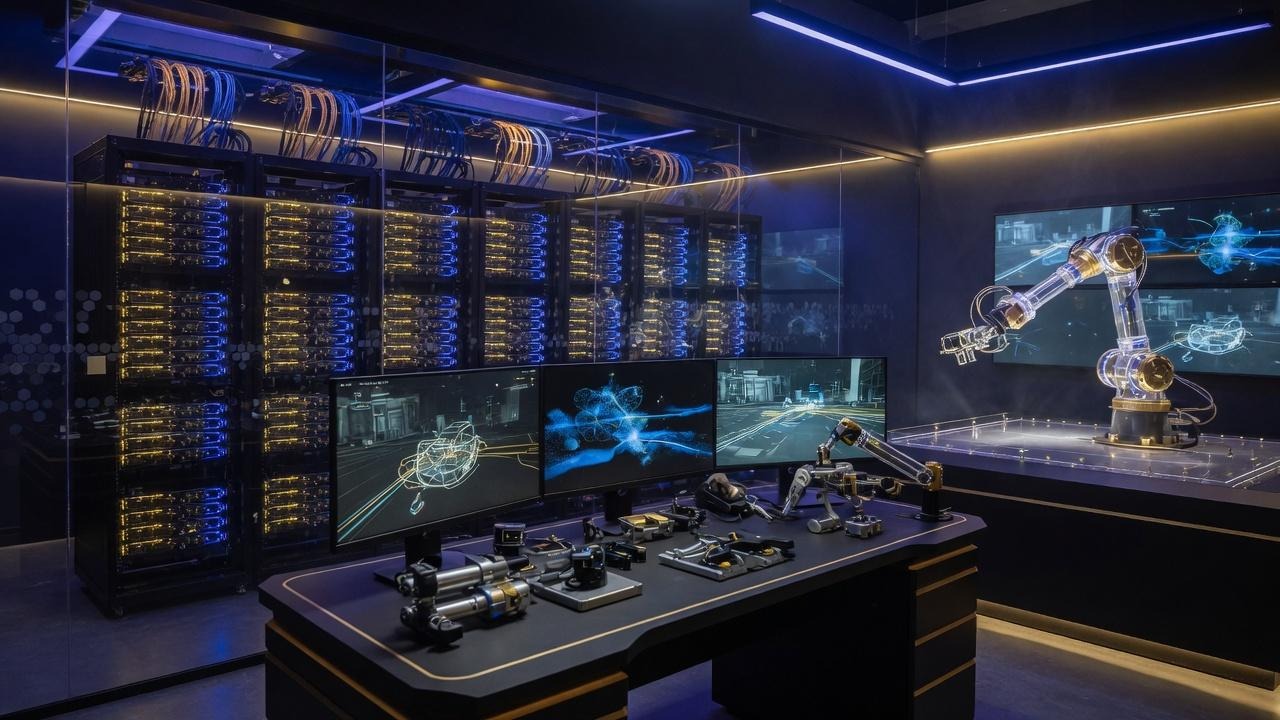
Much of what drives operational benefits is decided in spaces like this, where monitoring and maintenance aim to keep machines available and well used. Good operation improves the odds, but it cannot control demand or pricing.
That is the honest boundary. Operators can pursue high utilization and uptime; they cannot promise them, because the market sits beyond anyone's control.
Why operational benefits are never guaranteed
Every factor above moves on its own schedule. Demand for AI compute can rise or fall. Energy costs shift. Newer hardware can change what the market pays for older machines. Even with excellent operation, none of these is within anyone's full control.
That is why responsible ownership never promises a specific outcome. Operational benefits are a conditional possibility, and any honest description treats them that way. When you read about ownership, the language used around benefits is a good test of whether the source is being straight with you.
A simple way to picture operational benefits
Think of owned hardware like a piece of productive equipment rather than a savings account. A savings account pays a set rate; productive equipment only produces value when it is running, doing work people will pay for, at a cost lower than what that work brings in. Operational benefits behave like the second case, not the first.
That picture explains why the same machine can be meaningful in one period and quiet in another. When demand is strong, pricing is healthy, and the machine runs reliably, the equipment is productive. When demand softens or costs climb, the same equipment can produce little, even though nothing about the ownership has changed.
Holding this mental model helps you avoid the two common errors: treating benefits as automatic, and treating a quiet stretch as a failure. Both misread what operational benefits actually are, which is a conditional result of real activity.
Setting honest expectations
If you are weighing managed GPU ownership, understanding these drivers is the most useful preparation you can do. It helps you read any opportunity with clear eyes and ask sharper questions, especially about how benefits are described and what happens when conditions are weak. Our managed compute operations explain how utilization and uptime are pursued in practice.
The aim is not to discourage you, but to arm you. An owner who understands the drivers will not be surprised by variation, and will not be misled by anyone who promises a fixed result. That understanding is the best protection you can bring to the decision.
Hold the framing firmly. Operational benefits are not guaranteed and depend on utilization, uptime, demand, costs, hardware performance, and market conditions.
Common questions about operational benefits
They are the practical results owned hardware can produce when it serves real AI compute demand. They depend on the machine doing useful, paid work, so they are a conditional possibility rather than a fixed feature of ownership.
Utilization, uptime, market demand and pricing, and operating costs all move them. Because these factors change independently and interact, the benefits change too.
No. Strong operation can improve utilization and uptime, which helps, but it cannot control demand, pricing, or energy costs. Those sit beyond any operator's reach, so benefits remain conditional.
Because ownership is certain but results are not. Using a conditional term reflects the honest reality that the hardware might produce something, or might not, depending on conditions.
Power, cooling, and operating costs sit against whatever the hardware brings in. If costs rise or paid work falls, the net benefit shrinks, which is part of why nothing can be promised.
The factors that drive them, especially demand, pricing, and costs, are outside anyone's full control. Operational benefits are never guaranteed and depend on utilization, uptime, demand, costs, and market conditions.
Talk with us about AI infrastructure ownership
Share your name, phone, email, and which managed device tier interests you. We will reach out with a clear walkthrough. No pressure.
Request received
Thank you. We will contact you at the phone number or email you provided.
Want a grounded view of operational benefits?
Talk through how utilization, uptime, and demand shape what owned hardware can do.
Operational benefits are not guaranteed and depend on utilization, uptime, demand, costs, hardware performance, and market conditions.