Article on ownership benefits
The benefits of owning AI hardware
Owning AI hardware can carry real operational benefits, but they are conditional, not promised. Here is a grounded look at what holding a physical GPU machine can mean, what it cannot, and how to keep your expectations honest from the start.
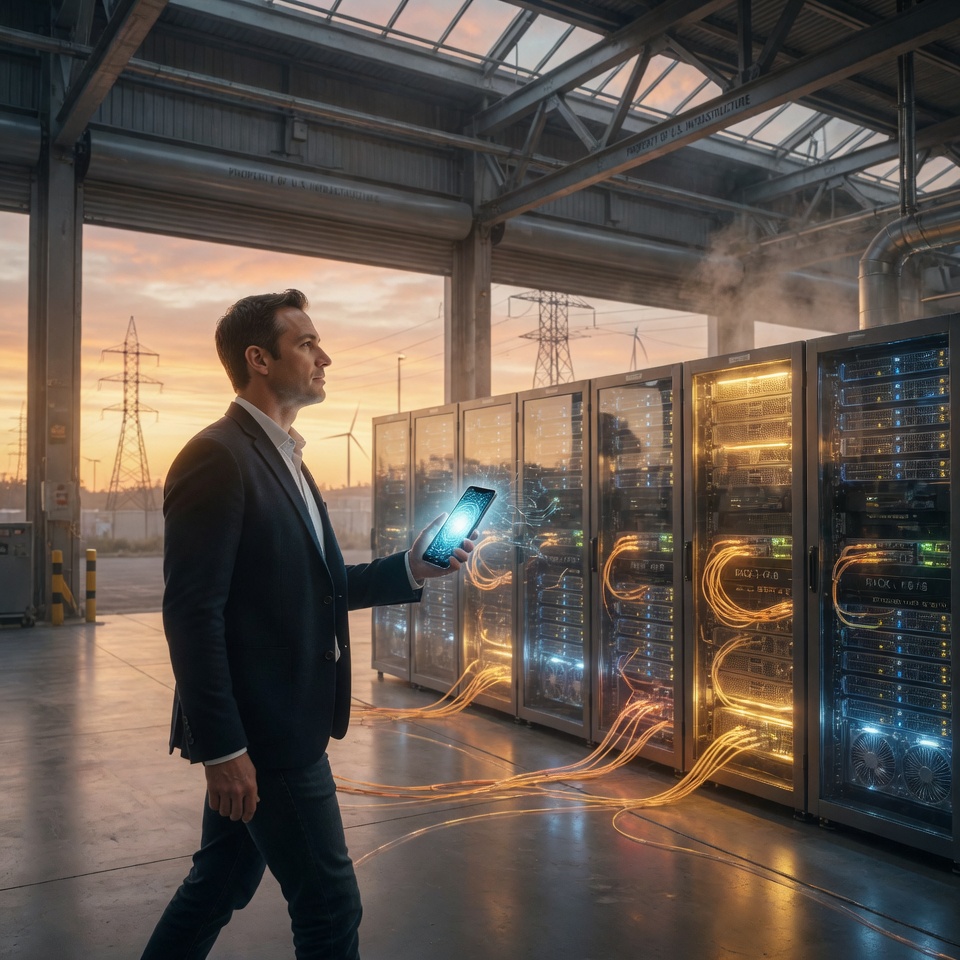
Key takeaways
- Owning hardware means holding a scarce physical asset rather than renting access to one.
- It can offer direct exposure to AI compute demand and a real sense of control.
- Managed operation removes the burden of running the machine yourself.
- Every benefit is conditional and depends on real-world use, so none of it is guaranteed.
What we mean by operational benefits
When people talk about the benefits of owning AI hardware, they often blend two separate ideas. One is the simple fact of holding a scarce asset, the way you might value owning any durable, in-demand piece of equipment. The other is what the asset can do operationally when it is put to work serving real compute demand.
Both ideas are worth understanding, and they behave differently. The value of holding scarce hardware is tied to the hardware itself and to how supply and demand for that hardware move over time. The operational side is tied to activity: the machine has to run useful work for paying demand before any operational benefit appears at all.
It is important to be clear from the start that operational benefits are conditional. They depend on how the hardware is used and on conditions no single party controls. This article walks through the benefits owners point to, then sets each one against its honest limits, so the picture is complete rather than one-sided.
Operational benefits owners often point to
Holding a scarce asset
Advanced GPUs are in short supply. Owning one means holding the hardware itself, not a rental slot that expires.
Direct exposure to demand
When your machine serves real compute demand, you have a direct connection to that activity rather than a layer of abstraction in between.
Control without the workload
Managed operation lets you keep ownership while a professional team handles hosting, power, cooling, and maintenance.
A long-term position
Ownership is a deliberate position in AI infrastructure rather than a short rental that leaves nothing behind.
Why interest in owning hardware is rising
The interest in owning AI hardware tracks the broader surge in compute demand. As more of the economy runs on AI, the machines that serve that demand have become some of the most sought-after equipment in technology, and the people who hold them are positioned differently from those who only rent access to a shared pool.
This is not a reason to rush. It is context. Demand growth explains why owning hardware feels meaningful to some people, but it does not change the fact that any benefit still depends on the machine running useful work under real market conditions.
It is also worth separating the trend from your own situation. A field can be expanding quickly while still being the wrong fit for a particular person. The healthy approach is to treat rising demand as background, then judge ownership on your own goals, timeline, and comfort with risk.
The demand context behind ownership
4 to 5x
Annual growth in AI training compute since 2010, according to Epoch AI.
Source: Epoch AI, May 2024
945 TWh
Projected global data centre electricity by 2030, more than double 2024 levels, according to the IEA.
Source: International Energy Agency (IEA), April 2025
53%
Share of the population using generative AI within three years, faster than the internet or PC, according to Stanford HAI.
Source: Stanford Institute for Human-Centered AI (HAI), April 2026
The scarce hardware behind the benefit
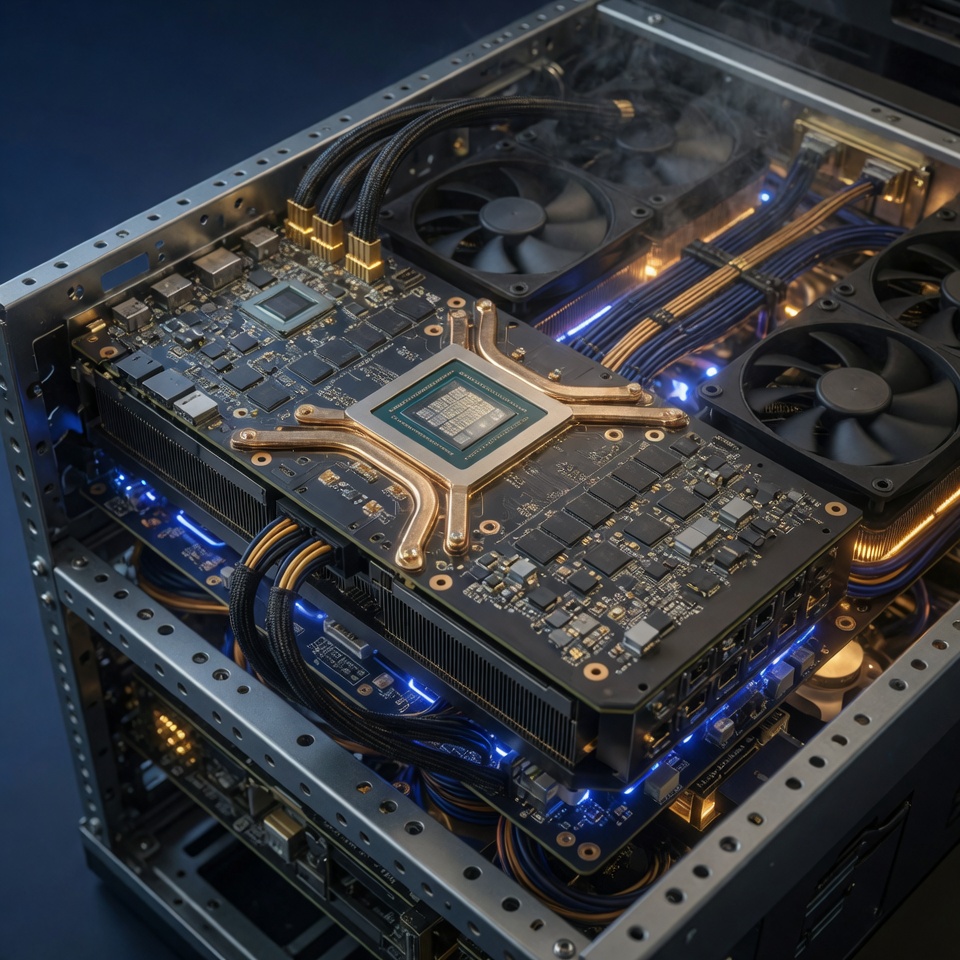
Every operational benefit traces back to a real, physical machine like the accelerators shown here. The scarcity that makes ownership appealing is the scarcity of this hardware, and the operational side depends on these cards running useful work reliably inside a well-run facility.
Seeing the hardware is a useful reminder that ownership is concrete. It is not a financial abstraction, and it is not a promise. It is a tangible asset that must be operated well to produce anything at all.
Misconceptions that distort the benefits
A common misconception is that owning AI hardware is a way to set money to work and step back. It is not. The hardware only does anything when it is running useful workloads for paying demand, and that requires constant operation, which is exactly why a managed model exists. Ownership is active equipment, not a quiet financial product.
Another misconception is that holding scarce hardware means its value only rises. Scarcity can support value, but newer accelerators arrive on a regular cadence, and what the market pays for older machines shifts as that happens. The honest view is that a real asset has a real lifecycle, with both an upside and a downside.
A third is confusing the benefit with the way it might be received. How any benefit reaches an owner is a downstream detail. Whether there is anything to receive at all depends on utilization, uptime, demand, and costs, and that is the question that actually matters.
- Owned hardware is active equipment, not a set-and-forget product.
- Hardware value moves both ways as newer machines arrive.
- The form a benefit takes matters far less than whether one exists.
The limits you should hold in mind
None of these benefits is promised. Hardware has upfront and operating costs. Demand for compute varies. A machine can sit underused if the market softens, and performance changes as newer hardware arrives and the older machine ages. These are normal features of holding real equipment, not reasons for alarm, but they should be named clearly.
There is also concentration risk in owning a single type of asset, and there is timing risk, since the value of access shifts with supply and demand. A credible operator will put these limits in front of you early rather than burying them, because clear expectations are part of doing this honestly.
Anyone describing ownership benefits as certain is overstating them. The honest framing is that benefits are possible and conditional, never guaranteed, and the language a source uses around outcomes is a good test of whether it is being straight with you.
Putting the benefits in context
If the operational benefits appeal to you, managed GPU ownership is one way to pursue them while a professional team runs the hardware on your behalf. Reading about how the compute side is operated helps set realistic expectations before you decide anything, and it shows where any benefit would actually come from.
Keep the framing honest throughout. Operational benefits are not guaranteed and depend on utilization, uptime, demand, costs, hardware performance, and market conditions.
References and data
- Training compute of frontier AI models grows by 4 to 5x per year. Epoch AI. May 2024.
- Energy and AI. International Energy Agency (IEA). April 2025.
- The 2026 AI Index Report. Stanford Institute for Human-Centered AI (HAI). April 2026.
Common questions about ownership benefits
The clearest benefit is holding a scarce physical asset rather than renting access to one. Beyond that, owners often value direct exposure to compute demand and control over the hardware, though these are conditional on real use.
No. Operational benefits depend on how the hardware is used and on market conditions. They are possible outcomes, never promised ones, and hardware carries real upfront and operating costs.
No. With managed ownership a professional team operates the machine for you, so you can hold the asset without taking on the round-the-clock workload of running it yourself.
Soft demand, low utilization, downtime, rising power costs, and the arrival of newer hardware can all reduce or erase any benefit. These factors move independently and are outside any single party's full control.
Ownership is a hardware position, not a financial product. It should not be approached as a way to make money, because operational benefits are never guaranteed and depend on utilization, uptime, demand, costs, and market conditions.
Managed ownership places the hardware in a professional data center with proper power, cooling, security, and monitoring. A home rig leaves all of that, plus noise, heat, and reliability, to you, which is far harder to sustain.
Talk with us about AI infrastructure ownership
Share your name, phone, email, and which managed device tier interests you. We will reach out with a clear walkthrough. No pressure.
Request received
Thank you. We will contact you at the phone number or email you provided.
Curious what owning AI hardware could offer you?
Talk through the operational side of managed GPU ownership, with honest answers about what is and is not promised.
Operational benefits are not guaranteed and depend on utilization, uptime, demand, costs, hardware performance, and market conditions.