Article on physical ownership
Owning physical AI infrastructure
Behind every AI service is a physical machine running in a building somewhere. Owning that machine, rather than renting access to a pool, means holding a real and tangible asset. Here is what that actually means, and what it asks of you.
Key takeaways
- Every AI service ultimately runs on physical hardware in a real building.
- Owning a physical machine means holding a tangible asset, not a slice of a shared pool.
- Physical ownership comes with real costs and depends on professional operation.
- Holding a real asset does not promise a result, and outcomes depend on conditions.
AI is physical underneath the software
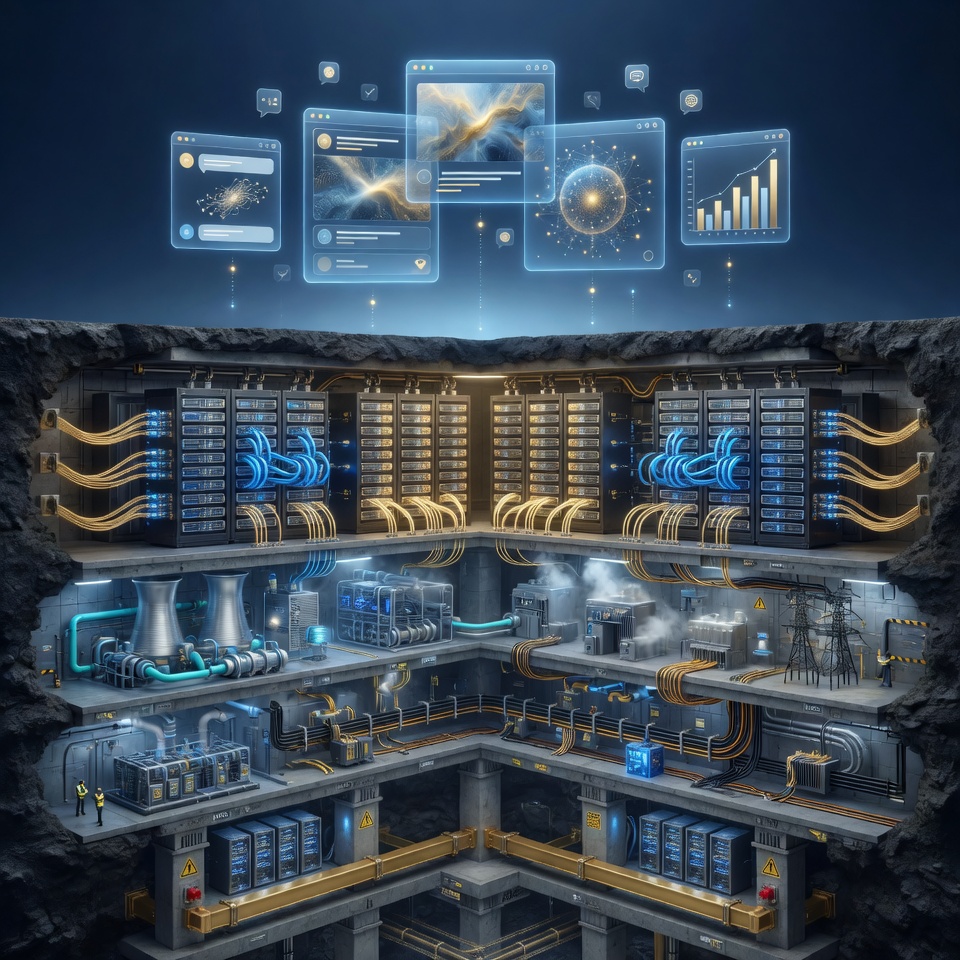
It is easy to think of AI as something that lives in the cloud, but the cloud is just a set of physical machines in data centers. Every model, every response, and every training run happens on real GPUs that draw power, generate heat, and need cooling and maintenance to keep working. The software experience is the surface, and the machine is the substance underneath it.
Owning physical AI infrastructure means holding one of those real machines. Instead of paying for access to an abstraction, you hold the tangible hardware that the abstraction is built on. That is a different relationship to the technology than most people have, because most people only ever touch the service layer. When a model answers a question or a training run completes, a specific piece of silicon somewhere did the work, and that silicon is exactly what physical ownership puts in your hands.
This distinction is more than philosophical. A physical asset behaves differently from a subscription. It can be located, secured, maintained, and held over time, and it does not simply vanish when you stop paying a monthly fee. Understanding that is the starting point for thinking clearly about physical ownership.
Why holding a physical asset is different
It is a real asset
A physical machine is something you hold, not a subscription that ends and leaves nothing behind.
It is scarce
Advanced GPUs are in short supply, so the physical hardware itself carries real-world value.
It is located somewhere
Your machine lives in a specific American data center with power, cooling, and security.
It needs operating
Physical hardware must be run well to stay useful, which is why managed operation matters so much.
Physical infrastructure has a real footprint
Because AI infrastructure is physical, it has a measurable footprint in power and space. Data centers consume real electricity, and that consumption has been climbing as AI workloads grow. The hardware you own is part of that physical system, not separate from it, and the power it draws is a real and ongoing cost.
Understanding the footprint helps explain why professional operation matters. Power, cooling, and density are engineering problems that a serious facility solves and a home setup cannot, which is a large part of why owned hardware is hosted in data centers rather than spare rooms.
It also grounds the conversation in physics. AI is not weightless, and neither is owning a piece of it. The same qualities that make the hardware capable, dense compute and high power draw, are the qualities that make a proper facility necessary.
The physical scale of AI infrastructure
176 TWh
U.S. data center electricity use in 2023, about 4.4 percent of national electricity, according to Lawrence Berkeley National Laboratory.
Source: Lawrence Berkeley National Laboratory, December 2024
415 TWh
Global data centre electricity in 2024, about 1.5 percent of the world total, according to the IEA.
Source: International Energy Agency (IEA), April 2025
100 MW
Power that the largest frontier training runs now exceed, according to Epoch AI.
Source: Epoch AI, 2025
The tangible hardware you hold
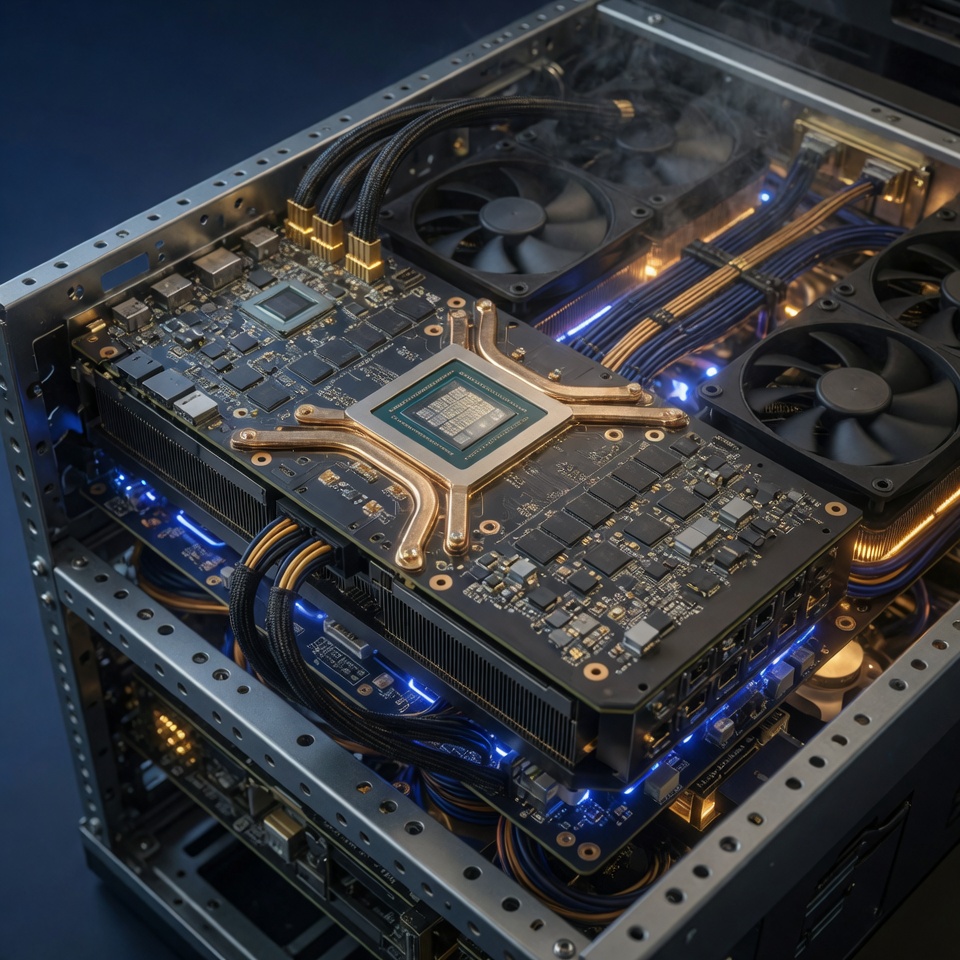
This is what physical ownership comes down to: accelerator cards racked, powered, and cooled inside a data center. The asset is as concrete as any other piece of industrial equipment, and it sits in a known place rather than in an abstract pool.
Holding the hardware is different from holding a contract for access. The machine is yours whether the market is busy or quiet, which is precisely what people mean when they talk about a real position rather than a rental.
Misconceptions about physical ownership
One misconception is that a physical asset must hold or grow its value simply because it is real and scarce. Scarcity can support value, but hardware ages and newer accelerators arrive, so the worth of an older machine shifts over time. A tangible asset is still a lifecycle asset, with both an upside and a downside.
Another misconception is that owning the hardware means owning the building or the operation. It does not. You hold the specific machine, while the facility, the power, and the team are provided by the operator. That separation is the point of the managed model, and it keeps your responsibility focused on the asset itself.
A third is treating physical ownership as a financial security. It is not a share or a fund. It is a piece of equipment that must be operated to do anything, which is why every honest description ties its benefits to real use rather than to ownership alone.
- A real asset still has a lifecycle as newer hardware arrives.
- You own the machine, not the facility or the operation around it.
- Physical ownership is equipment, not a financial security.
What physical ownership requires
Physical assets are real, which means they carry real responsibilities. Hardware costs money up front. It needs a place to run, constant monitoring, and maintenance over its life. It can age as newer hardware arrives, and it can sit underused if demand softens, so the responsibilities do not end the moment the machine is installed.
Managed ownership exists to carry those responsibilities for you. A professional team handles the operations, so you can hold the physical asset without becoming a data center operator yourself. That arrangement does not remove the underlying risks, but it does put the operational work in capable hands.
The honest way to hold this is to accept the asset and its conditions together. You get something tangible and durable, and you accept that its usefulness depends on how well it is run and on a market no one fully controls.
Holding the asset without running it
If holding a tangible piece of AI infrastructure appeals to you, managed GPU ownership lets you do exactly that while a team runs the machine. Reading about secure data center operation shows how the physical side is protected and maintained, and where the responsibilities sit.
A real asset is still subject to real conditions. Operational benefits are not guaranteed and depend on utilization, uptime, demand, costs, hardware performance, and market conditions.
References and data
- 2024 United States Data Center Energy Usage Report. Lawrence Berkeley National Laboratory. December 2024.
- Energy and AI. International Energy Agency (IEA). April 2025.
- How much power will frontier AI training demand in 2030?. Epoch AI. 2025.
Common questions about physical ownership
It means holding a real, tangible machine that runs AI compute, rather than renting access to a shared pool. The hardware is a physical asset located in a specific data center and assigned to you.
It is deployed in an American data center with high-density power, cooling, and physical security, where a professional team operates and maintains it on your behalf.
Advanced GPU hardware needs high-density power, serious cooling, security, and constant monitoring. A home setting struggles with noise, heat, electricity, and reliability, which is why owned hardware is hosted in data centers.
Hardware value changes over time as newer machines arrive and demand shifts. Owning a physical asset is meaningful, but its worth is not fixed, and no specific outcome is promised.
You own the specific machine assigned to you. The facility, power, cooling, and operations team are provided by the operator, which is exactly what makes the managed model practical.
No. You hold a specific physical machine, not a financial security. It is a tangible asset you own directly, operated for you by a professional team.
No. A physical asset still depends on real-world conditions. Operational benefits are never guaranteed and depend on utilization, uptime, demand, costs, and market conditions.
Talk with us about AI infrastructure ownership
Share your name, phone, email, and which managed device tier interests you. We will reach out with a clear walkthrough. No pressure.
Request received
Thank you. We will contact you at the phone number or email you provided.
Want to hold a real piece of AI infrastructure?
Talk through what owning a physical, professionally operated GPU machine would look like.
Operational benefits are not guaranteed and depend on utilization, uptime, demand, costs, hardware performance, and market conditions.