Article on the ownership mechanics
How hardware ownership works
Owning a managed GPU machine is more straightforward than it sounds. Here is the full mechanic, from sourcing the hardware to operating it inside a data center, laid out step by step with the roles, costs, and limits made clear.
Key takeaways
- Ownership starts with sourcing and deploying a specific physical machine on your behalf.
- The hardware is hosted in an American data center with power, cooling, and security.
- A professional team monitors and maintains the machine and connects it to compute demand.
- You hold the asset throughout, and no operational outcome is guaranteed.
How the mechanic fits together
Managed hardware ownership works by splitting two roles cleanly. You provide the ownership, and a professional operator provides the operations. The result is a physical machine that belongs to you and runs without you having to manage it day to day, which is what makes the model practical for people who are not infrastructure engineers.
The process moves through a few clear stages, from acquiring the hardware to keeping it running reliably over time. Each stage has a distinct purpose, and together they turn what would be a complex undertaking into something an individual can actually hold and follow without specialist tools or training.
The point of describing the mechanic in full is transparency. When you can see each step, you can ask better questions, understand where your money goes, and judge whether the model is being described honestly. A process that is explained plainly is far easier to trust than one that is kept vague.
How ownership works, step by step
- 1. Source the hardware. A specific NVIDIA-powered machine is sourced and configured to serve AI compute, then assigned to you as your asset.
- 2. Deploy in a data center. The machine is installed in an American data center with high-density power, professional cooling, and physical security.
- 3. Connect to demand. The hardware is connected to AI compute demand so it can do useful work when conditions allow it.
- 4. Monitor around the clock. A professional team watches performance continuously, catching issues early to keep the machine healthy.
- 5. Maintain over time. Routine maintenance and any repairs are handled by the operator, so the hardware stays in good working order.
- 6. Report and review. You receive visibility into how your hardware is performing, while keeping ownership of the asset throughout.
Who handles each part
Your role is to own the asset and make the decision to participate. You do not need to source scarce hardware yourself, negotiate data center space, wire high-density power, or learn to run server infrastructure. Those are exactly the barriers that keep most people out of owning AI hardware directly, and they are the parts the operator absorbs.
The operator's role is everything operational: hosting, power, cooling, monitoring, maintenance, security, and connecting the hardware to demand. That division of labor is what makes ownership practical for people who are not infrastructure engineers, while keeping the asset firmly in your name.
It helps to think of it as a clean line between holding and running. You hold the machine and decide whether to participate; the operator runs it and is accountable for keeping it healthy. Neither role blurs into the other, which keeps responsibilities clear.
Where your machine actually lives
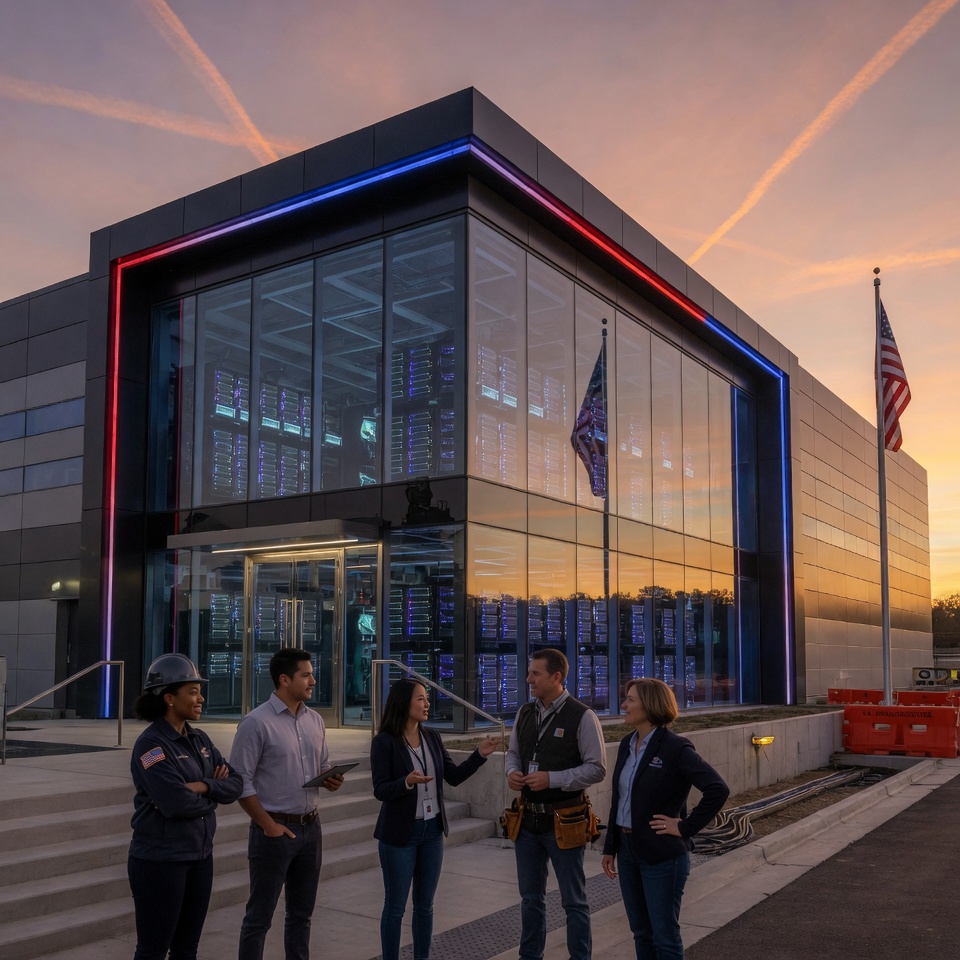
The deployment step is where ownership becomes physical. Your machine sits in a real facility staffed by people whose job is to keep it powered, cooled, secure, and running. That setting is what separates managed ownership from a home rig in a spare room.
It also explains why the operator role matters so much. The building, the power, and the team behind it are the difference between hardware that can do useful work and hardware that simply sits idle, and they are not things an individual can replicate at home.
What the operator handles for you
Hosting and power
Rack space, high-density power, and the facility itself are arranged and maintained for you.
Cooling
Professional cooling keeps the hardware within safe operating limits under heavy load.
Monitoring and maintenance
Continuous monitoring and routine upkeep aim to keep the machine available and healthy.
Security
Physical and operational security protect the hardware in a way a home setup cannot match.
What ownership costs and requires
Ownership is real, so it carries real costs. There is an upfront cost to source and configure the machine, and there are ongoing operating costs for power, cooling, monitoring, and maintenance over the life of the hardware. A clear arrangement makes both kinds of cost visible, so you understand the full picture rather than just the headline figure.
It is also worth understanding the lifecycle. Hardware ages, newer accelerators arrive, and what an older machine is worth shifts over time. None of that is hidden in a transparent model; it is simply part of holding a physical asset, the same way it would be for any other piece of industrial equipment.
Because of all this, the sensible questions to ask early are about cost over time, not just the entry price. Knowing the operating costs and the expected lifecycle up front is the best way to keep your expectations grounded before you commit.
- An upfront cost to source and configure your machine.
- Ongoing operating costs for power, cooling, monitoring, and maintenance.
- A normal hardware lifecycle as newer accelerators arrive over time.
The demand context this process serves
4 to 5x
Annual growth in AI training compute since 2010, according to Epoch AI.
Source: Epoch AI, May 2024
945 TWh
Projected global data centre electricity by 2030, more than double 2024 levels, according to the IEA.
Source: International Energy Agency (IEA), April 2025
Seeing the process in practice
This is the model behind managed GPU ownership: you hold the machine, and a team runs it. If you want the operational detail, reading about managed GPU compute shows how the running side is handled in practice, step by step, by the people accountable for it.
The process is real, but it does not promise a result. Operational benefits depend on how the hardware is used and on market conditions, so nothing here is guaranteed. Operational benefits are not guaranteed and depend on utilization, uptime, demand, costs, hardware performance, and market conditions.
References and data
- Training compute of frontier AI models grows by 4 to 5x per year. Epoch AI. May 2024.
- Energy and AI. International Energy Agency (IEA). April 2025.
Common questions about how ownership works
No. The hardware is deployed and hosted for you in an American data center. Power, cooling, security, and connectivity are all handled by the operations team, so you never touch the facility.
You own a specific physical NVIDIA-powered machine that is assigned to you as your asset. You are not buying a slice of a shared pool or a contract for access only.
You receive visibility into how your machine is performing. The operator monitors it around the clock, while you keep ownership of the asset throughout the process.
Expect ongoing operating costs for power, cooling, monitoring, and maintenance over the life of the hardware. A transparent arrangement makes these clear up front so there are no surprises later.
Maintenance and repairs are part of the operator role. The team handles upkeep and addresses faults to keep the machine in working order, though no operation can promise zero downtime.
Ownership terms vary, so this is a fair question to ask directly before committing. Because you hold a physical asset, your options differ from renting, where access simply ends when you stop paying.
No. The process explains how ownership works, not what it will return. Operational benefits are never guaranteed and depend on utilization, uptime, demand, costs, and market conditions.
Talk with us about AI infrastructure ownership
Share your name, phone, email, and which managed device tier interests you. We will reach out with a clear walkthrough. No pressure.
Request received
Thank you. We will contact you at the phone number or email you provided.
Want to see how ownership would work for you?
Talk through the steps of managed GPU ownership and what each stage involves.
Operational benefits are not guaranteed and depend on utilization, uptime, demand, costs, hardware performance, and market conditions.