Article with a practical checklist
Questions to ask before owning GPUs
Owning GPU hardware is a real commitment, so it deserves real questions. Here is a practical checklist covering ownership, operation, cost, and risk to help you decide with clear eyes.
Key takeaways
- Ask what you actually own and where the hardware physically lives.
- Ask who operates the machine and what that includes.
- Ask about the full costs, not just the upfront price.
- Ask how outcomes are framed, since no honest operator promises a result.
Good questions come before commitment
Owning GPU hardware is a meaningful decision with real costs. The best protection is asking clear questions before committing, so you understand exactly what you are getting and what you are not. Questions asked early are far cheaper than surprises discovered later.
The checklist below groups the questions that matter most into a few clear areas: what you own, where it lives, who operates it, what it costs, and how risk is described. Working through them helps you separate a transparent offer from an overstated one.
None of these questions are confrontational. A credible operator will welcome them, because clear answers are part of doing this honestly.
The questions worth asking
What do I actually own?
Confirm you hold a specific physical machine as your asset, not a slice of a pool or a contract for access only.
Where does it live and who secures it?
Ask which data center hosts the hardware and how power, cooling, and physical security are handled.
Who operates it and what is included?
Clarify exactly what the operator covers, from monitoring and maintenance to connecting the hardware to demand.
What are the full costs?
Look beyond the upfront price to operating costs over the life of the hardware, so there are no surprises.
Questions about what you hold
Start by pinning down the asset itself. Ask whether you hold a specific, identifiable machine, and how that ownership is documented. The answer should be concrete: a particular NVIDIA-powered machine assigned to you, not a vague stake in a shared system.
Then ask what happens over time. How long is the hardware expected to stay useful, what are your options as it ages, and what would happen if you wanted to step back. These questions reveal how the arrangement treats you as the actual owner.
Asking where the hardware lives

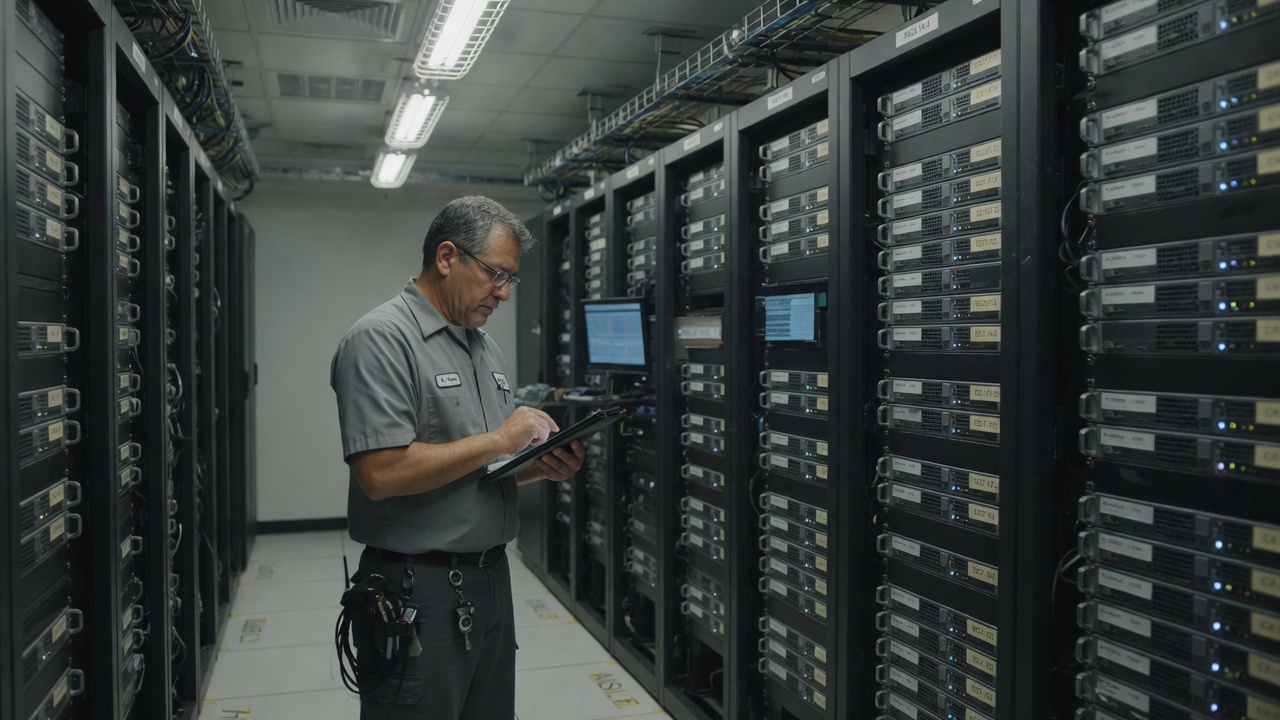
A picture of the infrastructure is a reminder of what your questions are really about. Power delivery, cooling, and security are not abstract; they are the systems that keep your machine alive and working.
When you ask where the hardware lives and how it is run, you are asking about the parts of this picture that you cannot see in a brochure. Clear answers here are a strong sign of a serious operator.
Questions about who runs the machine
Operation is where ownership succeeds or struggles, so probe it carefully. Ask who monitors the hardware and how often, what maintenance is covered, and how faults are handled when they occur. The answers should describe a real, continuous process rather than a vague promise of support.
Ask also how the hardware is connected to demand, since that connection is what gives the machine a chance to do useful work. A serious operator can explain this plainly, including the honest point that connection to demand does not guarantee the machine will always be busy.
Finally, ask what visibility you will have. You should expect a clear way to see how your machine is performing over time, so that ownership feels real rather than opaque.
The questions about outcomes and risk
Ask directly how any benefits are described. A transparent operator will tell you that operational benefits depend on utilization, uptime, demand, costs, and market conditions, and that none of it is promised. The language they use is itself an answer.
Be cautious of anyone who frames ownership as a promise of steady income or a fixed result. That framing is a red flag, because hardware ownership cannot honestly promise an outcome. Ask what could go wrong, and listen for whether the answer is honest or evasive.
Red flags that should make you pause
Some answers should make you slow down rather than sign. Be wary of anyone who promises a fixed amount, describes results as assured, or talks about ownership with no mention of risk at all. Hardware ownership cannot honestly be framed that way, and a polished pitch does not change that.
Other warning signs are vaguer than outright promises. If an operator cannot tell you exactly what you own, where it lives, or who runs it, that vagueness is itself a red flag. So is pressure to decide quickly, since a serious commitment deserves time and clear answers.
The healthiest sign, by contrast, is an operator who volunteers the limits before you ask. When someone explains what could go wrong as readily as what could go right, you are far more likely to be dealing with an honest picture of the model.
Putting the checklist to use
Take this checklist into any conversation about owning hardware. With managed GPU ownership, you should be able to get straight answers on each point, and our managed ownership overview is a good place to start.
Hold the honest framing throughout. Operational benefits are not guaranteed and depend on utilization, uptime, demand, costs, hardware performance, and market conditions.
Common questions before owning GPUs
Ask exactly what you own. You want confirmation that you hold a specific physical machine as your asset, not a slice of a shared pool or a contract that only grants temporary access.
Watch how benefits are framed. Any claim that promises a fixed outcome, assured payments, or ownership with no risk is a warning sign, because hardware ownership cannot honestly promise an outcome.
Ask about operating costs over the life of the hardware, including power, cooling, and maintenance, so you understand the full picture rather than just the upfront figure.
Clarify exactly what the operator covers and what is left to you. A clear answer should include monitoring, maintenance, security, and how the hardware is connected to demand.
Yes. A credible operator will explain the real risks, such as soft demand, downtime, rising costs, and aging hardware. Evasive answers about risk are a reason to slow down.
No. Owning hardware is a serious commitment, and a transparent operator welcomes clear questions. The quality and honesty of the answers tell you a great deal about who you are dealing with.
Talk with us about AI infrastructure ownership
Share your name, phone, email, and which managed device tier interests you. We will reach out with a clear walkthrough. No pressure.
Request received
Thank you. We will contact you at the phone number or email you provided.
Have questions before owning hardware?
Bring your checklist and get straight answers about managed GPU ownership.
Operational benefits are not guaranteed and depend on utilization, uptime, demand, costs, hardware performance, and market conditions.