Article on GPU hardware
What is a data center GPU?
Not all GPUs are alike. The chips behind serious AI are very different from the card in a gaming PC. Here is what sets a data center GPU apart.
Key takeaways
- A data center GPU is built for continuous, heavy workloads, unlike a consumer card built mainly for gaming.
- Data center GPUs carry far more memory and faster connections for linking many GPUs together.
- They are designed to run around the clock with serious cooling and reliability features.
- Serious AI work depends on these professional GPUs, not the cards sold for home computers.
Two very different categories of GPU
Although the word GPU covers them both, a consumer graphics card and a data center GPU are built for different worlds. A consumer card is designed mainly to render games and run occasional heavy tasks on a single desktop. A data center GPU is designed to do demanding compute work continuously, as part of a much larger system.
The difference is not just power. It is about memory, connectivity, reliability, and the ability to run at full load for weeks without rest. Those traits are exactly what AI workloads require.
The two also live in different environments. A consumer card sits in one machine under a desk, cooled by a couple of fans. A data center GPU sits in a rack among many others, fed by industrial power and cooling, and expected to behave predictably as one part of a coordinated whole.
Data center GPU versus consumer GPU
| Trait | Consumer GPU | Data center GPU |
|---|---|---|
| Built for | Gaming and desktop use | Continuous compute at scale |
| Memory | Enough for games | Much larger for big models |
| Linking GPUs | Limited | Fast connections for clusters |
| Duty cycle | Bursts of heavy use | Around the clock operation |
| Environment | A single desktop | A managed data center rack |
What a data center GPU looks like
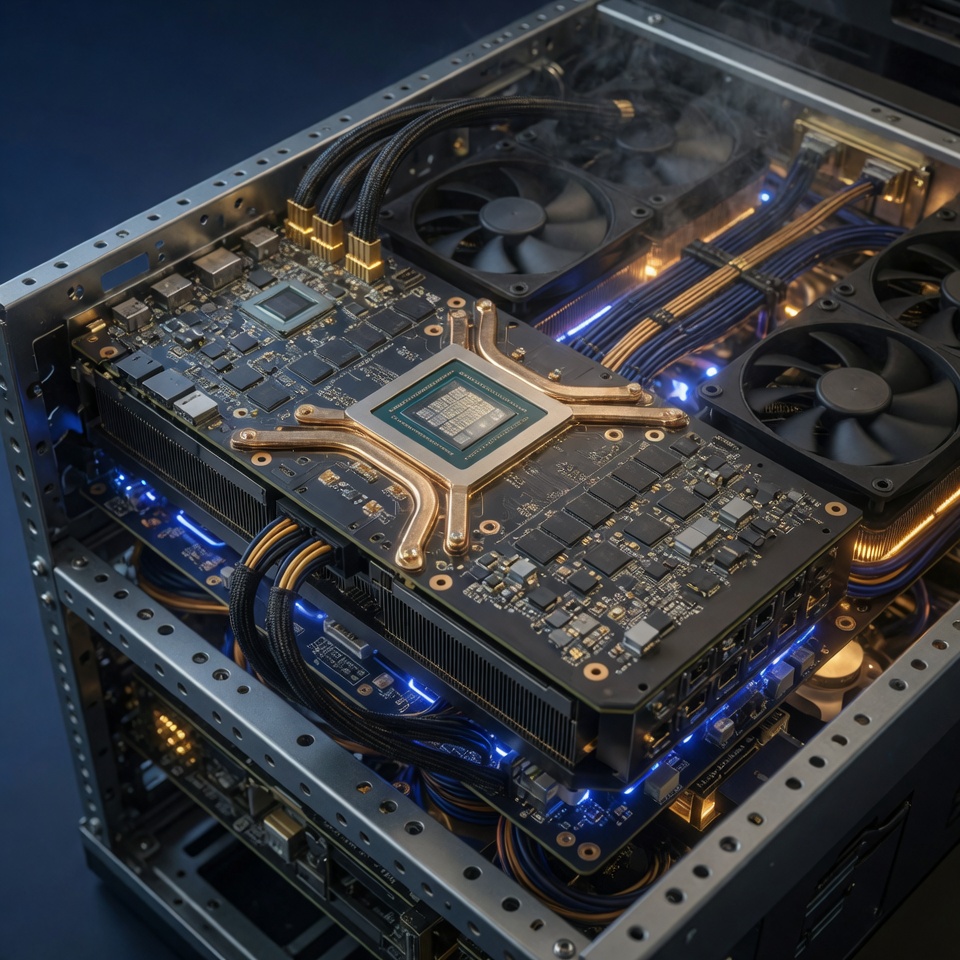
Up close, a data center GPU looks different from a gaming card. It is built to sit in a rack, draw heavy power, and shed a lot of heat while running constantly. Many of these cards are linked so they can work as one machine, which is something consumer hardware is not designed to do.
Why AI relies on data center GPUs
Large AI models need more memory than a consumer card offers, and they need many GPUs working together. Data center GPUs are built with the extra memory and the high-speed links that make clusters possible, so they can tackle problems that consumer cards cannot.
They are also built to last under constant load. AI training and inference run continuously, and a card built for short gaming sessions would struggle with that duty. Data center GPUs are engineered for sustained work, with the cooling and reliability to match.
Reliability features go further than most people realize. Data center GPUs include protections that catch and correct errors, since a single fault during a long training run can spoil weeks of work. That focus on dependable, continuous operation is central to their design.
What sets a data center GPU apart
More memory
Far more onboard memory so large models and their working data fit without slow workarounds.
Fast interconnects
Special links let many GPUs share results quickly and act together as one large machine.
Built for uptime
Error correction and durable design support continuous operation across long workloads.
Serious cooling
Designed for the heavy heat of constant full load, removed by industrial data center cooling.
The chip is only part of the cost
Owning a data center GPU is only the beginning. These chips draw heavy power and produce significant heat, so they need an environment that can supply both reliably. The surrounding power, cooling, and networking can cost as much attention as the hardware itself.
This is why serious GPUs almost always live in professional facilities rather than homes or offices. The building, the power feeds, the cooling, and the operations team are all part of what turns an expensive chip into useful, dependable AI capacity.
It also means the real comparison is not just chip versus chip. It is a whole operating environment. A data center GPU reaches its potential only when everything around it is built and run to match its demands.
Density is part of why this is so demanding. A single rack of data center GPUs can draw as much power as many ordinary servers combined, and all of that energy turns into heat that has to be removed continuously. Handling that concentration of power and heat safely is a core reason these chips live in purpose-built facilities.
Common misconceptions to clear up
A common misconception is that a high-end gaming card is the same as a data center GPU. They share a family name, but the professional hardware has far more memory, faster links, stronger reliability features, and a design built for constant load.
Another misconception is that you can simply put a data center GPU in a home computer and get full value. The chip needs heavy, stable power and serious cooling that a home setup cannot provide, so it would be throttled or unreliable outside a proper facility.
A third misconception is that buying the chip is the main expense. In practice, the power, cooling, networking, and operation around it are a large and ongoing part of the real cost of running serious GPU hardware.
A final misconception is that consumer and data center GPUs are interchangeable because they share a brand or generation name. The names can look similar, but the engineering, memory, connectivity, reliability features, and price sit in different worlds. Choosing the wrong category for the job leads to either wasted capability or hardware that simply cannot keep up.
Why operation matters as much as the chip
A data center GPU only delivers its potential when it is housed, powered, cooled, and operated properly. The hardware is demanding, and getting full value from it takes a professional environment rather than a spare room at home.
Golden Core Mining helps customers own managed NVIDIA data center GPU hardware while a professional team runs it inside American facilities. To learn more, explore our NVIDIA GPU hosting service.
Owning hardware does not guarantee any outcome. Operational benefits are not guaranteed and depend on utilization, uptime, demand, costs, hardware performance, and market conditions.
Common questions about data center GPUs
You can run smaller AI tasks on a gaming GPU, but it has less memory, weaker connections for linking cards, and is not built for continuous heavy load. Serious AI work relies on data center GPUs designed for those demands.
Data center GPUs carry much more memory, support fast connections so many GPUs can work together, and are built to run around the clock with strong cooling and reliability. These traits suit the continuous, large-scale nature of AI.
They are the hardware capable of training and running large AI models, and demand has grown faster than supply. That scarcity is why organizations compete to secure data center GPU capacity.
In practice no. These chips need heavy, stable power and serious cooling that a home setup cannot provide, so they would be throttled or unreliable. They are designed to run inside professional facilities built for their demands.
No. The power, cooling, networking, and ongoing operation around a data center GPU are a large part of the real cost. A chip only becomes useful capacity when the whole operating environment is built and run to match its demands.
Because a single fault during a long training run can spoil weeks of work. Data center GPUs include features that catch and correct errors so they can run continuously and reliably, which is essential for large, long-running AI workloads.
Talk with us about AI infrastructure ownership
Share your name, phone, email, and which managed device tier interests you. We will reach out with a clear walkthrough. No pressure.
Request received
Thank you. We will contact you at the phone number or email you provided.
Want to own real data center GPU hardware?
Talk through what owning managed NVIDIA GPU hardware would look like, with no pressure and straight answers.
Operational benefits are not guaranteed and depend on utilization, uptime, demand, costs, hardware performance, and market conditions.