Article on GPU memory
VRAM and why it matters for AI
People focus on GPU speed, but memory often decides what you can run. Here is what VRAM is and why it matters so much for AI.
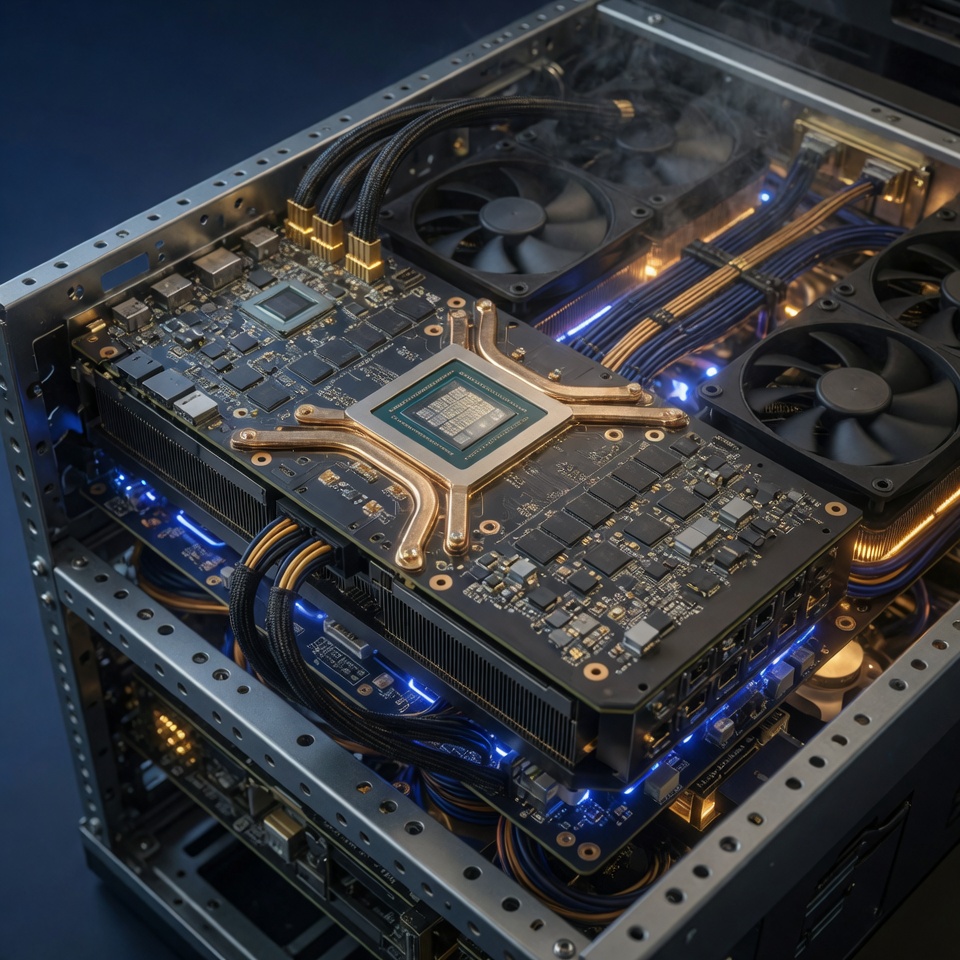
Key takeaways
- VRAM is the GPU's own high-speed memory, where the model and its data live while the GPU works.
- The size of the model you can run is limited by how much VRAM you have, not just GPU speed.
- When a model does not fit in VRAM, performance drops sharply or the work cannot run at all.
- This is why large AI models need data center GPUs with far more memory than consumer cards.
What VRAM actually is
VRAM, short for video random access memory, is the dedicated high-speed memory built into a GPU. It is where the GPU keeps the information it is actively working on, including the model's parameters and the data flowing through it.
VRAM matters because a GPU can only work quickly on data that sits in its own memory. If the information it needs is not there, it has to wait for it to be moved in, which is far slower. So the amount of VRAM sets a hard limit on how much a GPU can handle at once.
It helps to picture VRAM as the GPU's workbench. The cores can only work on what is laid out in front of them. A bigger workbench means more of the job fits within reach, while a small one forces constant trips to fetch the next piece, which wastes time.
Why memory caps model size
An AI model is made of billions of numbers, and all of them need to be held in memory while the model runs. The larger the model, the more VRAM it requires. When a model and its working data fit comfortably in VRAM, the GPU runs at full speed.
When they do not fit, you face hard choices. You can shrink the model, split it across several GPUs, or move data back and forth from slower memory, which hurts performance badly. This is why two GPUs with similar speed can deliver very different results if one has far more VRAM.
Memory demand is not only the model itself. Running a model also needs space for the input being processed and for intermediate results created along the way. All of that competes for the same VRAM, which is why memory fills up faster than people expect.
This is also why serving many users at once raises memory needs. Each active request carries its own working data through the model, so a GPU handling many requests must hold many of these in memory together. Spare VRAM is what lets a single GPU serve more people before it runs out of room.
Where the model actually lives

It is easy to think of a model as software floating somewhere abstract. While it runs, it is very physical. Its billions of parameters occupy real memory chips on the GPU, kept close to the cores so the math stays fast. When those numbers no longer fit, the whole system slows or stalls.
Where VRAM makes the difference
Larger models
More VRAM lets you load bigger models that simply will not fit on smaller cards.
Longer context
Memory holds the input a model is reasoning over, so more VRAM allows longer prompts and documents.
Higher throughput
Spare memory lets a GPU serve more requests at once, improving efficiency for inference.
Fewer compromises
Enough memory avoids the slow workarounds needed when a model does not fit on one card.
Why memory speed matters too
The amount of VRAM is only part of the story. How fast the GPU can read and write that memory, known as memory bandwidth, also shapes performance. A GPU with plenty of memory but slow access to it can still leave its cores waiting for data.
For many AI workloads, especially inference, memory bandwidth is the real limit rather than raw calculation speed. The cores can do the math quickly, but they are only as productive as the rate at which the right numbers reach them. This is why data center GPUs invest heavily in fast memory, not just large memory.
Together, memory size and memory speed often matter more than headline calculation figures. A balanced GPU with ample, fast VRAM tends to outperform one that looks faster on paper but is starved for memory.
Common misconceptions about VRAM
A common misconception is that a faster GPU can always make up for less memory. It cannot. If a model does not fit in VRAM, speed barely helps, because the GPU is forced into slow workarounds or cannot run the model at all.
Another misconception is that VRAM and ordinary system memory are interchangeable. They are not. System memory is much slower for the GPU to reach, so relying on it for AI work causes a sharp drop in performance compared with keeping everything in VRAM.
A third misconception is that only model size uses memory. In practice the input being processed and the intermediate results also consume VRAM, which is why memory needs can climb quickly during real workloads.
A final misconception is that splitting a model across several GPUs is a free fix for limited memory. It does let larger models run, but it also adds communication between the GPUs, which can slow things down if the links are not fast enough. More memory on each card avoids that cost, which is one reason high-memory data center GPUs are so valued.
Why data center GPUs lead on memory
Because memory matters so much, the GPUs built for AI carry far more VRAM than the cards in a home computer, along with the cooling and power to use it fully. That is a large part of what separates serious AI hardware from consumer gear.
Golden Core Mining helps customers own managed NVIDIA GPU hardware sized for real AI work, operated by a professional team. To learn more, explore our GPU compute for AI inference service.
Owning hardware does not guarantee any outcome. Operational benefits are not guaranteed and depend on utilization, uptime, demand, costs, hardware performance, and market conditions.
Common questions about VRAM
VRAM is the GPU's own fast memory. It holds the AI model and the data the GPU is working on right now. Because the GPU works quickest on data already in this memory, the amount of VRAM limits how much it can handle at once.
Every parameter in a model must be stored in memory while it runs. A larger model needs more VRAM, and if it does not fit, you must shrink it, split it across GPUs, or accept much slower performance.
AI models are far larger than the workloads gaming cards were designed for. Data center GPUs carry much more VRAM, along with the cooling and power to use it, so they can run models that consumer cards cannot.
No. If a model does not fit in VRAM, raw speed barely helps, because the GPU is forced into slow workarounds or cannot run the model at all. Having enough memory comes first, then speed improves performance within that limit.
Memory bandwidth is how fast a GPU can read and write its own memory. Even with plenty of VRAM, slow access leaves the cores waiting for data. For many AI workloads, especially inference, bandwidth is the real limit rather than raw calculation speed.
No. VRAM is the GPU's own high-speed memory, while system memory belongs to the CPU and is much slower for the GPU to reach. Relying on system memory for AI work causes a sharp drop in performance compared with keeping everything in VRAM.
Talk with us about AI infrastructure ownership
Share your name, phone, email, and which managed device tier interests you. We will reach out with a clear walkthrough. No pressure.
Request received
Thank you. We will contact you at the phone number or email you provided.
Want hardware sized for real AI models?
Talk through what owning managed NVIDIA GPU hardware would look like, with no pressure and straight answers.
Operational benefits are not guaranteed and depend on utilization, uptime, demand, costs, hardware performance, and market conditions.