Inference Workloads
GPU compute for AI inference
Every time an AI model answers a request, that is inference. As AI adoption grows, inference demand grows with it. Golden Core Mining helps you own the hardware that serves it.
Owned NVIDIA hardware for inference workloads, operated in U.S. data centers. Operational benefits are not guaranteed.
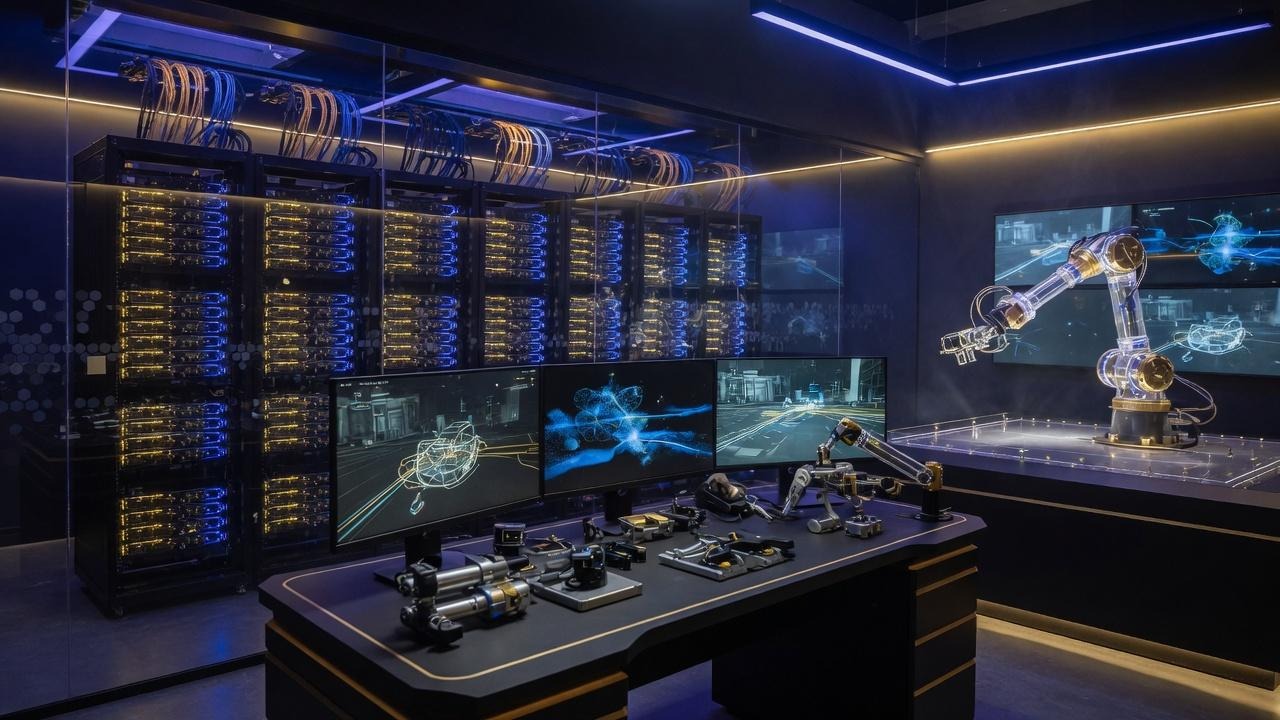
Inference is AI at work
Inference is what happens when a trained model is actually used. Every answer, image, summary, or recommendation an AI produces is an inference request. Unlike training, which happens in bursts, inference is ongoing and scales directly with how many people use AI.
As AI moves into everyday tools, inference becomes a steady, growing source of compute demand. The hardware that serves it needs to be available and responsive whenever requests arrive.
A common misconception is that the heavy lifting in AI is all training. In practice, a model is trained once per version but answers requests millions of times, so inference is where a large and growing share of day-to-day compute is spent.
What inference workloads demand
Availability
Inference happens at all hours, so hardware needs reliable uptime.
Responsiveness
Requests expect fast answers, which rewards efficient, well-run hardware.
Connectivity
Low-latency networking helps serve requests quickly and reliably.
Steady operations
Inference is continuous, so monitoring and maintenance matter every day.
How inference demand is scaling
~53%
Population that reached generative AI use within three years, faster than internet or PC, according to Stanford HAI.
Source: Stanford Institute for Human-Centered AI (HAI), April 2026
threefold
Rise in active users reported by major model providers over the past year, according to the IEA.
Source: International Energy Agency (IEA), 2025
Serving requests around the clock

Inference demand is created by ordinary use. Each prompt, search, or suggestion sends work to hardware somewhere, at any hour. That steady stream is why inference rewards hardware that is available and responsive rather than only powerful in bursts.
Why inference demand keeps growing
Training a model is a one-time effort per version, but inference repeats for every single use. As AI assistants, agents, and features spread across software, the total volume of inference rises steadily.
Owned NVIDIA hardware operated in a data center can be connected to AI compute demand that includes inference workloads. As always, demand and utilization vary and are never guaranteed, so any operational benefit depends on the hardware actually serving requests.
The shape of inference demand is what makes it interesting. Because it follows everyday usage rather than discrete projects, it tends to be more continuous than training, spread across many small requests at all hours. That steadiness is a reason inference is often described as the long tail of AI compute, though the amount of work any single machine serves still depends on demand and how well the operation is run.
Training builds the model once. Inference runs it forever. That is where steady demand can come from.
How owned hardware serves inference
- Acquire. You purchase NVIDIA-powered hardware documented in your name.
- Deploy. We install it in a U.S. data center with low-latency connectivity.
- Operate. We keep it available, monitored, and maintained for continuous work.
- Connect. The hardware links to AI provider networks that may include inference demand.
Practical things to consider for inference hardware
Inference rewards a slightly different setup than training, and a few points are worth keeping in mind.
Uptime above all
Requests arrive at all hours, so reliable availability is what lets inference hardware stay useful.
Low-latency paths
Fast, dependable networking helps the hardware answer requests quickly when demand is present.
Steady operations
Continuous monitoring and maintenance matter every day, not just during big runs.
Demand still varies
Inference can be more continuous than training, but utilization is never guaranteed.
Clearing up how inference demand reaches your hardware
One misconception is that inference is a minor workload compared to training. In day-to-day terms it is often the opposite, because a model is trained once per version but answers requests millions of times. As AI features spread, inference becomes a large and growing share of total compute.
Another is that owning inference-ready hardware guarantees a steady stream of work. It does not. The hardware can be connected to inference demand through provider networks, but whether requests actually arrive depends on adoption, market conditions, and how fully the hardware is utilized. Idle hardware produces no operational benefit, and none of this is guaranteed.
What is not guaranteed
Demand
Inference demand depends on AI adoption and the market.
Utilization
Benefits require the hardware to be serving requests.
Uptime
Downtime means missed inference workloads.
Costs
Power, cooling, and maintenance are ongoing.
Operational benefits are not guaranteed and depend on utilization, uptime, demand, costs, hardware performance, and market conditions.
AI inference compute questions
Inference is running a trained model to produce a result, such as an answer or an image. It happens every time someone uses an AI feature, so it scales with usage.
Training happens once per model version, but inference repeats for every use. As AI spreads across everyday software, the total volume of inference keeps rising.
Owned NVIDIA hardware operated in a data center can be connected to AI compute demand that includes inference. Utilization and demand are never guaranteed.
According to Stanford HAI, generative AI reached about 53 percent population-level usage within three years, faster than the internet or the PC, and the IEA notes major providers reported a threefold rise in active users over the past year.
Inference requests arrive at all hours, so any downtime is a missed opportunity to serve them. Reliable availability is one of the main things that lets inference hardware stay useful.
It tends to be more continuous because it follows everyday usage rather than discrete training runs. Even so, the amount of inference work any single machine serves varies and is never guaranteed.
Talk with us about AI infrastructure ownership
Share your name, phone, email, and which managed device tier interests you. We will reach out with a clear walkthrough. No pressure.
Request received
Thank you. We will contact you at the phone number or email you provided.
Own hardware ready for inference demand.
Talk through NVIDIA hardware and operations built to serve steady AI workloads.
Operational benefits are not guaranteed and depend on utilization, uptime, demand, costs, hardware performance, and market conditions.