Training Workloads
GPU compute for AI training
Training AI models is one of the most demanding workloads in computing. Golden Core Mining helps you own and operate NVIDIA hardware built for it.
Owned NVIDIA hardware for training workloads, operated in U.S. data centers. Operational benefits are not guaranteed.
Why AI training is so compute heavy
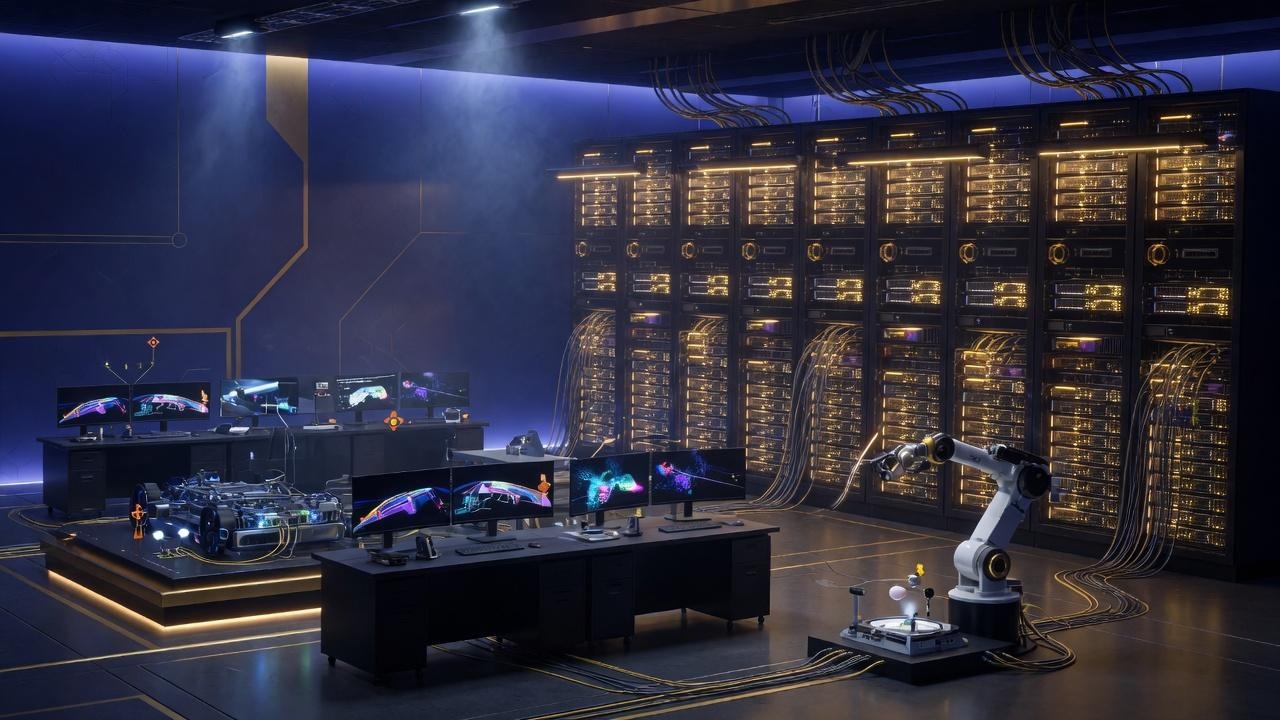
Training an AI model means showing it enormous amounts of data and adjusting billions of internal parameters until it performs well. This is a sustained process that can run for days or weeks, using many GPUs working together at full load.
Because training pushes hardware hard and continuously, it depends on serious power, cooling, and networking. The environment around the GPUs matters as much as the GPUs themselves.
Training is also intolerant of interruptions. A power blip or thermal event can stall a long run and waste compute that has already been spent, which is why stability is treated as a first-class requirement, not a nice-to-have.
What training workloads demand
Sustained power
Training runs at high load for long stretches, requiring stable, redundant power.
Strong cooling
Continuous full-load compute produces heat that has to be removed efficiently.
Fast interconnect
GPUs working together need high-bandwidth links to share data quickly.
Reliable uptime
An interrupted training run wastes time and compute, so stability is essential.
How fast training demands are rising
Where large training runs happen
The biggest training jobs do not run on one machine. They spread across many GPUs that must stay coordinated through fast networking, all while power and cooling hold steady for days. That is the environment owned hardware needs to take part in serious training demand.
How owned hardware serves training
With managed ownership, you hold NVIDIA-powered hardware and Golden Core Mining runs it in a U.S. data center built for sustained load. The hardware can be connected to AI compute demand that includes training workloads through provider networks.
You avoid the burden of building a training-grade environment yourself, while keeping ownership of the physical asset. What the hardware produces still depends on demand, utilization, uptime, and costs, so any operational benefit is described as possible rather than guaranteed.
Training also rewards consistency over time, not just a single strong run. A facility that holds steady power and cooling for days, responds quickly when a node misbehaves, and keeps fast interconnect healthy is what allows hardware to take part in long jobs at all. That reliability is difficult to reproduce outside a professional environment, which is the core reason owners hand the operation to a dedicated team.
Training is unforgiving of weak infrastructure. That is exactly why professional operations matter.
How owned hardware reaches training demand
- Acquire. You purchase NVIDIA-powered hardware suited to sustained workloads, documented in your name.
- Deploy. We install it in a U.S. data center engineered for high, continuous load.
- Operate. We run power, cooling, fast interconnect, monitoring, and maintenance.
- Connect. The hardware links to AI provider networks that may include training workloads when demand exists.
How training workloads differ from inference
Training and inference place very different demands on hardware, which is worth understanding before owning.
| Dimension | AI training | AI inference |
|---|---|---|
| Pattern | Intense, sustained runs for days or weeks | Continuous, smaller requests around the clock |
| What it stresses | Power, cooling, and fast interconnect | Availability and responsiveness |
| Tolerance for interruption | Low, a stall can waste a long run | Higher, individual requests are short |
| Hardware preference | Often newer, high-end accelerators | Wider range can serve demand |
| When demand appears | In project-driven bursts | Whenever people use AI features |
What owning training-ready hardware really involves
A common assumption is that owned hardware will run frontier training jobs continuously. In reality, large training runs are project-driven and arrive in bursts, and what your machine serves depends on the demand available through provider networks at any time. Between training jobs, capable hardware can serve other AI workloads, but it only produces operational benefits when it is actually utilized.
Another misconception is that training is mostly a software achievement. The software matters, but it runs on hardware that must hold steady under heavy, sustained load. A single thermal event or power blip can stall a run and waste compute already spent, which is why stability is treated as a requirement rather than a bonus.
It is also worth being clear that training demand favors newer hardware over time. That does not make older hardware useless, since it can still serve other work, but it does mean demand for any specific generation shifts. None of this is guaranteed, and any operational benefit depends on conditions no one fully controls.
What is not guaranteed
Demand
Training demand depends on the broader AI market.
Utilization
Hardware produces benefits only when it is running workloads.
Costs
Sustained load means real, ongoing power and cooling costs.
Hardware generation
Training demand favors newer hardware over time.
Operational benefits are not guaranteed and depend on utilization, uptime, demand, costs, hardware performance, and market conditions.
AI training compute questions
Training adjusts billions of parameters across huge datasets, often running many GPUs at full load for days or weeks. That sustained intensity requires strong power, cooling, and networking.
Yes. Owned NVIDIA hardware operated in a data center can be connected to AI compute demand, which can include training workloads, through provider networks. Demand and utilization are never guaranteed.
Training-grade environments need sustained redundant power, industrial cooling, and fast interconnect that homes are not built to provide, plus uptime that protects long runs.
According to Epoch AI, training compute for frontier AI models has grown roughly 4 to 5 times per year since 2010, and power for the largest runs has grown about 2.2 times per year.
Often, yes. Newer NVIDIA generations tend to attract more training demand over time, while older hardware may serve other workloads. None of this is guaranteed and demand shifts with the market.
When training demand is not available, capable hardware can serve other AI workloads, but it only produces operational benefits when it is actually utilized, which is never guaranteed.
Talk with us about AI infrastructure ownership
Share your name, phone, email, and which managed device tier interests you. We will reach out with a clear walkthrough. No pressure.
Request received
Thank you. We will contact you at the phone number or email you provided.
Own hardware ready for training workloads.
Talk through NVIDIA hardware and operations designed for sustained AI compute.
Operational benefits are not guaranteed and depend on utilization, uptime, demand, costs, hardware performance, and market conditions.