Article on how AI works
Training vs inference, explained
Every AI model lives through two phases: training and inference. Here is what each one means, how they differ, and why both depend on GPUs.
Key takeaways
- Training is how a model learns; inference is how it is used after learning.
- Training is a one-time, compute-heavy effort, while inference happens continuously at scale.
- Training compute for frontier models has grown roughly 4 to 5 times per year since 2010, according to Epoch AI.
- Both phases rely on GPUs, but they place different demands on memory, speed, and capacity.
Every AI model has two phases
An AI model goes through two distinct stages. The first is training, where the model learns patterns from large amounts of data. The second is inference, where the finished model is put to work answering questions, generating text, or analyzing images.
Understanding the difference matters because the two phases behave very differently. Training is rare and intense, while inference is constant and spread across many users. Both need GPUs, but for different reasons and in different patterns.
The distinction also shapes cost and planning. Training is a large, scheduled project with a clear beginning and end. Inference is an ongoing service that has to stay available every hour of every day. Confusing the two leads to bad decisions about how much hardware to secure and how to run it.
What training actually involves
Training is the process of teaching a model. It starts with billions of numbers, called parameters, set to random values. The model makes a prediction, checks how wrong it was, and nudges those parameters to do slightly better. Repeat this billions of times across a huge dataset and the model gradually learns.
This is enormously expensive. Epoch AI finds that the compute used to train frontier AI models has grown roughly 4 to 5 times per year since 2010. Training a large model can occupy thousands of GPUs running together for weeks, which is why it is treated as a major, planned undertaking.
Training also stresses hardware in a specific way. It needs large bursts of raw compute, a lot of memory to hold the model and its working data, and fast connections so many GPUs can stay in step. A weakness in any of those areas can stretch a run from weeks into months. Because the GPUs in a training run depend on each other, a single failed chip or a slow link can stall the whole job, which is why long runs are watched closely and built on hardware designed to keep going without interruption.
What inference involves
Inference is what happens every time someone uses an AI model. The parameters are now fixed, so the model is not learning. It simply takes an input and produces an output, such as answering a question or describing a photo.
A single inference is far cheaper than training, but inference happens constantly. When millions of people use a model every day, the total compute for inference can rival or exceed the cost of training the model in the first place. That steady demand is a large part of why GPU capacity stays in short supply.
Inference also rewards different traits in hardware. Instead of long bursts, it needs steady, responsive capacity that can serve many requests at once with low delay. Keeping that capacity available and well utilized is an operational challenge of its own, separate from the heavy lift of training.
There is also a fine-tuning stage that sits between the two. After a model is trained, teams often adjust it for a specific task using a smaller, focused round of training. This is lighter than building a model from scratch, but it still relies on the same GPU hardware, which is one more way compute demand keeps flowing even after the first big training run is done.
Where both phases are managed
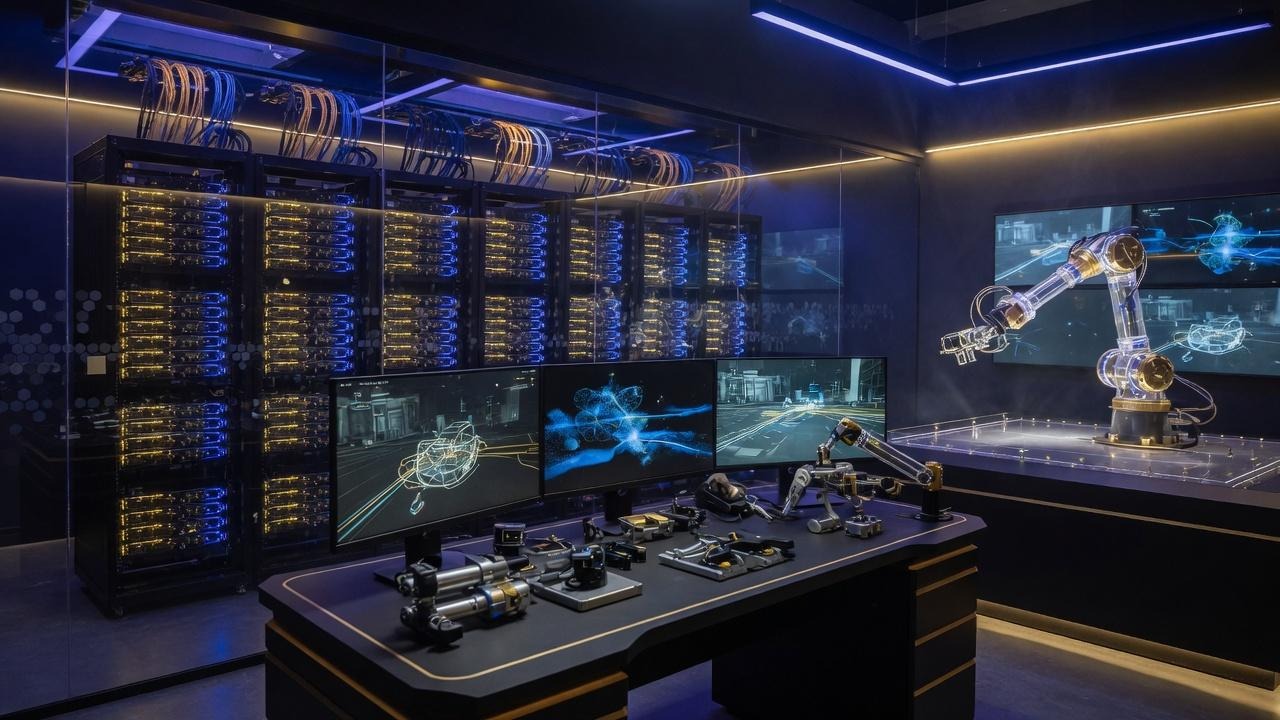
In a real facility, training and inference are not separate worlds. They draw on the same pool of GPUs, and operators balance long training jobs against the steady stream of live requests. Keeping both healthy at once, without letting expensive hardware sit idle, is a big part of running AI infrastructure well.
Training and inference side by side
| Trait | Training | Inference |
|---|---|---|
| Goal | Teach the model | Use the model |
| How often | Rare, planned runs | Constant, every request |
| GPU pattern | Many GPUs, long bursts | Steady, distributed load |
| Main pressure | Raw compute and memory | Scale and responsiveness |
| Parameters | Being adjusted | Fixed and frozen |
What the data shows
4 to 5x
Annual growth in training compute for frontier models since 2010, according to Epoch AI.
Source: Epoch AI, May 2024
~50%
Surge in AI-focused data centre electricity in 2025, according to the IEA.
Source: International Energy Agency (IEA), 2025
Common misconceptions about the two phases
A common misconception is that training is the only expensive part of AI. Training is intense, but it happens once per model. Inference happens forever, across every user and every request, so over a model's life its total compute can match or exceed what training cost.
Another misconception is that once a model is trained, the demand for GPUs goes away. In practice, a popular model creates ongoing inference demand that can grow as more people use it. The IEA reports AI-focused data centre electricity surged about 50 percent in 2025, reflecting how heavily live use draws on hardware.
Finally, people sometimes assume the same setup is ideal for both phases. Training favors large bursts of compute and memory, while inference favors steady, responsive capacity. Good infrastructure is designed to handle both, which is harder than optimizing for either one alone.
Another point worth clearing up is that inference is not free just because each request is small. The cost is spread out rather than removed. A model used by a large audience runs its math millions of times a day, so the bill, in compute and electricity, accumulates quietly but steadily over the life of the model.
Why both phases keep GPUs busy
Because training is intense and inference never stops, demand for GPU capacity comes from both directions at once. That is one reason well-run GPU hardware tends to stay in use rather than sitting idle.
Golden Core Mining helps customers own managed NVIDIA GPU hardware that a professional team connects to AI training and inference demand. To see how that works, explore our GPU compute for AI training service.
Owning hardware does not guarantee any outcome. Operational benefits are not guaranteed and depend on utilization, uptime, demand, costs, hardware performance, and market conditions.
References and data
- Training compute of frontier AI models grows by 4 to 5x per year. Epoch AI. May 2024.
- Key Questions on Energy and AI. International Energy Agency (IEA). 2025.
Common questions about training and inference
Training is how a model learns from data by adjusting its parameters, while inference is how the finished model is used to produce answers. Training happens once and is very compute-heavy, while inference happens continuously every time someone uses the model.
Training is more intense per run, but inference happens so often that its total compute can match or exceed training over time. For a popular model serving millions of people, ongoing inference is a major share of GPU demand.
Yes. Both rely on the parallel math that GPUs do well, but they stress hardware differently. Training needs large bursts of compute and memory, while inference needs steady, responsive capacity spread across many requests.
It depends on the model size, but training a large frontier model can occupy thousands of GPUs running together for weeks. It is treated as a major, planned project rather than something done casually, because of the compute and coordination involved.
As more people use AI tools, the number of requests rises, and each request is an inference. The IEA reports AI-focused data centre electricity surged about 50 percent in 2025, which reflects how heavily live use draws on GPU hardware.
Yes, the same GPUs can serve both, and in practice they often do. Operators balance long training jobs against steady inference traffic so that expensive hardware stays busy rather than idle, though each phase rewards slightly different design choices.
Talk with us about AI infrastructure ownership
Share your name, phone, email, and which managed device tier interests you. We will reach out with a clear walkthrough. No pressure.
Request received
Thank you. We will contact you at the phone number or email you provided.
Want hardware that serves both training and inference?
Talk through what owning managed NVIDIA GPU hardware would look like, with no pressure and straight answers.
Operational benefits are not guaranteed and depend on utilization, uptime, demand, costs, hardware performance, and market conditions.