Article on how AI works
How AI models use GPUs
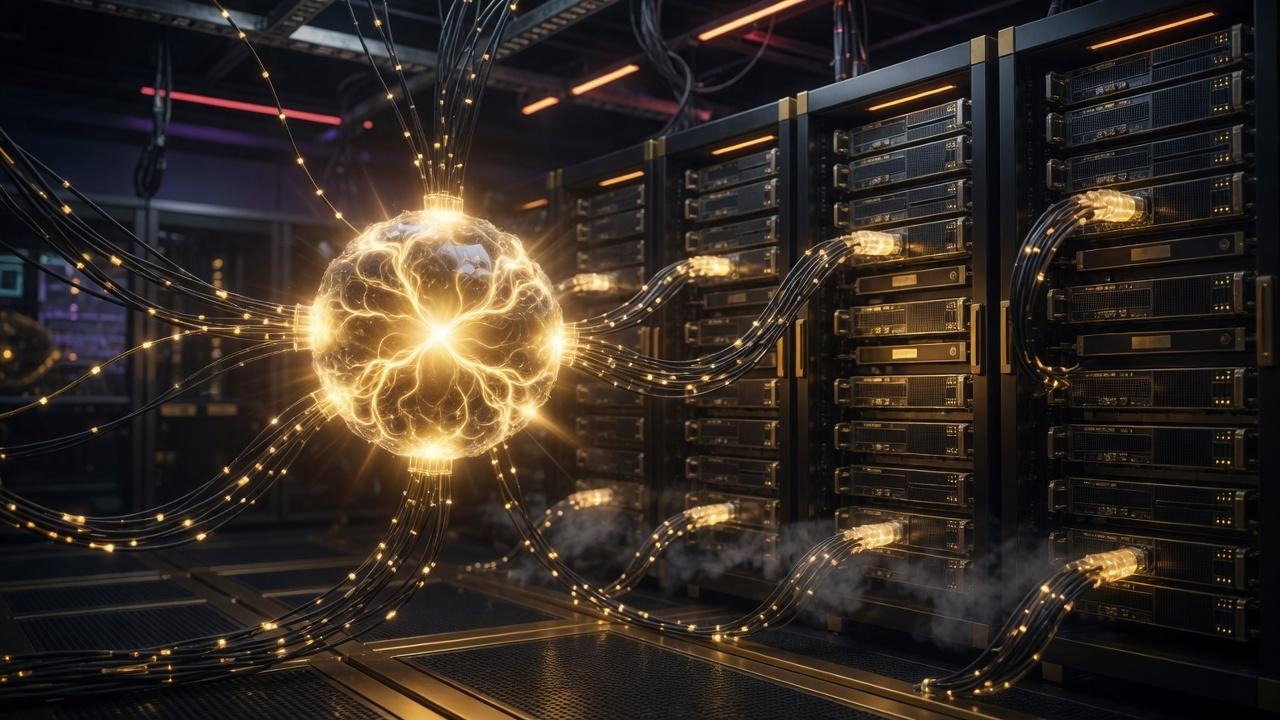
An AI model travels from raw data to trained weights to live answers. Here is how GPUs do the heavy lifting at each stage of that journey.
Key takeaways
- An AI model's life moves through three stages: data, training into weights, and inference.
- Weights are the billions of numbers a model learns, and they are what make a model useful.
- GPUs do the parallel math at every stage, from processing data to running the finished model.
- Both training and inference keep GPUs busy, which is why GPU capacity is in constant demand.
The journey from data to answers
An AI model is not built by writing rules by hand. Instead, it learns from examples. The journey starts with raw data, moves through a training process that turns that data into a set of learned numbers called weights, and ends with inference, where the finished model produces answers.
At every step of this journey, the actual work is parallel math, and that is where GPUs come in. They are the engine that makes each stage practical, from preparing data to running the model for millions of people.
Seeing the journey as a whole helps explain why GPU demand never really stops. Each stage leans on the same kind of hardware, so a model that is popular keeps GPUs busy long after it is first built.
It also explains why the line between research and product is thin in AI. The same hardware that lets a team train a new model is the hardware that serves it to users once it works. A breakthrough in the lab quickly turns into steady, real-world demand for GPUs, which keeps the pressure on capacity high.
The three stages of an AI model
- Data. Huge collections of text, images, or other examples are gathered and prepared so a model can learn from them.
- Training into weights. GPUs adjust billions of numbers over and over until the model captures patterns in the data. These numbers are the weights.
- Inference. The trained model takes new input and produces output, such as answering a question, using its fixed weights.
Where this work actually happens
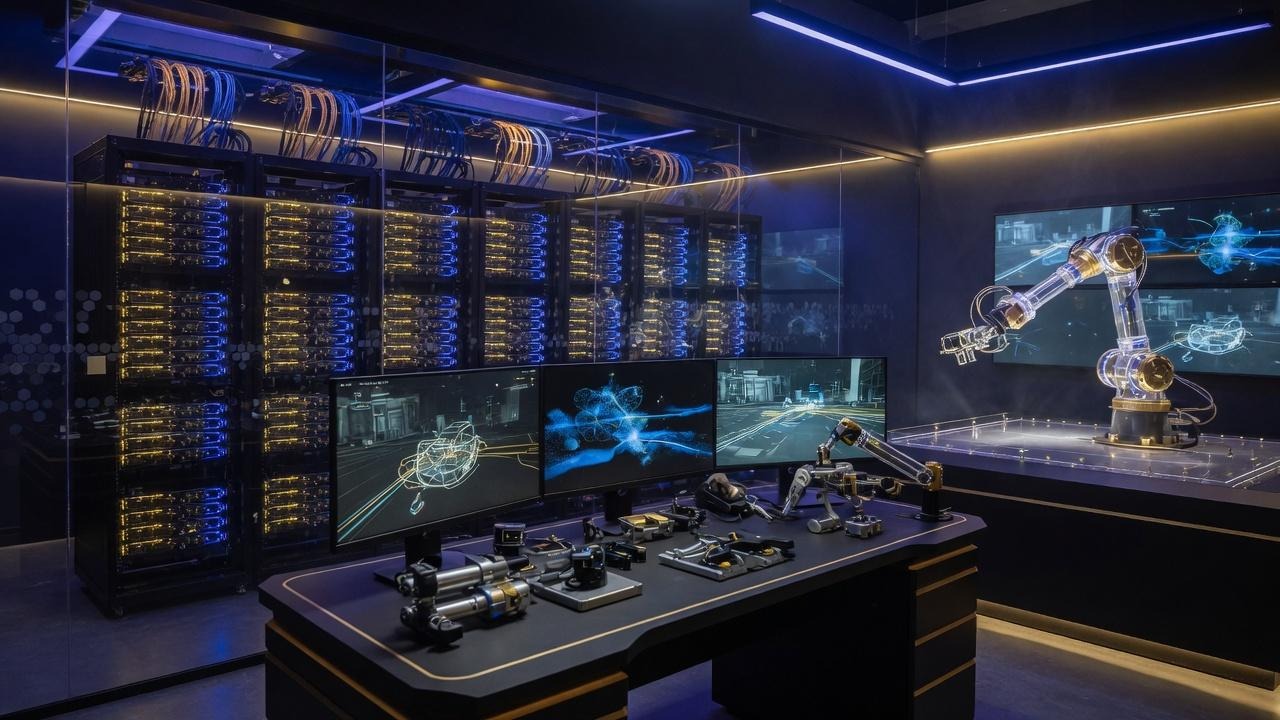
The journey from data to answers sounds abstract, but every stage runs on real hardware in real facilities. Operators monitor the GPUs doing the heavy math, keeping training jobs and live requests healthy. The model is a set of numbers, but the work of producing and running it is very physical.
What weights actually are
The weights are the heart of a trained model. They are billions of numbers that together encode everything the model has learned. During training, GPUs nudge these numbers up and down until the model makes good predictions, repeating the cycle across enormous amounts of data.
Once training finishes, the weights are frozen. From then on, running the model means feeding new input through those fixed numbers. This is why a trained model can be copied and run anywhere it has enough GPU power and memory to hold its weights.
Because the weights are just numbers, the same model can be deployed in many places at once. Each copy still needs GPU hardware to run, which is part of why a single popular model can drive demand across many data centers.
How GPUs power each step
During training, GPUs perform the massive number of calculations needed to adjust the weights, often across a whole cluster working together. This is the most demanding phase and can run for weeks.
During inference, GPUs run the fixed weights against new input. Each request is lighter than training, but with millions of users the total work is enormous. Both phases keep GPUs busy, which is a major reason demand for GPU capacity stays so high.
Even preparing the data leans on GPUs in many systems, since cleaning and organizing huge datasets also benefits from parallel processing. From the first step to the last, the same kind of hardware does the heavy lifting.
The memory side matters at every step too. During training, the GPU must hold the weights it is adjusting along with the data flowing through them. During inference, it must hold the fixed weights and the input being processed. In both cases, having enough fast memory close to the cores is what keeps the work moving smoothly.
Why the math keeps growing
4 to 5x
Annual growth in training compute for frontier models since 2010, according to Epoch AI.
Source: Epoch AI, May 2024
Trillion
Parameter scale NVIDIA built the Blackwell platform to train and run, according to NVIDIA.
Source: NVIDIA Newsroom, March 2024
Common misconceptions about AI and GPUs
A common misconception is that GPUs only matter during training. In reality, every time someone uses a model, GPUs run the math behind that answer. Inference keeps hardware busy long after training is done.
Another misconception is that a trained model no longer needs heavy hardware. Even with frozen weights, pushing input through billions of numbers is still substantial parallel math, especially across millions of requests.
A third misconception is that GPUs do everything alone. They do the heavy parallel math, but CPUs coordinate the system and prepare data. The GPU is the engine, while the CPU directs the flow of work.
A final misconception is that the weights contain the original data. They do not. Training distills patterns from the data into numbers, but those numbers are not a copy of the examples. This is why a trained model can be shared as a set of weights without carrying the raw dataset along with it.
Why steady demand favors well-run hardware
Because both training and inference lean on GPUs, well-operated hardware tends to stay in use rather than idle. Turning a GPU into useful work, though, depends on power, cooling, monitoring, and a connection to real demand.
Golden Core Mining helps customers own managed NVIDIA GPU hardware that a professional team operates and connects to AI demand. To learn more, explore our GPU compute for AI training service.
Owning hardware does not guarantee any outcome. Operational benefits are not guaranteed and depend on utilization, uptime, demand, costs, hardware performance, and market conditions.
References and data
- Training compute of frontier AI models grows by 4 to 5x per year. Epoch AI. May 2024.
- NVIDIA Blackwell Platform Arrives to Power a New Era of Computing. NVIDIA Newsroom. March 2024.
Common questions about AI and GPUs
Weights are the billions of numbers a model learns during training. Together they encode the patterns the model has picked up from data, and they are what the model uses to produce answers during inference.
GPUs do the heavy parallel math at every stage, but they work alongside CPUs that coordinate the system and prepare data. The GPU is the engine, while the CPU directs the flow of work.
Even with fixed weights, producing an answer means pushing input through billions of numbers, which is still heavy parallel math. With millions of users making requests, that work adds up to enormous ongoing GPU demand.
First comes data, where examples are gathered and prepared. Then comes training, where GPUs adjust billions of weights until the model learns. Finally comes inference, where the finished model uses its fixed weights to produce answers for users.
In principle yes, because the weights are just numbers that can be copied. In practice, each copy still needs GPU hardware with enough power and memory to hold the weights and run the math, which is why deployment still depends on capacity.
Models keep growing, and Epoch AI finds training compute for frontier models has grown roughly 4 to 5 times per year since 2010. Larger models and rising use both increase the math involved, which keeps demand for GPU capacity climbing.
Talk with us about AI infrastructure ownership
Share your name, phone, email, and which managed device tier interests you. We will reach out with a clear walkthrough. No pressure.
Request received
Thank you. We will contact you at the phone number or email you provided.
Want hardware that powers real AI models?
Talk through what owning managed NVIDIA GPU hardware would look like, with no pressure and straight answers.
Operational benefits are not guaranteed and depend on utilization, uptime, demand, costs, hardware performance, and market conditions.