Article on AI infrastructure
What is an AI data center?
AI runs inside specialized buildings packed with GPUs, power, and cooling. Here is what an AI data center is and why it has become so important.
Key takeaways
- An AI data center is a facility built to house and run large amounts of GPU hardware for AI.
- It differs from a traditional data center in its density of power, cooling, and networking.
- Data centres used about 415 TWh of electricity in 2024, roughly 1.5 percent of the global total, according to the IEA.
- These facilities are now central to AI because the hardware cannot run well anywhere else.
What an AI data center is
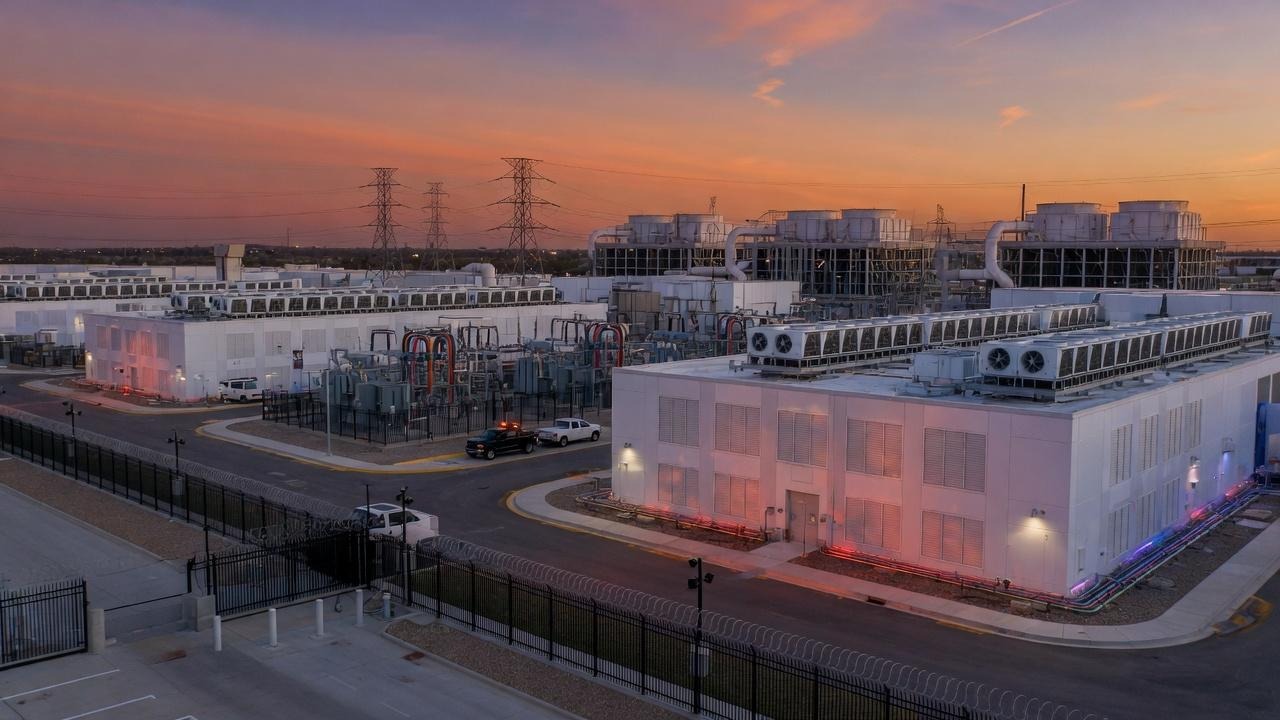
An AI data center is a purpose-built facility designed to house and operate large amounts of GPU hardware. Inside, rows of servers packed with GPUs are connected, powered, and cooled so they can run AI workloads continuously and at scale.
While it looks like a traditional data center from the outside, the work inside is different. Instead of storing files or hosting websites, an AI data center exists to deliver enormous amounts of parallel compute for training and running AI models.
That focus changes everything about how the building is designed. Every part of the facility, from the power feeds to the cooling to the layout of the racks, is shaped around the heavy, dense, continuous demands of GPU hardware.
How it differs from a traditional data center
AI hardware draws far more power and produces far more heat than the equipment in a typical data center. A rack of GPUs can consume many times the electricity of a normal server rack, which means the building needs much heavier power delivery and far more capable cooling.
Networking is different too. Because AI workloads spread across many GPUs that must share results constantly, an AI data center needs fast, dense connections between machines. These demands make AI facilities more specialized and more expensive to build than older designs.
Cooling in particular is pushed to new levels. The heat from dense GPU racks often exceeds what traditional air cooling can handle, so many AI facilities turn to liquid cooling to keep the hardware within safe limits while running at full load.
Location matters more than it once did as well. Because these facilities draw so much electricity, they tend to be built where power is available and reasonably affordable, with room to grow. Access to the grid, to water for cooling, and to fast network connections now shapes where AI data centers can realistically be placed.
What sits inside the building
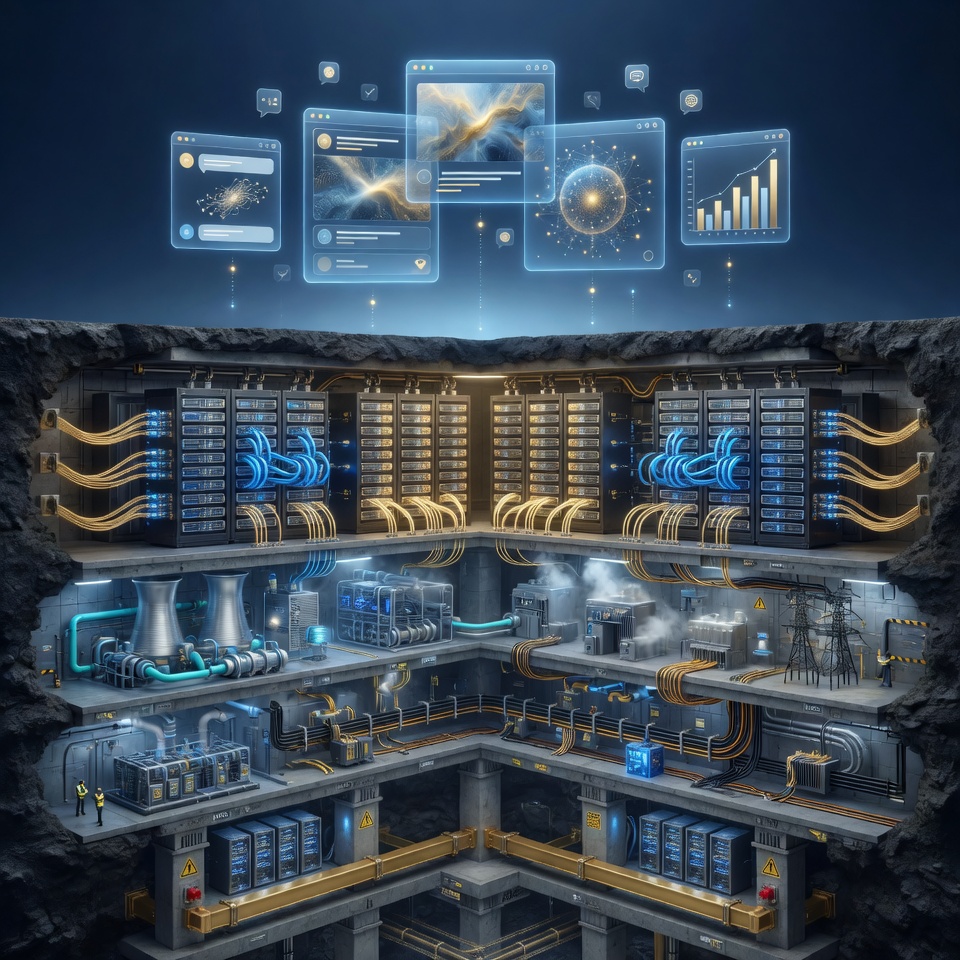
A cutaway view shows that the GPUs are only part of the picture. Around them sit the power distribution, cooling systems, and networking that make continuous AI work possible. The building itself is engineered as one system, because the hardware inside cannot perform without all of it.
What the data shows
415 TWh
Electricity used by data centres worldwide in 2024, about 1.5 percent of global supply, according to the IEA.
Source: International Energy Agency (IEA), April 2025
945 TWh
Projected global data centre electricity demand by 2030, more than double 2024, according to the IEA.
Source: International Energy Agency (IEA), April 2025
176 TWh
U.S. data center electricity use in 2023, up from about 58 TWh in 2014, according to Lawrence Berkeley National Laboratory.
Source: Lawrence Berkeley National Laboratory, December 2024
Why AI data centers matter
AI data centers matter because the hardware behind AI cannot reach its potential anywhere else. GPUs need stable, heavy power, serious cooling, and fast networking, and only a purpose-built facility provides all three reliably.
The scale of this is large and growing. The International Energy Agency reports that data centres used about 415 TWh of electricity in 2024 and projects demand to more than double to around 945 TWh by 2030. That growth shows how central these facilities have become to AI.
The trend is clear in the United States too. Lawrence Berkeley National Laboratory reports that U.S. data center electricity use reached about 176 TWh in 2023, up from roughly 58 TWh in 2014. Building and powering these facilities has become a major undertaking.
The systems that make it work
Heavy power
Industrial power delivery feeds dense GPU racks that draw far more electricity than ordinary servers.
Serious cooling
Air and increasingly liquid cooling remove the intense heat of GPUs running at full load.
Dense networking
Fast links let many GPUs share results constantly so they can act as one large machine.
Operations and security
Monitoring, maintenance, and physical security keep the facility running safely around the clock.
Common misconceptions about AI data centers
A common misconception is that an AI data center is just a bigger version of a normal one. The real difference is density. AI racks draw far more power and produce far more heat, which demands specialized power and cooling rather than simply more space.
Another misconception is that the cost is mostly the chips. The building, power infrastructure, cooling, networking, and operations are a large and ongoing part of the expense, and they are what make the hardware useful.
A third misconception is that serious AI hardware can run well outside a facility like this. Small tasks can run anywhere, but heavy GPU workloads need the stable power, strong cooling, and fast networking that only a purpose-built data center provides reliably.
A final misconception is that all data centers are basically the same inside. A facility built for storage or websites is designed around very different needs than one built for AI. The heavy power, dense networking, and advanced cooling that AI requires are not easily added to a building that was not planned for them from the start.
From the facility to a position inside it
Because AI data centers are demanding and costly to build, most people cannot run serious GPU hardware on their own. The practical path is to own hardware that lives inside a professionally operated facility.
Golden Core Mining helps customers own managed NVIDIA GPU hardware hosted and run inside American data centers by a professional team. To learn more, explore our AI GPU infrastructure service.
Owning hardware does not guarantee any outcome. Operational benefits are not guaranteed and depend on utilization, uptime, demand, costs, hardware performance, and market conditions.
References and data
- Energy and AI. International Energy Agency (IEA). April 2025.
- 2024 United States Data Center Energy Usage Report. Lawrence Berkeley National Laboratory. December 2024.
Common questions about AI data centers
An AI data center is built around dense GPU hardware, which draws far more power and creates far more heat than ordinary servers. That means heavier power delivery, much stronger cooling, and faster networking between machines.
GPUs running AI workloads are power hungry, and AI facilities pack many of them together. The IEA reports data centres used about 415 TWh in 2024 and projects that to more than double to around 945 TWh by 2030.
Small tasks can, but serious GPU hardware needs stable heavy power, strong cooling, and fast networking that only a purpose-built facility provides reliably. That is why AI compute is concentrated in data centers.
No. The building, power infrastructure, cooling, networking, and ongoing operations are a large and continuous part of the cost. These systems are what turn expensive chips into reliable, useful AI capacity.
Dense GPU racks produce intense heat, often more than traditional air cooling can handle. Many AI facilities use liquid cooling to keep the hardware within safe limits while running at full load continuously, which is essential for reliability.
Lawrence Berkeley National Laboratory reports U.S. data center electricity use reached about 176 TWh in 2023, up from roughly 58 TWh in 2014. That sharp rise reflects how central these facilities have become, with much of the recent growth tied to AI.
Talk with us about AI infrastructure ownership
Share your name, phone, email, and which managed device tier interests you. We will reach out with a clear walkthrough. No pressure.
Request received
Thank you. We will contact you at the phone number or email you provided.
Want hardware inside a real AI data center?
Talk through what owning managed NVIDIA GPU hardware would look like, with no pressure and straight answers.
Operational benefits are not guaranteed and depend on utilization, uptime, demand, costs, hardware performance, and market conditions.