Monitoring and Maintenance
GPU monitoring and maintenance
Hardware that is not watched is hardware that fails quietly. Golden Core Mining monitors and maintains customer-owned NVIDIA GPUs around the clock.
Continuous monitoring and proactive maintenance for hardware you own. Operational benefits are not guaranteed.
Why monitoring and maintenance are not optional
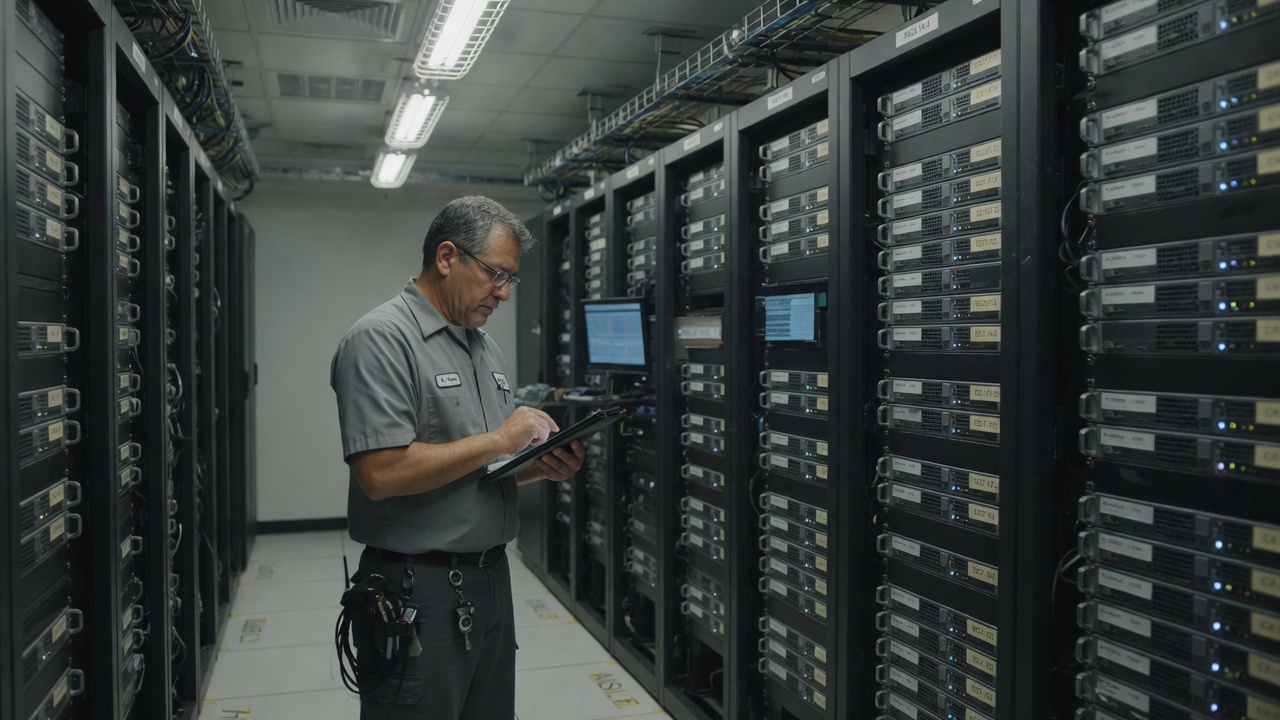
AI hardware runs hard and continuously. Small problems, a rising temperature, a failing fan, a memory module showing errors, or a component slowly degrading, can grow into failures that take hardware offline. Monitoring catches these signals early, and maintenance acts on them before they turn into downtime.
The difference between watched and unwatched hardware is the difference between a routine fix and an emergency. A fan that is replaced when it starts to slow is a five-minute task. The same fan ignored until it fails can let a GPU overheat, throttle, and degrade, turning a minor part into a major loss.
Hardware that nobody watches tends to fail at the worst moment. Continuous operations turn surprises into routine work, which is the entire point of professional monitoring and maintenance.
What continuous monitoring tracks
Temperature
Thermal signals that warn of cooling or load problems before they cause harm.
Utilization
How busy the hardware is, so idle time can be identified and addressed.
Health signals
Component status, error rates, and early warnings of degradation.
Connectivity
Network status so workloads keep flowing without interruption.
Monitoring from a real operations center
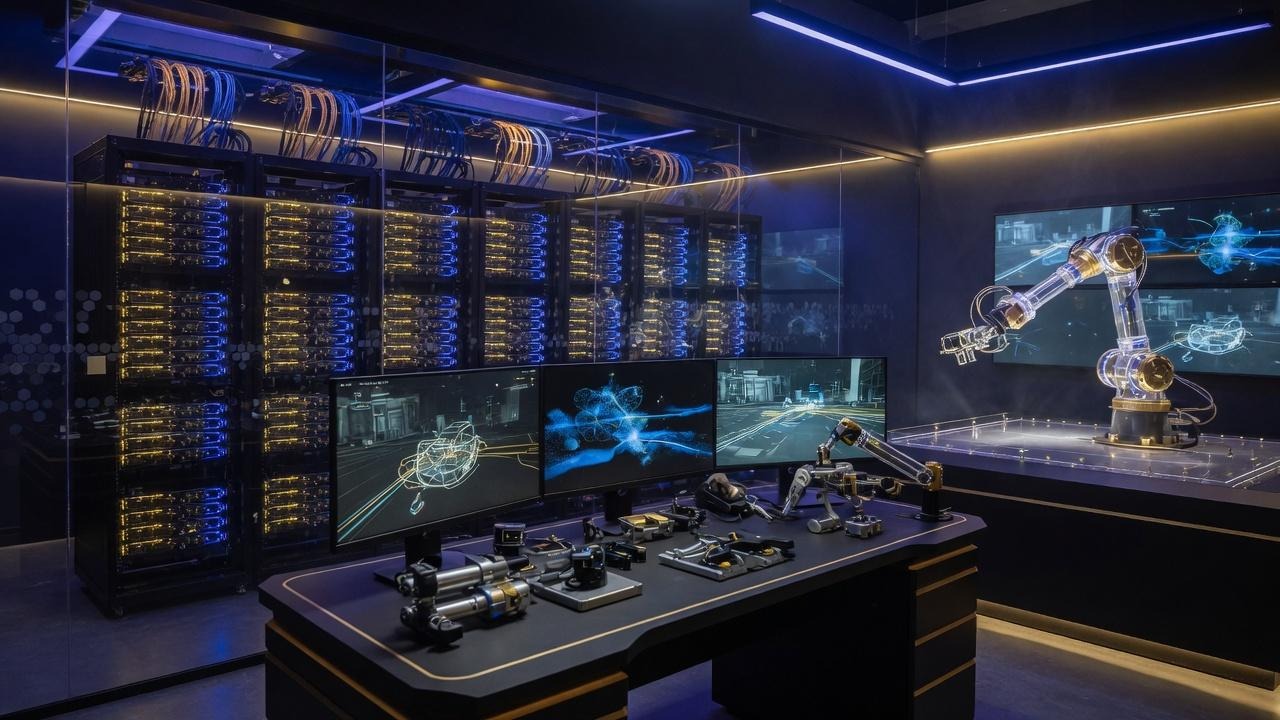
Monitoring is more than a dashboard. It is a combination of automated alerts, recorded baselines, and trained people who know what a normal machine looks like and can spot when something drifts out of range.
That combination is what lets an operations team respond to a warning sign in minutes rather than discovering a problem hours later, after it has already cost availability.
What proactive maintenance covers
Diagnostics
Identifying the root cause quickly when signals look wrong.
Part replacement
Coordinating repairs and swaps to limit downtime.
Vendor coordination
Working with suppliers and manufacturers on hardware issues and warranties.
Optimization
Keeping firmware and configurations tuned for reliable operation.
How a warning becomes a routine fix
- Detect. Automated monitoring flags a signal that falls outside the expected range.
- Diagnose. The team investigates to understand what is happening and why.
- Act. Maintenance addresses the issue, from a configuration change to a part swap.
- Verify. The fix is confirmed and the baseline is updated so the same issue is easier to catch next time.
Maintenance is a lifecycle, not a one-time setup
Monitoring and maintenance are not jobs you finish. They run for as long as the hardware does, because the failure modes change as a machine ages. Early on, the work is mostly about catching configuration issues and confirming that cooling and power behave as expected under real load. Later, it shifts toward watching for the slow wear that affects fans, drives, and thermal interfaces over thousands of hours of operation.
Good maintenance also keeps records. Baselines, error histories, and part-replacement logs build a picture of how a specific machine behaves over time, which makes it easier to tell the difference between a harmless fluctuation and the early sign of a real problem. That history is one of the practical advantages of having a single team operate the same hardware continuously rather than treating each issue in isolation.
None of this stops hardware from aging. Every GPU generation has a working life, and at some point performance, efficiency, and demand for an older generation all decline. Honest maintenance plans for that reality rather than pretending it away, which is why we are clear that upkeep extends and protects hardware life without making it permanent.
How monitoring and maintenance connect to managed ownership
Most people who want to own AI hardware do not want to spend their nights watching dashboards or sourcing replacement parts. Managed ownership exists precisely so the demanding upkeep is handled by a team while you hold the asset. Monitoring and maintenance are the daily work behind that arrangement.
For the owner, the visible result is simpler than the work behind it. Rather than alerts and diagnostics, you receive periodic operational reporting that summarizes how the hardware is doing, while the team absorbs the detail. That separation is the point of the model, because it lets you hold a real machine without taking on the around-the-clock responsibility of keeping it healthy.
It is honest to say that none of this guarantees an outcome. Monitoring and maintenance reduce avoidable downtime and extend the working life of hardware, but they cannot prevent every fault, cannot stop hardware from aging, and cannot create demand for the compute. Operational benefits still depend on utilization, demand, costs, and market conditions.
What monitoring cannot guarantee
Uptime
Monitoring reduces downtime but cannot prevent every fault.
Demand
Healthy hardware still depends on AI compute demand.
Utilization
Benefits require running workloads.
Hardware lifecycle
All hardware ages and eventually needs replacement.
Operational benefits are not guaranteed and depend on utilization, uptime, demand, costs, hardware performance, and market conditions.
Monitoring and maintenance questions
Temperature, utilization, component health, error rates, and connectivity, continuously, so early warning signs are caught before they cause downtime. It combines automated alerts with people who know what normal looks like.
Diagnostics, part replacement coordination, vendor and warranty relationships, and configuration and firmware tuning to keep hardware healthy and available over its life.
Monitoring is the continuous watching that detects problems and trends. Maintenance is the action taken in response, from a configuration change to a physical repair. They work as a loop, where monitoring informs maintenance and maintenance updates what monitoring looks for.
Because monitoring is continuous, many issues are flagged the moment a signal drifts out of range, which lets the team diagnose and act early. The goal is to handle problems as routine work rather than emergencies, though no operation can promise a specific response to every event.
No. Monitoring and maintenance reduce downtime, but no operation can prevent every fault. Uptime is never guaranteed, and all hardware eventually ages and needs replacement.
No. Under managed ownership, Golden Core Mining handles monitoring and maintenance for the hardware you own, so you do not need to watch dashboards or source parts. You receive periodic operational reporting instead.
Talk with us about AI infrastructure ownership
Share your name, phone, email, and which managed device tier interests you. We will reach out with a clear walkthrough. No pressure.
Request received
Thank you. We will contact you at the phone number or email you provided.
Keep your hardware healthy and available.
Talk through monitoring, maintenance, and operations for hardware you own.
Operational benefits are not guaranteed and depend on utilization, uptime, demand, costs, hardware performance, and market conditions.