Article on decentralized compute
Decentralized GPU networks explained
Decentralized GPU networks pool hardware from many contributors to serve compute demand. Here is how the idea works in plain terms, how the projects differ, and how it all contrasts with owning a managed physical machine.

Key takeaways
- Decentralized GPU networks pool hardware from many contributors to serve compute demand.
- They differ widely in how they coordinate, pay, and verify contributors.
- Managed physical ownership is a different model where you hold a specific machine in a data center.
- Golden Core Mining is a physical infrastructure operator, not a crypto protocol or token network.
What a decentralized GPU network is
A decentralized GPU network is a system that pools graphics processing hardware from many separate contributors and makes that combined capacity available to people who need compute. Instead of one company owning all the machines, the supply comes from many locations and many owners.
The appeal is breadth. By aggregating hardware that already exists, these networks aim to make compute more widely available and less dependent on any single provider. It is a different answer to the same scarcity problem that drives so much of the AI hardware conversation.
The details vary a great deal between projects, including how they match supply with demand, how they verify that work was actually done, and how contributors are compensated. Understanding that variation is key to reading any specific network clearly.
How decentralized networks coordinate compute
Most decentralized networks need a way to register available hardware, route workloads to it, verify that the work was completed correctly, and settle compensation with contributors. Some use blockchain-based systems for coordination and payment, while others rely on more conventional marketplaces and contracts.
Because the hardware is spread across many owners and locations, reliability and consistency can vary. Quality depends on who is contributing, how well their individual machines run, how they are connected, and how rigorously the network verifies and schedules work.
This is not a criticism of the model so much as a description of its nature. Distributing supply across many parties is the source of both its breadth and its variability. The networks that work best tend to be the ones that invest heavily in verification and scheduling, because those systems are what turn scattered hardware into dependable capacity.
Where decentralized networks differ most
Coordination
Some rely on blockchain protocols, others on conventional marketplaces, which changes how trust is handled.
Verification
Networks need ways to confirm that work was actually performed, and the rigor of this varies widely.
Reliability
Because hardware sits with many owners, uptime and performance can be uneven across the pool.
Compensation
How and when contributors are compensated differs, and none of it implies a promised result.
A physical operator, not a protocol
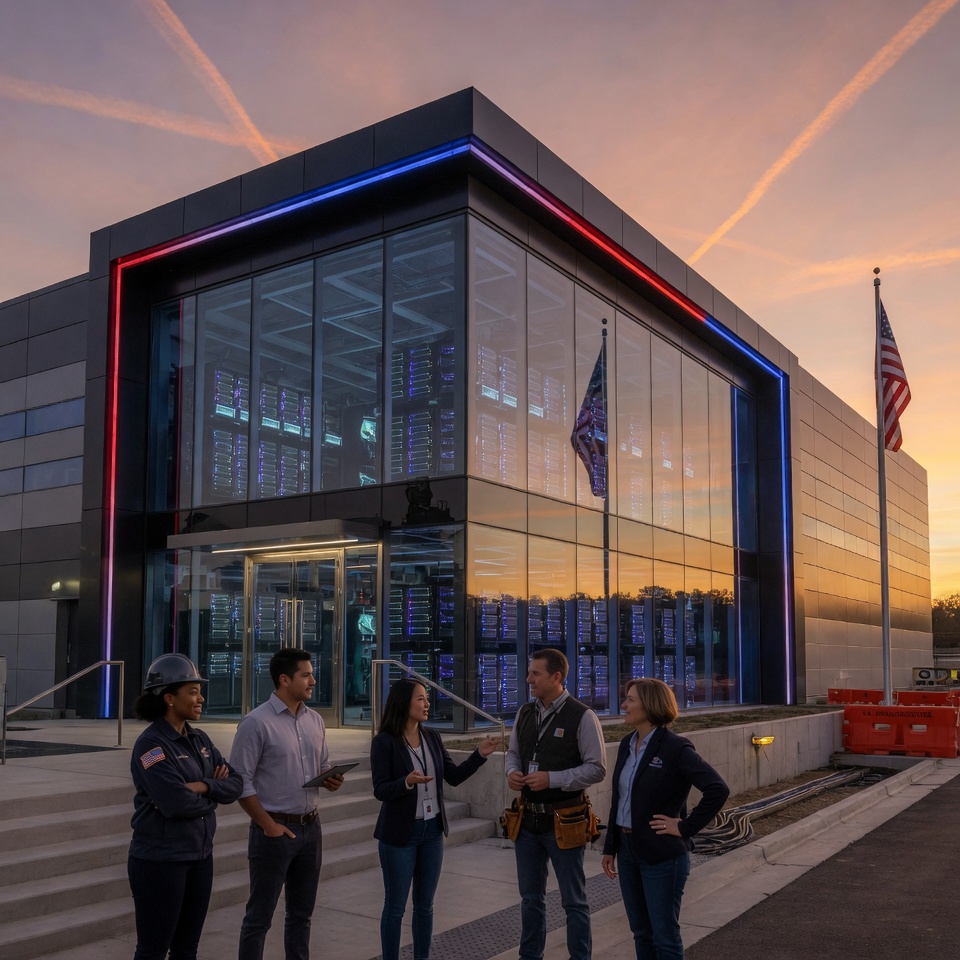
The image points to the practical difference. Managed ownership is grounded in a specific building, specific machines, and a specific team accountable for operations. It is not a distributed protocol made of many anonymous nodes.
Holding that picture in mind helps when comparing models, because a decentralized network and a managed physical asset are different things even when both ultimately serve AI compute demand.
Decentralized networks versus managed ownership
| Factor | Decentralized GPU network | Managed physical ownership |
|---|---|---|
| What you hold | A role in a pooled network | A specific physical machine |
| Where hardware lives | Spread across many owners | In a known American data center |
| Operation | Varies by contributor | Run by one professional team |
| Coordination | Often protocol or marketplace based | Direct managed operation |
| Accountability | Distributed across the network | A single operator responsible |
How managed ownership is different
Managed physical ownership is a separate model from a decentralized network. With managed ownership you hold a specific NVIDIA-powered machine that sits in a known data center, operated by one professional team. You are not contributing a node to a distributed protocol, and you are not buying a token.
To be clear, Golden Core Mining is an AI infrastructure management company, not a cryptocurrency protocol or a token network. It sources, hosts, and operates real hardware that customers own. Any comparison to decentralized networks here is for understanding the landscape, not a claim that the two are the same thing.
That distinction matters for setting expectations. A managed physical asset is a tangible machine in a building; a decentralized network is a coordination system spread across many parties. Knowing which you are looking at prevents a lot of confusion.
Common misconceptions to avoid
A frequent misconception is that anything involving GPUs and compute marketplaces must be a crypto token. Many decentralized networks do use blockchain coordination, but pooling compute and issuing a token are not the same thing, and plenty of compute models involve no token at all.
Another misconception is that decentralization automatically means lower cost or higher reliability. Breadth can help availability, but it can also introduce variability, since the hardware quality and uptime depend on many independent contributors rather than one accountable operator.
A final point of confusion is conflating ownership models. Holding a managed physical machine, renting cloud capacity, and contributing to a decentralized pool are three different relationships to compute. Knowing which one a given offering represents is the single most useful thing you can clarify before going further.
Reading the landscape clearly
If decentralized compute interests you, it helps to understand how it differs from holding a managed physical asset. Our decentralized compute overview explains where managed ownership sits in the wider picture, as a physical infrastructure model rather than a protocol.
Whatever model you explore, keep expectations realistic. Operational benefits are not guaranteed and depend on utilization, uptime, demand, costs, hardware performance, and market conditions.
Common questions about decentralized GPU networks
It is a system that pools GPU hardware from many separate contributors and makes that combined capacity available to people who need compute, rather than one company owning all the machines.
No. Golden Core Mining is an AI infrastructure management company that sources, hosts, and operates physical hardware customers own. It is a physical infrastructure operator, not a cryptocurrency protocol or a token network.
With managed ownership you hold a specific physical machine in a known data center, operated by one professional team. A decentralized network pools hardware from many owners and locations, often coordinated by a protocol or marketplace.
No. Many use blockchain-based coordination and payment, but others rely on conventional marketplaces and contracts. Pooling compute and issuing a token are separate things.
Not necessarily. Breadth can improve availability, but reliability and performance depend on many independent contributors, so consistency can be harder to maintain than in a single managed facility.
Managed physical ownership lets you hold a specific machine as your asset. A decentralized network usually gives you a role in a pool rather than a tangible machine of your own, and no model promises an outcome.
Talk with us about AI infrastructure ownership
Share your name, phone, email, and which managed device tier interests you. We will reach out with a clear walkthrough. No pressure.
Request received
Thank you. We will contact you at the phone number or email you provided.
Want to understand where managed ownership fits?
Talk through how managed physical ownership differs from decentralized compute models.
Operational benefits are not guaranteed and depend on utilization, uptime, demand, costs, hardware performance, and market conditions.