Article comparing two architectures
Centralized versus decentralized compute
Centralized and decentralized compute answer the same question in opposite ways: where should AI hardware live and who should run it? Here is a clear comparison of the two architectures and their trade-offs.
Key takeaways
- Centralized compute concentrates hardware in managed facilities run by one operator.
- Decentralized compute spreads hardware across many owners and locations.
- Each approach trades off consistency, control, and breadth differently.
- Managed physical ownership is a centralized model where you still hold your own machine.
Two ways to organize compute
Centralized compute concentrates hardware in a small number of well-run facilities, operated by a single organization with consistent power, cooling, and security. Decentralized compute does the opposite, spreading hardware across many independent owners and locations.
Neither is simply better. They make different trade-offs around consistency, control, and how widely supply is distributed. The same workload can run on either, but the experience, reliability, and accountability differ.
Understanding those trade-offs helps you read any compute offering more clearly, and it explains where a model like managed physical ownership sits within the wider landscape.
Centralized and decentralized compared
| Factor | Centralized compute | Decentralized compute |
|---|---|---|
| Where hardware lives | Concentrated in managed facilities | Spread across many owners |
| Who operates it | One professional operator | Many independent contributors |
| Consistency | More uniform and controlled | Varies by contributor |
| Coordination | Direct management | Often protocol or marketplace based |
| Physical security | Managed in one facility | Depends on each location |
| Accountability | A single responsible operator | Distributed across the network |
What centralized compute does well
Centralized facilities can deliver consistent power, professional cooling, strong physical security, and a single team accountable for performance. That consistency is valuable for workloads that need reliability and for owners who want one clear point of responsibility.
Concentration also makes engineering easier to get right. High-density power and serious cooling are hard problems, and a dedicated facility solves them at scale in ways scattered hardware cannot. A single site can standardize power delivery, redundancy, and environmental controls to a level that is impractical to replicate across many independent locations.
The trade-off is that capacity sits in fewer hands. Access can depend on the operator, and concentration carries its own considerations around availability and location that are worth weighing honestly.
Concentrated capacity in one facility
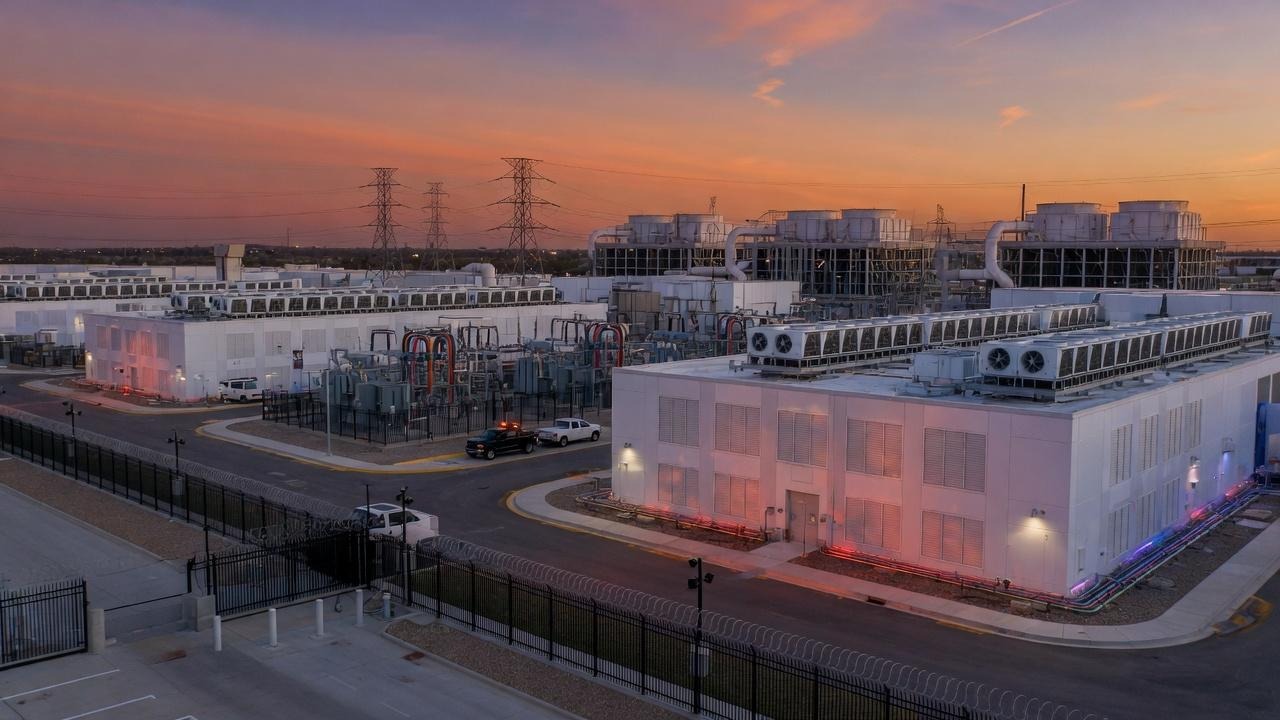
A campus like this captures the centralized approach: a lot of capacity in one engineered place, with consistent power, cooling, and security under one team. It is the opposite of supply scattered across many homes and offices.
Decentralized compute trades this concentration for breadth, accepting more variability in exchange for drawing on hardware that already exists in many locations.
What decentralized compute does well
Decentralized compute can tap hardware that already exists in many places, which can broaden supply and reduce reliance on any single operator. That breadth is the core appeal, and it can make capacity more widely available.
It also distributes control, which some people value on principle. No single party holds all the hardware, and the system draws on a wider base of contributors, which can reduce dependence on any one operator's pricing or availability.
The trade-off is variability. Reliability, security, and performance depend on each contributor and on how the network verifies and schedules work, so consistency can be harder to maintain than in a single managed facility.
There is also a coordination cost. A network spread across many owners needs robust ways to route work, confirm it was done, and settle compensation fairly. How well a given network handles that coordination has a large effect on how usable its breadth actually is in practice.
Common misconceptions about the two models
One common misconception is that centralized always means a faceless mega-provider and decentralized always means a fairer, cheaper alternative. In reality both span a wide range. Centralized facilities vary in quality and accountability, and decentralized networks vary in reliability and how seriously they verify work.
Another is that decentralization removes the physical layer. It does not. Every decentralized network still runs on real machines that draw power and need cooling somewhere; the difference is that those machines sit with many separate owners rather than in one engineered facility.
A third is treating the choice as purely technical. For most people it is really a question of what they want from the arrangement: consistency and clear accountability, or breadth and distributed control. Naming that preference first makes the technical comparison far easier to read.
Where managed ownership sits
Managed physical ownership is a centralized model with a twist: the hardware runs in a professionally operated facility, but you own your specific machine. You get the consistency of central operation while still holding the asset in your own name. That combination is unusual, because most centralized models give you access without ownership, and most ownership models leave the operations to you.
If you value a single accountable team, engineered power and cooling, and strong physical security, the centralized side of the spectrum tends to fit. If you value breadth and distributed control above consistency, the decentralized side may appeal more. Our decentralized compute overview explains how the models relate and where managed ownership fits between them.
Whichever architecture you weigh, stay grounded. Operational benefits are not guaranteed and depend on utilization, uptime, demand, costs, hardware performance, and market conditions.
Common questions about centralized and decentralized compute
Centralized compute concentrates hardware in managed facilities run by one operator, while decentralized compute spreads hardware across many independent owners and locations. They trade off consistency against breadth.
It tends to offer more uniform power, cooling, and security because one team is accountable. Decentralized compute can vary by contributor, though it can broaden supply. Neither guarantees a specific outcome.
High-density power and serious cooling are hard engineering problems that a dedicated facility can solve at scale. Scattered hardware in many locations rarely has that level of infrastructure.
Capacity sits in fewer hands, so access can depend on the operator, and there are considerations around availability and location. The benefit is consistency and clear accountability.
Managed physical ownership is a centralized model where the hardware runs in a professionally operated facility, but you still own your specific machine as your asset.
Yes. The compute landscape includes both, and they serve different needs. Understanding the trade-offs helps you read any specific offering rather than assuming one approach is always right.
Talk with us about AI infrastructure ownership
Share your name, phone, email, and which managed device tier interests you. We will reach out with a clear walkthrough. No pressure.
Request received
Thank you. We will contact you at the phone number or email you provided.
Want to compare compute models with a guide?
Talk through how centralized and decentralized approaches differ and where ownership fits.
Operational benefits are not guaranteed and depend on utilization, uptime, demand, costs, hardware performance, and market conditions.