Article on ongoing upkeep
The hardware maintenance burden, explained
Buying the hardware is a single decision. Keeping it healthy is a standing commitment. Here is what ongoing maintenance of an AI machine actually demands, week after week, and why it lands hardest at home.
Key takeaways
- Maintenance is not a one-time setup, it is an ongoing job that follows the hardware.
- Patches, driver updates, and monitoring have to happen without breaking running work.
- Parts wear out and fail, and replacing them quickly takes spares, skill, and time.
- Managed operations turn this standing burden into a service handled by a team.
Maintenance is a job, not a setup step
People often picture maintenance as the work of getting a machine running once. In practice, the setup is the easy part. The hard part is everything that comes after, because an AI machine that serves compute has to stay healthy while it runs, not just on the day it is installed.
That ongoing work does not announce itself with a single big task. It shows up as a driver that needs updating, a disk that is filling, a fan that is slowing, or a security patch that cannot wait. None of these is dramatic on its own, but together they form a steady drumbeat of upkeep that never quite ends.
The reason this matters is that the machine only has value while it is running well. Neglected maintenance does not stay invisible, it eventually surfaces as degraded performance, an outage, or a failure that could have been prevented. Upkeep is the price of keeping the hardware useful.
The maintenance that never finishes
- Patching and updates. Operating system patches, security fixes, and driver updates have to be applied regularly and tested so they do not break the workloads already running.
- Monitoring. Temperatures, utilization, storage, and errors need watching so small issues are caught before they turn into failures or downtime.
- Part replacement. Fans, drives, and power supplies wear out. Replacing them fast means keeping spares on hand and knowing how to swap them safely.
- Tuning and cleanup. Logs grow, configurations drift, and dust builds up. Routine cleanup keeps the machine stable and efficient over time.
The parts that need a steady hand
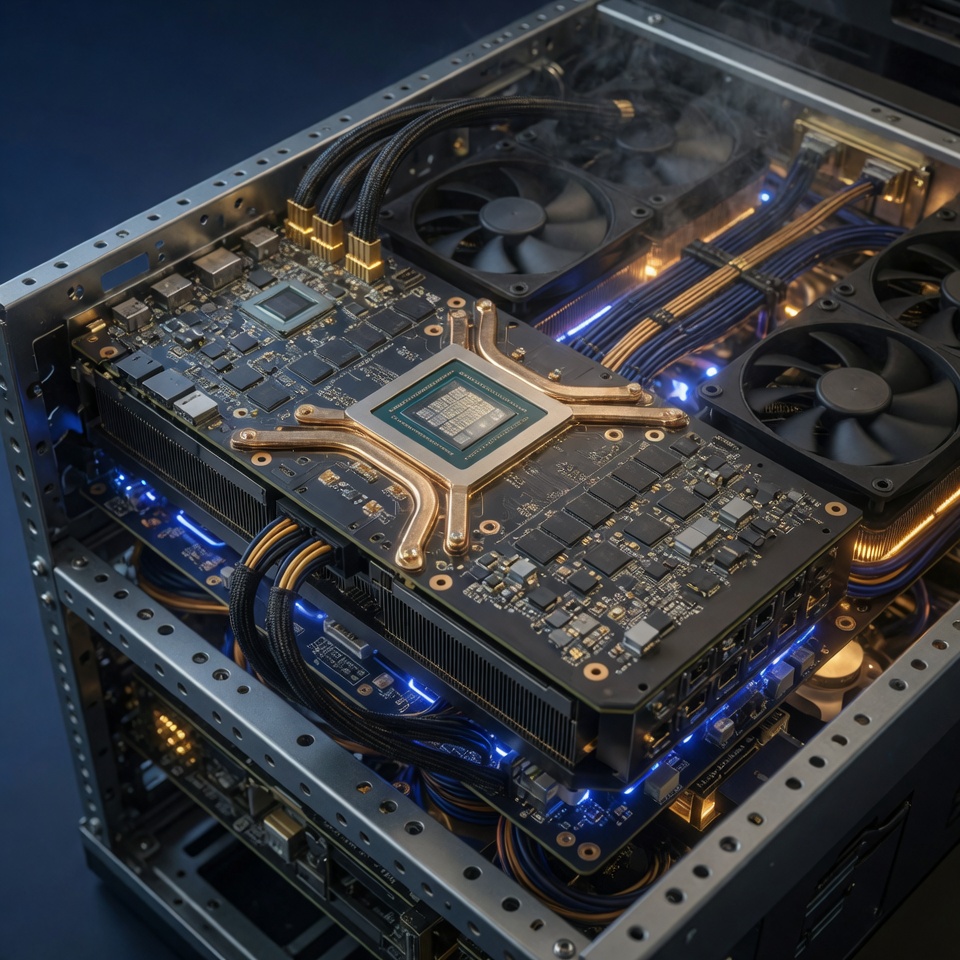
AI hardware is dense and works hard, which is precisely what makes its maintenance demanding. Components packed tightly together run hot, and the moving and consumable parts, fans, drives, and power supplies, wear under continuous load.
Keeping hardware like this healthy is a skilled, hands-on discipline. It rewards experience, the right spare parts, and procedures that prevent a routine swap from turning into a longer outage. That is hard to replicate alone in a spare room.
Why this burden lands hardest at home
At home, every one of these tasks is yours. There is no rotation, no on-call team, and no shelf of spare parts. When a patch goes wrong or a part fails, the recovery depends entirely on your time and skill, and it often happens at the least convenient moment.
There is also no one to share the knowledge. A facility team builds up procedures and experience across many machines, so a problem one person solved becomes something the whole team knows how to handle. At home, every lesson is learned the hard way, by you, usually while the machine is down.
A data center treats this work as a routine service. A team handles patching, monitoring, and part replacement across many machines, with spares on site and procedures that keep the work from interrupting the compute. The same tasks become far less disruptive when they are someone's profession rather than your evening.
The parts that wear out under sustained load
Fans
Cooling fans run constantly and are among the first parts to wear, and a failing fan quietly raises temperatures until performance or hardware suffers.
Drives
Storage wears with use and can fail without warning, so monitoring and timely replacement protect both the data and the uptime.
Power supplies
Components that deliver steady high power degrade over time, and a failing supply can take the whole machine down at once.
Thermal paste and dust
Heat transfer degrades and dust accumulates, both of which slowly reduce cooling and force the hardware to work harder to stay safe.
Why it is never truly set and forget
A tempting belief is that once a machine is configured well, it will mostly run itself. For a lightly used hobby box that can be roughly true. For hardware serving sustained AI workloads it is not, because the same heavy use that makes the machine valuable is what wears it down and exposes it to problems.
The more a machine is worth running, the more attention it needs to keep running. That is the uncomfortable truth behind the maintenance burden: there is no version of serious AI compute that is genuinely hands-off. The only real choice is whose hands do the work, yours or a team's.
Letting upkeep be someone else's job
If you want sustained AI compute without the standing maintenance commitment, the answer is to move the upkeep to a team built for it. That is what managed monitoring and maintenance provides while you still own the hardware, so the patches, swaps, and watching become a service rather than your second job.
Framed simply, you keep the asset and a professional team keeps it healthy, with the spares, skills, and procedures that make maintenance routine instead of disruptive.
Owning hardware always carries some operational risk. Operational benefits are not guaranteed and depend on utilization, uptime, demand, costs, hardware performance, and market conditions.
Questions about hardware maintenance
More than most people expect. Patches, driver updates, monitoring, and part replacement are ongoing, and the machine has to stay healthy while it runs, not just on the day it is set up.
At home there is no team, no rotation, and no shelf of spare parts. Every patch, alert, and failed component is yours to handle, often at an inconvenient time and with no backup, and every lesson is learned the hard way.
Cooling fans, storage drives, and power supplies are common wear items under sustained load, along with degrading thermal paste and accumulating dust that quietly reduce cooling over time.
Not for serious workloads. The heavy use that makes the machine valuable is the same use that wears it down, so the more a machine is worth running, the more attention it needs to keep running.
A facility handles patching, monitoring, and part swaps as a routine service across many machines, with spares on site and shared procedures, so the work does not interrupt your compute and does not fall on you.
Yes. You own the physical NVIDIA-powered hardware while a professional team handles maintenance and monitoring. You keep the asset and hand off the upkeep. Outcomes are never guaranteed.
Talk with us about AI infrastructure ownership
Share your name, phone, email, and which managed device tier interests you. We will reach out with a clear walkthrough. No pressure.
Request received
Thank you. We will contact you at the phone number or email you provided.
Own the hardware without the maintenance job.
Talk through managed monitoring and maintenance handled by a professional team.
Operational benefits are not guaranteed and depend on utilization, uptime, demand, costs, hardware performance, and market conditions.