Article on data center efficiency
Power usage effectiveness explained
PUE is the simplest way to measure how efficiently a data center uses power. Here is what it means, how to read it, and why it matters more as AI grows.

Key takeaways
- Power usage effectiveness, or PUE, is total facility power divided by the power that reaches the computing hardware.
- A PUE of 1.0 would be perfect, and lower numbers mean less energy wasted on overhead like cooling.
- U.S. data center electricity rose to 176 TWh in 2023, about 4.4 percent of national supply, according to Lawrence Berkeley National Laboratory.
- As AI power demand climbs, efficiency decides how much of that energy does useful work.
What power usage effectiveness measures
Power usage effectiveness, usually shortened to PUE, is a simple ratio. You take all the electricity a data center draws and divide it by the electricity that actually reaches the computing hardware. The rest goes to overhead, mostly cooling, power conversion, and lighting.
A perfect score is 1.0, meaning every watt reaches the chips and nothing is lost to overhead. In reality, PUE is always above 1.0. A figure near 1.1 to 1.2 reflects an efficient modern facility, while older sites can sit well above that, sometimes near 2.0.
The appeal of PUE is that it turns a complex question, how well a facility uses energy, into one number that can be compared across sites and tracked over time. That simplicity is also its limit, as we will see, but it makes PUE a useful starting point.
How to read a PUE number
The closer PUE is to 1.0, the more of the facility's power is doing useful computing rather than being spent on support systems. A PUE of 1.5, for example, means that for every unit of power used by the hardware, half a unit more is spent on overhead like cooling and power delivery.
Because cooling is usually the largest overhead, PUE is closely tied to how a facility removes heat. Efficient cooling designs are one of the main ways operators push the number down and keep more energy on useful work. Climate and location matter too, since a cooler site can sometimes use outside air to help.
It is worth treating PUE as a guide rather than the whole story. It measures facility overhead, not how busy the hardware is or how much useful work each watt produces. A site can have a low PUE and still run idle hardware, so it is best read alongside other measures.
Why efficiency matters at this scale
176 TWh
U.S. data center electricity use in 2023, about 4.4 percent of national supply, according to Lawrence Berkeley National Laboratory.
Source: Lawrence Berkeley National Laboratory, December 2024
58 TWh
U.S. data center electricity in 2014, showing how steeply demand has climbed, according to Lawrence Berkeley National Laboratory.
Source: Lawrence Berkeley National Laboratory, December 2024
325 to 580 TWh
Projected U.S. data center electricity by 2028, according to Lawrence Berkeley National Laboratory.
Source: Lawrence Berkeley National Laboratory, December 2024
Where the overhead power goes
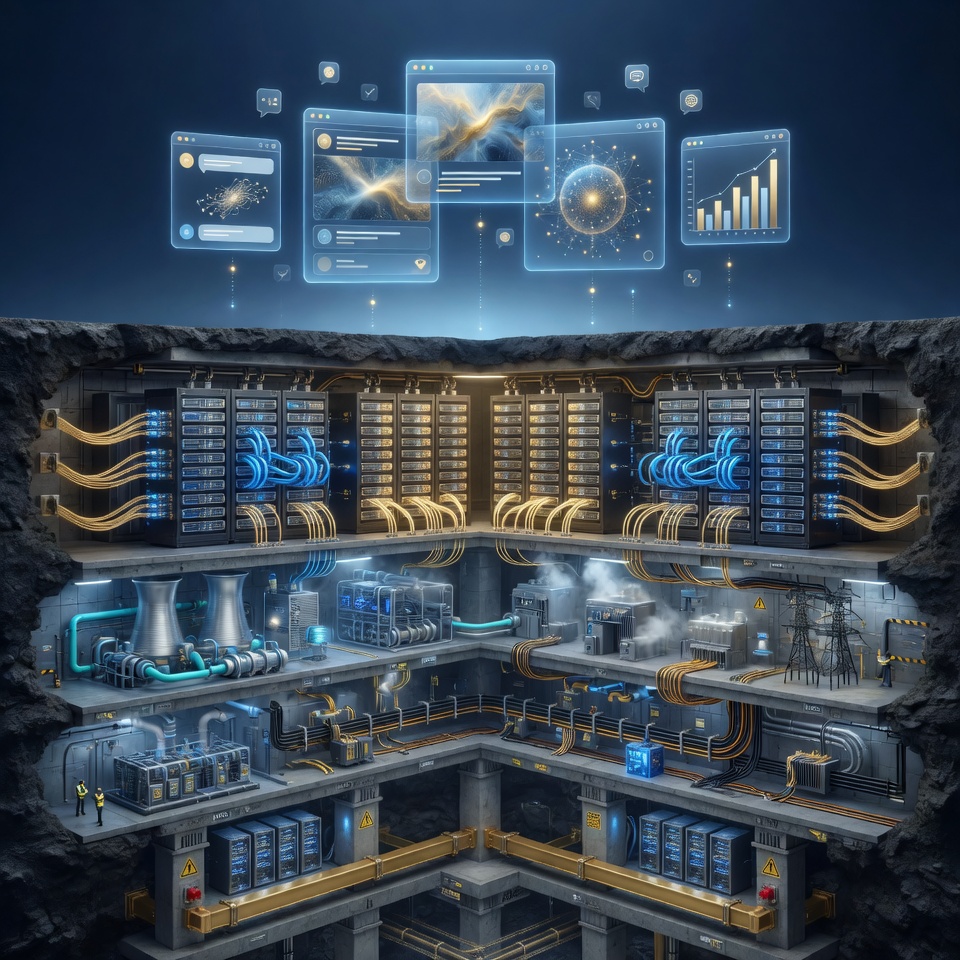
PUE becomes concrete when you can see where the overhead lives. The cooling loops, power conversion, and distribution shown in this cutaway are exactly the systems that sit in the numerator above the hardware. Reducing their energy share is how operators push PUE toward 1.0.
Why PUE matters more as AI grows
When data centers were a small slice of the grid, overhead was a minor concern. That has changed. Lawrence Berkeley National Laboratory reports U.S. data center electricity rose to 176 TWh in 2023, up from about 58 TWh in 2014, and could reach 325 to 580 TWh by 2028.
At that scale, a lower PUE means a large absolute saving and more compute per unit of power. Efficiency is no longer just a cost detail. It decides how much useful AI work a facility can do with the power it is able to secure, and secured power has become one of the scarcest resources in the buildout.
There is a competitive angle too. When two operators have similar hardware but different efficiency, the one with the lower PUE can run more compute on the same grid connection. In a world where new power is hard to obtain, squeezing more useful work from each secured megawatt is not just greener, it is a way to grow when adding raw power is not an option.
How facilities push PUE down
Efficient cooling
Because cooling is the largest overhead, advanced cooling designs, including liquid cooling, are the main lever for lowering PUE.
Better power delivery
Reducing losses in power conversion and distribution keeps more of each watt heading to the hardware rather than being lost as heat.
Smart site choices
Climate and location can let a facility use outside air or other local advantages to cut the energy spent on cooling.
What PUE does not tell you
PUE is useful, but it is easy to lean on it too hard. The metric only measures the ratio of total facility power to power that reaches the hardware. It says nothing about how busy that hardware is, how much useful work each watt produces, or where the electricity comes from. A site can post an excellent PUE while running idle machines on power from a strained grid.
It can also shift with where and when it is measured. PUE looks better in cool weather and at full load, so a single annual figure can hide wide swings across seasons and usage. That is why careful operators report PUE alongside other measures rather than treating it as a single grade.
The honest way to use PUE is as one indicator among several. Pair it with how fully the hardware is utilized, how reliable the facility is, and how the power is sourced, and it becomes a meaningful part of the efficiency picture rather than a misleading headline number.
Why facility efficiency matters to hardware owners
For anyone holding GPU hardware, the efficiency of the facility it runs in is not an abstraction. A lower PUE means more of the power bill goes to computing rather than overhead. That is part of why where hardware is hosted matters as much as the hardware itself.
Efficiency is also one of those things that is easy to overlook until the bills arrive. An owner focused only on the chip can miss that the surrounding facility quietly shapes how much of the power they pay for turns into useful work. Asking about a facility's efficiency is one of the more practical questions an owner can raise.
The managed ownership model places your hardware in professionally run facilities and handles the power and cooling for you. Our service on data center GPU hosting explains how that works. It does not guarantee any particular result. Owning hardware does not guarantee any result. Operational benefits are not guaranteed and depend on utilization, uptime, demand, costs, hardware performance, and market conditions.
References and data
- 2024 United States Data Center Energy Usage Report. Lawrence Berkeley National Laboratory. December 2024.
Common questions about PUE
PUE is total facility power divided by the power that reaches the computing hardware. It shows how much energy goes to useful computing versus overhead like cooling and power conversion.
A perfect score is 1.0, where no energy is lost to overhead. Real facilities are always higher. A figure near 1.1 to 1.2 reflects an efficient modern data center, while older sites often sit well above that.
No. PUE measures facility overhead, not how busy the hardware is or how much useful work each watt produces. A site can have a low PUE and still run idle hardware, so it is best read alongside other measures.
The biggest lever is efficient cooling, since cooling is usually the largest overhead. Reducing losses in power delivery and choosing favorable site climates also help keep more of each watt heading to the hardware.
Data center electricity has grown sharply. Lawrence Berkeley National Laboratory reports U.S. use rose to 176 TWh in 2023 from about 58 TWh in 2014, so at this scale a lower PUE saves large amounts of power and frees more for computing.
Talk with us about AI infrastructure ownership
Share your name, phone, email, and which managed device tier interests you. We will reach out with a clear walkthrough. No pressure.
Request received
Thank you. We will contact you at the phone number or email you provided.
Want hardware in an efficient, well-run facility?
Talk through what owning managed NVIDIA GPU hardware inside an American data center would look like, with no pressure.
Operational benefits are not guaranteed and depend on utilization, uptime, demand, costs, hardware performance, and market conditions.