Article on AI infrastructure
Cooling as a constraint for AI
Every watt a GPU draws turns into heat that has to go somewhere. Here is why cooling, not just chips and power, limits how much AI a site can run.
Key takeaways
- Power drawn by GPUs turns into heat, and removing that heat is a hard physical limit on density.
- Data centres used about 415 TWh of electricity worldwide in 2024, and cooling adds to that total, according to the IEA.
- Modern AI racks are so dense that air cooling alone often cannot keep up, pushing the move to liquid cooling.
- Cooling capacity helps decide how much compute a site can actually run.
Why heat is a hard limit
Electricity that flows into a GPU does not disappear. Almost all of it becomes heat. A single modern accelerator can produce as much heat as a space heater, and a full rack packs dozens of them into a small footprint. If that heat is not removed quickly, the chips throttle to protect themselves, and at the extreme they fail outright.
This makes cooling a genuine constraint, not a detail. A site can have chips and power available and still be unable to run them at full speed, simply because it cannot carry the heat away fast enough. In that situation, the cooling system, not the chip, is what caps performance.
Heat also compounds with density. The more compute you pack into a rack to use space efficiently, the more concentrated the heat becomes, which makes the cooling challenge harder exactly where you most want to push performance.
What the data shows
415 TWh
Electricity used by data centres worldwide in 2024, including cooling overhead, according to the IEA.
Source: International Energy Agency (IEA), April 2025
945 TWh
Projected global data centre electricity by 2030, which raises cooling demand too, according to the IEA.
Source: International Energy Agency (IEA), April 2025
Why air cooling is reaching its limits
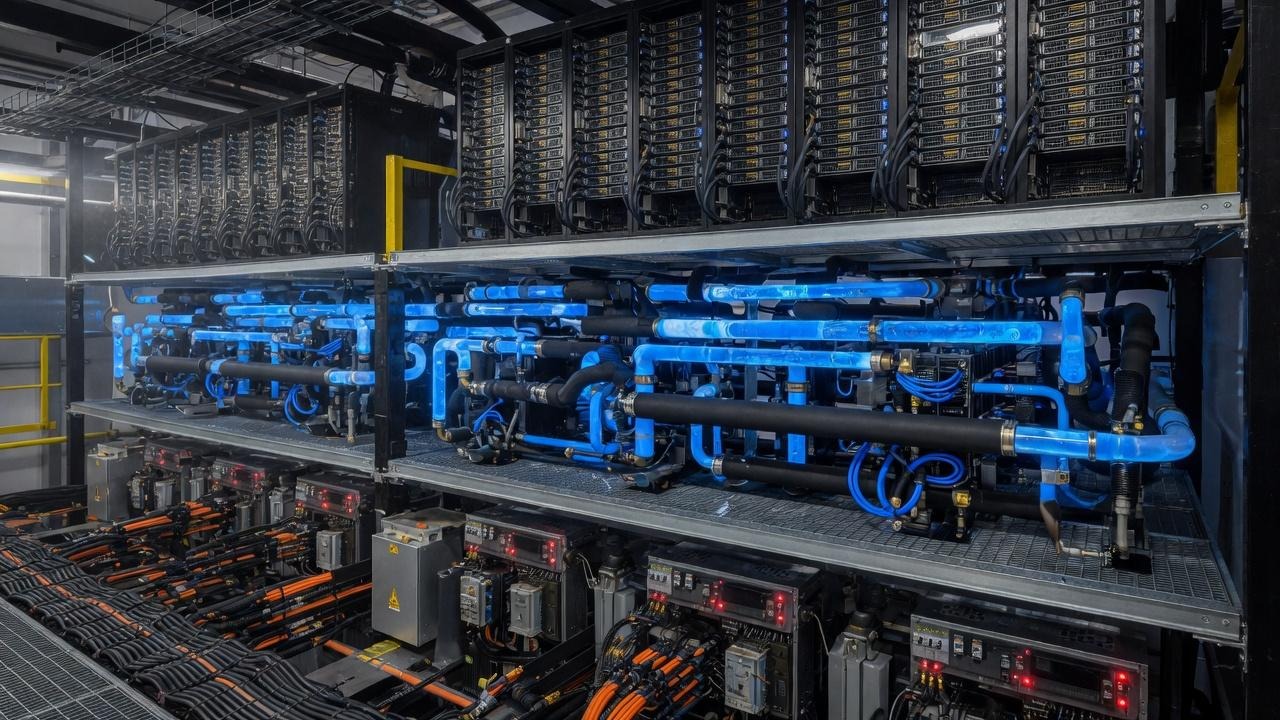
For years, data centers cooled servers by moving large volumes of cold air. As AI racks grew denser and hotter, air struggled to keep up. Moving enough air to cool a high-density AI rack becomes loud, inefficient, and eventually impossible past a certain heat level, because air simply cannot carry heat away fast enough.
That is why the industry is shifting toward liquid cooling, which carries heat away far more effectively than air. Liquid cooling lets operators pack more compute into the same space, but it also adds plumbing, design, and operational complexity that has to be managed carefully. A leak or a pump failure becomes a serious event, so reliability engineering matters more than ever.
There are several approaches along the spectrum. Some facilities bring liquid directly to a cold plate on each chip, while others immerse whole servers in a non-conductive fluid. Each method trades cost, complexity, and serviceability differently, but they share the same goal: move heat away from dense hardware faster than air ever could, so the chips can keep running at full speed.
How cooling fits the whole facility
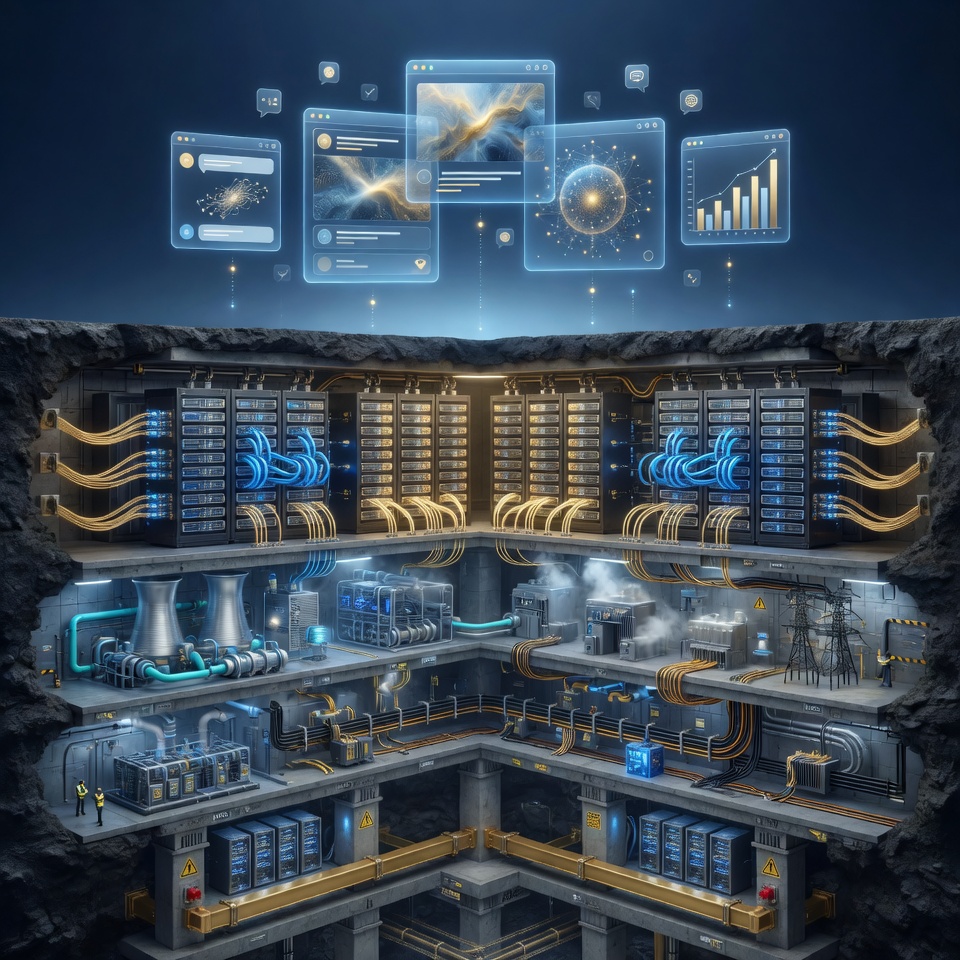
Cooling is not a single machine but a system threaded through the entire facility, as this cutaway shows. The cooling design has to match the heat the planned hardware will produce, which is why operators size it carefully before a single server is installed.
Cooling decides how much compute fits
Because heat sets a ceiling, cooling capacity directly shapes how much AI a facility can run. The IEA reports data centres used about 415 TWh worldwide in 2024 and could reach around 945 TWh by 2030, and cooling is part of every one of those figures. Better cooling means more of the energy goes to useful compute instead of being wasted moving heat around.
This is why cooling sits alongside chips and power as one of the core constraints on AI. A well-cooled facility can safely run more hardware, more of the time, which is the whole point of owning the hardware in the first place.
It also helps explain why two sites with identical chips can deliver very different results. The one with better cooling can sustain higher performance without throttling, fit more hardware into its floor space, and keep components within safe limits for longer. Cooling, in other words, is not a background utility. It is part of what determines how much value the hardware can produce.
What good cooling actually buys
Higher density
Effective cooling lets operators pack more compute into each rack, making better use of scarce, well-located floor space.
Sustained performance
When heat is removed quickly, chips run at full speed instead of throttling, so the hardware delivers the performance it was bought for.
Hardware longevity
Running cooler and within safe limits reduces stress on components, helping expensive hardware stay reliable over its working life.
What happens to all that heat
The heat a data center removes does not have to be pure waste. Some facilities capture it and put it to use, warming nearby buildings or feeding district heating systems. Reusing heat does not lower the amount a chip produces, but it can turn a disposal problem into a modest benefit and improve the overall efficiency of a site.
Heat reuse works best where there is something nearby that needs warmth and a climate that makes the economics sensible. It is not available everywhere, and it adds its own engineering, so it remains the exception rather than the rule. Still, it points to a future where cooling is designed as part of a larger energy system rather than treated only as a cost.
Whether or not heat is reused, the core constraint stands. The faster and more completely a facility can move heat away from dense hardware, the more compute it can run safely, which keeps cooling at the center of how much AI a site can deliver.
Why cooling belongs in the ownership conversation
If cooling limits how hard hardware can run, then owning a GPU is only useful when it lives somewhere with serious cooling. The managed ownership model puts your hardware inside a data center built for the heat, where a professional team handles cooling and power so the hardware can run safely.
Our service on GPU cooling and power explains how that side works. It does not remove the uncertainty of any infrastructure. Owning hardware does not guarantee any result. Operational benefits are not guaranteed and depend on utilization, uptime, demand, costs, hardware performance, and market conditions.
References and data
- Energy and AI. International Energy Agency (IEA). April 2025.
Common questions about AI cooling
Power drawn by GPUs turns almost entirely into heat. If that heat is not removed fast enough, chips throttle or fail, so cooling capacity sets a hard limit on how much compute a site can run, regardless of available chips and power.
AI racks have become so dense that air cooling often cannot remove the heat efficiently. Liquid cooling carries heat away far more effectively, letting operators run more compute in the same space, though it adds design and operational complexity.
Yes. Cooling is part of total data center electricity. The IEA reports data centres used about 415 TWh worldwide in 2024, and better cooling means more of that energy goes to useful compute rather than waste.
It allows higher rack density, keeps chips running at full speed instead of throttling, and reduces stress that shortens hardware life. In short, good cooling lets expensive hardware deliver the performance it was bought for.
Yes. If the cooling system cannot carry heat away fast enough, the hardware must throttle even when chips and power are available. In that case cooling, not the chip, is what caps performance.
Talk with us about AI infrastructure ownership
Share your name, phone, email, and which managed device tier interests you. We will reach out with a clear walkthrough. No pressure.
Request received
Thank you. We will contact you at the phone number or email you provided.
Want hardware that stays cool and running?
Talk through what owning managed NVIDIA GPU hardware would look like, with cooling and power handled for you.
Operational benefits are not guaranteed and depend on utilization, uptime, demand, costs, hardware performance, and market conditions.