Article on ownership and timing
The shift from AI user to AI owner
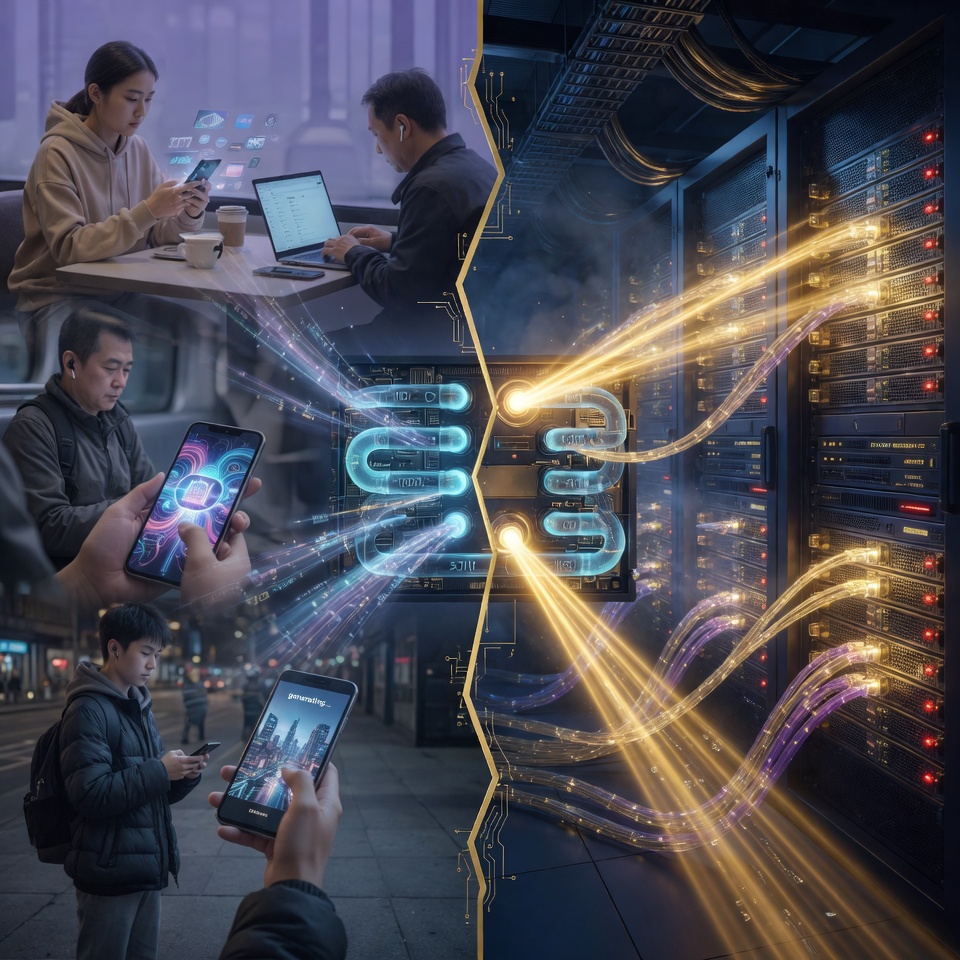
Almost everyone now uses AI. Very few own any part of the physical infrastructure it runs on. That gap is the difference between consuming a technology and holding a piece of it.
Key takeaways
- Using AI and owning AI infrastructure are very different positions in an economy.
- AI adoption is now mainstream, but ownership of the hardware remains concentrated among large companies.
- Managed hardware ownership lowers the practical barriers that once made ownership impractical for individuals.
- Ownership is real, but no outcome is promised and benefits depend on real-world conditions.
Consuming a technology is not the same as owning it
When a technology becomes essential, two roles emerge. Most people use it. A smaller group owns the infrastructure that provides it. Both matter, but they are very different positions in an economy, and they tend to experience that technology in very different ways.
AI has reached the point where nearly everyone is a user. The Stanford AI Index found generative AI reached about 53 percent population-level usage within three years, faster than the internet or the personal computer. Ownership of the hardware behind it, however, is still concentrated among large companies.
That contrast is the heart of this article. It is worth understanding clearly, because the gap between using a technology and owning a piece of it shapes who participates in its growth and who simply consumes the result.
How wide the gap is
~53%
Population-level usage generative AI reached within three years, faster than the internet or PC, according to the Stanford AI Index.
Source: Stanford Institute for Human-Centered AI (HAI), April 2026
More than 2x
Growth in global corporate AI investment in 2025, with the United States leading, according to the Stanford AI Index.
Source: Stanford Institute for Human-Centered AI (HAI), April 2026
Why so few people own AI infrastructure
Owning AI infrastructure has been hard for individuals. It requires buying scarce hardware, finding a data center, securing power and cooling, and operating complex equipment around the clock. Those barriers kept ownership in the hands of a few large players.
Each barrier compounds the next. Even someone who manages to buy a high-end GPU faces the harder problems of where to host it, how to cool it, and how to keep it running reliably. Most people simply opt out and remain users.
Meanwhile, the Stanford AI Index reports that global corporate AI investment more than doubled in 2025, with the United States leading. Large organizations are committing heavily to the hardware layer, which widens the gap between them and ordinary users.
What holding a piece looks like

The shift from user to owner does not require building a data center yourself. With a managed model, you can hold a real machine while professionals run the demanding parts.
That is what narrows the old gap: the ownership is yours, but the round-the-clock operations are handled by people who do it for a living.
How the two positions differ
The user
Pays for access to AI services and owns nothing. When the subscription ends, there is no asset left behind.
The owner
Holds physical hardware that produces compute. The machine is a real asset, with real costs and real-world performance.
The old barrier
Sourcing scarce hardware, finding hosting, and operating equipment around the clock kept ownership out of reach for most.
The managed path
A professional team runs hosting, cooling, monitoring, and maintenance, so an individual can own without operating it alone.
Ownership is real, and so are the risks
Becoming an owner does not guarantee anything. Hardware has costs, demand varies, and operational benefits depend on real-world utilization and market conditions. None of it is promised, and it should not be treated as a shortcut.
The shift from user to owner is about position and choice, not a sure thing. It is hardware ownership, not a financial product, and it carries the ordinary risks of owning physical equipment.
Anyone considering it should weigh those risks honestly. The point of this article is clarity about what the shift is and is not, so the decision can be an informed one.
What becoming an owner looks like
If owning a piece of AI infrastructure interests you, managed GPU ownership is one practical route. You own the machine, and a professional team operates it inside American data centers, which removes the hardest parts of going it alone.
Decide deliberately. The point is informed choice, not pressure. Owning hardware does not guarantee any result, and operational benefits are not guaranteed and depend on utilization, uptime, demand, costs, hardware performance, and market conditions.
References and data
- The 2026 AI Index Report. Stanford Institute for Human-Centered AI (HAI). April 2026.
Questions about owning AI infrastructure
Using AI means consuming a service and owning nothing. Owning AI infrastructure means holding the physical hardware that produces compute, which is a real asset. They are very different economic positions.
Ownership has required buying scarce hardware, finding a data center, securing power and cooling, and operating equipment around the clock. Those compounding barriers kept it in the hands of large companies, while most people stayed users.
Through managed hardware ownership, yes. You own a physical NVIDIA machine and a professional team operates it. It is real hardware ownership with real risk, never a guaranteed outcome.
No. It is ownership of physical hardware, not a fund or savings plan. Hardware has costs and real-world performance, and operational benefits depend on conditions that are never guaranteed.
A professional team handles hosting, cooling, monitoring, and maintenance, so you can hold a real machine without operating it yourself. That removes the round-the-clock work that used to make individual ownership impractical.
Talk with us about AI infrastructure ownership
Share your name, phone, email, and which managed device tier interests you. We will reach out with a clear walkthrough. No pressure.
Request received
Thank you. We will contact you at the phone number or email you provided.
Curious what owning AI hardware looks like?
Talk through managed GPU ownership and whether it fits your goals, with no pressure and straight answers.
Operational benefits are not guaranteed and depend on utilization, uptime, demand, costs, hardware performance, and market conditions.