Article comparing two models
Owning versus renting GPU compute
Renting cloud GPUs and owning physical hardware solve the same need in opposite ways. One gives you flexibility and no asset. The other gives you an asset and a longer commitment. Here is how they compare in plain language, with the trade-offs laid out honestly.
Key takeaways
- Renting cloud compute means flexible access and no hardware to hold afterward.
- Owning hardware means you hold a physical asset and take a longer, more deliberate view.
- Managed ownership keeps the asset in your hands while a professional team runs the operations.
- Neither model promises a result, and owning hardware carries real upfront and operating costs.
Two ways to get the same compute
When you need GPU compute, you have two broad paths. You can rent it, which means paying a provider for access to hardware they own and operate. Or you can own it, which means holding a physical machine that belongs to you, whether you run it yourself or have a professional team operate it on your behalf. Both paths can put working AI compute in front of you today, and from a distance the output can look almost identical.
The real difference is structural rather than technical. It shows up in what you walk away with when you stop paying, how much of the machine you actually control, and how long you are committing your money and attention. A rented hour and an owned hour can do the same work, yet they leave you in very different positions once the work is done.
That structural difference is easy to miss when you only compare hourly prices. A rental invoice and a hardware purchase price are not the same kind of number, because one buys temporary access while the other buys a durable asset. Holding that distinction in mind is the key to comparing the two models honestly, and it is the thread that runs through everything below.
Owning and renting, side by side
| Factor | Renting cloud compute | Owning hardware |
|---|---|---|
| Asset | You hold nothing after the term ends | You hold a physical machine |
| Commitment | Short and flexible | Longer and more deliberate |
| Control | Limited to the provider terms | You own the underlying hardware |
| Operations | Handled by the provider | Run by you, or by a managed operator |
| Cost shape | Ongoing usage fees | Upfront hardware plus operating costs |
| Scaling | Up or down on demand | Fixed to the machines you hold |
| Exit | Stop paying and walk away | Keep, redeploy, or retire the asset |
When renting makes sense
Renting is a strong fit when your needs are short term, unpredictable, or experimental. You can scale up for a single project and scale back down when it ends, paying only for the hours you actually use. There is nothing to install, nothing to maintain, and nothing to sell or retire later, which keeps your commitment light and your options open.
This flexibility is genuinely valuable. A research team testing an idea, a startup with spiky workloads, or anyone unsure of their long-term needs benefits from being able to turn capacity on and off like a utility. Renting also shifts the operational burden entirely to the provider, so you never think about power, cooling, or failed components.
The trade-off is that you never build a position. Every payment buys access, not an asset, and you depend entirely on the provider for pricing and availability. When advanced GPUs are scarce, that dependence can mean waiting in a queue or paying more for the same access, with no control over either, and with nothing to show once you stop.
- Best when timelines are short, uncertain, or project-based.
- No upfront hardware cost and no operational work to absorb.
- Pricing and availability are set by the provider, not by you.
Renting access versus holding the asset
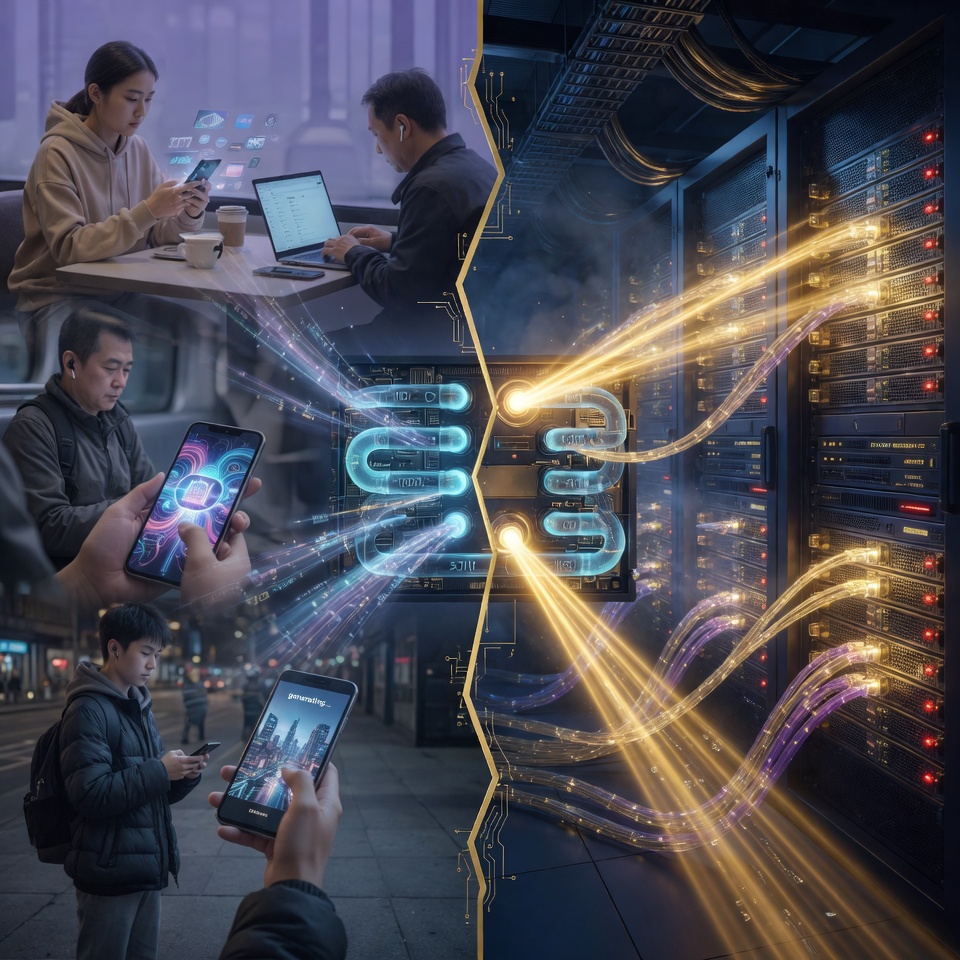
The picture captures the core split. On one side is the user paying for access; on the other is the physical hardware doing the work. Renting keeps you on the access side, while ownership puts you on the hardware side of the same activity.
Neither side is automatically better. The right side for you depends on whether you value flexibility or a durable position, and on how long you plan to stay in the picture. Seeing the two sides together makes it easier to ask which one your goals really point toward.
When owning makes sense
Owning fits when you want to hold a piece of the scarce hardware behind AI rather than rent it indefinitely. Instead of a recurring access fee that leaves nothing behind, you hold a tangible machine that is yours. With managed ownership, a professional team runs that machine so you avoid the burden of operating it yourself, which removes the single biggest barrier most people face.
Owning also changes your relationship to scarcity. Rather than competing for access during periods of high demand, you already hold the hardware. That position is the appeal for people thinking in years rather than weeks, and for those who would rather hold an asset than rent one repeatedly while supply stays tight.
The trade-off is commitment and risk. Hardware costs money up front, it has operating costs over its life, and what it does for you depends on real-world use. A machine can sit underused if demand softens, and newer hardware will eventually arrive and change what an older machine is worth. Ownership is a position, not a promise.
Owning hardware is a deliberate, longer commitment. It can suit a multi-year view, but it never promises an outcome, and the costs are real whether or not the machine is busy.
Why this choice matters now
4 to 5x
Annual growth in AI training compute since 2010, according to Epoch AI.
Source: Epoch AI, May 2024
945 TWh
Projected global data centre electricity by 2030, more than double 2024 levels, according to the IEA.
Source: International Energy Agency (IEA), April 2025
176 TWh
U.S. data center electricity use in 2023, about 4.4 percent of national electricity, according to Lawrence Berkeley National Laboratory.
Source: Lawrence Berkeley National Laboratory, December 2024
Practical factors to weigh either way
Your time horizon
Short or uncertain needs lean toward renting. A multi-year view leans toward holding an asset you can keep.
Cash flow shape
Renting spreads cost as usage fees. Owning concentrates cost up front, then adds ongoing operating costs.
Operational appetite
Running hardware yourself is real work. Managed operation removes that load while you keep ownership.
Tolerance for variability
Demand, pricing, and utilization shift over time, so any benefit from owned hardware is conditional.
A middle path worth knowing
If you like the idea of holding the asset without becoming a full-time operator, managed GPU ownership combines the two models. You own the machine, and an operations team handles hosting, power, cooling, monitoring, and maintenance inside an American data center. It keeps the asset in your name while putting the round-the-clock work in professional hands, which is why many people who weigh owning against renting end up looking at it.
Whichever path you weigh, keep expectations grounded. Owning hardware does not promise any outcome, and benefits depend on conditions outside anyone's full control. Operational benefits are not guaranteed and depend on utilization, uptime, demand, costs, hardware performance, and market conditions.
References and data
- Training compute of frontier AI models grows by 4 to 5x per year. Epoch AI. May 2024.
- Energy and AI. International Energy Agency (IEA). April 2025.
- 2024 United States Data Center Energy Usage Report. Lawrence Berkeley National Laboratory. December 2024.
Common questions about owning versus renting
No. Renting suits short term or unpredictable needs, while owning suits a longer, more deliberate position. The right choice depends on your goals, timeline, and tolerance for cost and risk, not on which one is better in the abstract.
Yes. Managed ownership lets you hold the physical machine while a professional team runs the data center operations. You get the asset without the round-the-clock workload of power, cooling, monitoring, and maintenance.
It depends entirely on your usage and timeline. Renting has low upfront cost but ongoing fees that never stop, while owning has an upfront hardware cost plus operating costs. Neither model promises a financial result, so compare them over your actual horizon.
With renting, access ends and you hold nothing. With owning, you still hold the physical machine, which you can keep running, redeploy, or eventually retire as the asset ages.
No. Owning is a hardware position, not a financial product. Operational benefits are never guaranteed and depend on utilization, uptime, demand, costs, and market conditions.
Yes. Many people rent first to understand their real needs, then consider ownership for a longer position once they know the workload. Owning still carries real costs and risk, and no outcome is promised.
Talk with us about AI infrastructure ownership
Share your name, phone, email, and which managed device tier interests you. We will reach out with a clear walkthrough. No pressure.
Request received
Thank you. We will contact you at the phone number or email you provided.
Weighing owning against renting?
Talk through which model fits your goals, with no pressure and straight answers.
Operational benefits are not guaranteed and depend on utilization, uptime, demand, costs, hardware performance, and market conditions.